
Nearly one in three people in Singapore will experience pain from a decayed tooth at some point in their lives, so if a toothache has you wincing over your coffee this morning, you’re far from alone.
It’s one of the most common reasons people search for same-day dental appointments, and for good reason, a toothache that starts as a dull twinge can escalate fast, especially in Singapore’s warm, humid climate where infections tend to progress quickly.
Toothache itself isn’t a diagnosis. It’s a signal that something in the tooth, gum, or surrounding tissue needs attention, and the right next step depends entirely on what’s causing it. This guide walks through the common causes, what actually helps in the short term, and when it’s time to stop waiting it out and see a dentist.
Common Symptoms of Toothache
Toothache doesn’t feel the same for everyone. The pattern of pain, and what triggers it, often gives an early clue about what’s going on underneath.
| Symptom | Common Pattern | Why It Matters |
|---|---|---|
| Dull or throbbing pain | Lingers or pulses steadily, often worse at night | Can point to ongoing irritation or early infection |
| Sharp pain with hot or cold | Triggered by temperature, sweet foods, or biting down | Often signals a cavity, crack, or worn enamel |
| Swelling, fever, or jaw ache | Appears with or shortly after the pain starts | Suggests the problem may be spreading and needs prompt review |
What Causes Toothache
Most toothaches trace back to one of a handful of causes, though occasionally the pain isn’t even coming from the tooth itself.
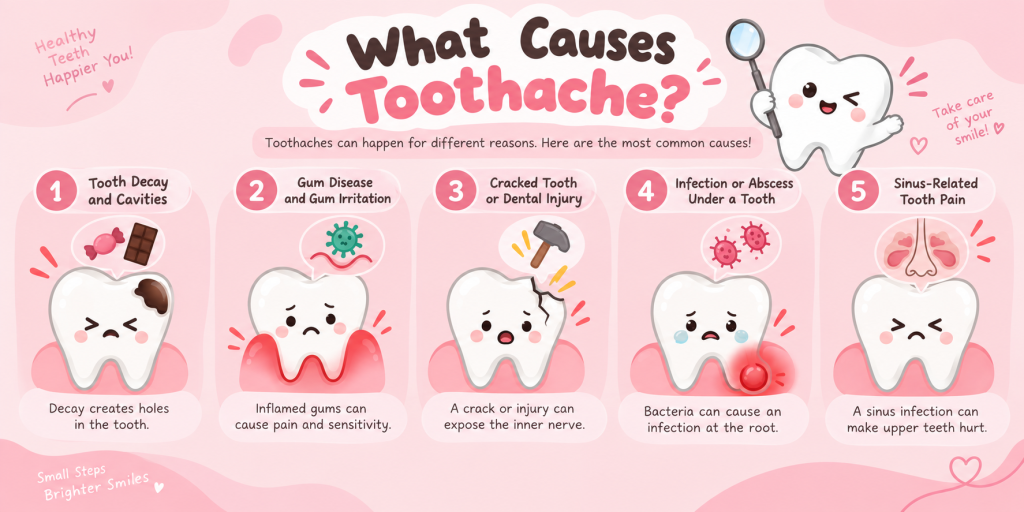
1. Tooth Decay and Cavities
Decay eats through the outer enamel and, left untreated, reaches the sensitive inner layers of the tooth. This is the single most common cause of toothache and usually starts as mild sensitivity before becoming a persistent ache.
2. Gum Disease and Gum Irritation
Inflamed or infected gum tissue can cause aching, tenderness, and sensitivity around the base of the teeth, particularly when plaque has built up along the gumline.
3. Cracked Tooth or Dental Injury
A crack, chip, or blow to the tooth can expose the inner nerve, causing sharp pain that’s often worse when chewing or when the tooth is exposed to temperature changes.
4. Infection or Abscess Under a Tooth
When bacteria reach the pulp inside a tooth, an infection can form at the root. This typically causes severe, throbbing pain, and sometimes swelling or a bad taste in the mouth.
5. Sinus-Related Tooth Pain
Occasionally, pain in the upper back teeth isn’t a dental problem at all. Because the upper molars sit close to the sinuses, a sinus infection or blocked sinuses can be mistaken for toothache, especially if it comes on alongside a cold or nasal congestion.
Also Read: Is Your Wisdom Tooth Pain Normal? Here’s How to Tell
How Dentists Diagnose Toothache
A dentist will usually start by asking when the pain began, what makes it better or worse, and whether it’s constant or comes and goes. This is followed by a physical exam of the tooth and gums, and often a dental X-ray to check for decay, infection, or damage that isn’t visible on the surface. Getting the diagnosis right matters more than getting fast relief, treating the symptom without addressing the cause usually means the pain just comes back.
Toothache Remedy
While waiting for a dental appointment, a few toothache remedy options can take the edge off the pain. None of them fix the underlying problem, but they can make the wait more bearable.
Over-the-Counter Pain Relievers
Paracetamol and ibuprofen, both readily available at pharmacies like Guardian and Watsons, are the most commonly recommended options for dental pain in Singapore. Paracetamol is gentler on the stomach, while ibuprofen also helps with any swelling. Always follow the dosage on the label, and check with a pharmacist first if you’re on other medication or have an existing health condition.
Home Comfort Measures
Rinsing with warm salt water can help clean the area and ease irritation, while a cold compress held against the outside of the cheek can numb the ache and reduce swelling from a knock or injury. Neither treats the cause, but both are safe short-term options.
Clove Oil for Toothache
Clove oil contains eugenol, a compound dentists have used as a numbing agent since the 1800s, and it’s one of the more evidence-backed home remedies for temporary tooth pain. Used correctly, diluted with a carrier oil like coconut or olive oil and applied with a cotton swab, never left on undiluted, it can offer brief relief. It shouldn’t be swallowed, isn’t recommended for young children, and anyone pregnant, nursing, or on blood-thinning medication should check with a doctor first, since eugenol can affect bleeding.
Professional Dental Treatment
Depending on the cause, a dentist may recommend a filling, a root canal, or in some cases an extraction. Antibiotics may be prescribed if there’s fever or swelling, but they treat the infection, not the tooth, the underlying issue still needs to be fixed.
When to See a Dentist in Singapore
Most toothaches aren’t medical emergencies, and Singapore’s National Dental Centre notes that tooth pain is generally best handled at a dental clinic rather than the emergency department — unless it comes with a high fever or significant facial swelling, in which case urgent hospital care is warranted.
That said, a few warning signs shouldn’t be ignored, particularly given how quickly infections can progress in Singapore’s climate.
| Sign | Why It Matters | Suggested Next Step |
|---|---|---|
| Pain lasting more than a day or two | May signal an untreated cavity or infection | Book a dental appointment |
| Swelling or fever | Can indicate the infection is spreading | Seek care the same day |
| Difficulty swallowing or breathing | A medical emergency | Go to a hospital A&E immediately |
If your toothache falls into that first category, persistent but not severe, clinics like AllSmiles Dental Care offer same-day appointments so you’re not stuck waiting days while the pain gets worse.
Also Read: Dead Tooth: Symptoms, Causes & Treatment Options
Preventing Toothache
Most toothaches are preventable with consistent habits, which is good news given how disruptive they can be.
Daily Oral Hygiene Habits
- Brush twice daily with a fluoride toothpaste
- Floss once a day to clear plaque between teeth
- Rinse with an antiseptic mouthwash if recommended by your dentist
- Replace your toothbrush every three months
Regular Dental Checkups
Visiting the dentist twice a year allows small issues, like early decay, to be caught and treated before they turn into a painful toothache.
Diet and Habit Choices
- Limit frequent sugary snacks and drinks
- Avoid using your teeth to open packaging or bite down on hard objects
- Stay hydrated to support saliva production, which naturally protects teeth
Get Toothache Relief at AllSmiles Dental Care
Tooth pain rarely gets better on its own, and the longer a cavity, crack, or infection goes untreated, the more complex — and often more costly, it becomes to fix. If you’ve been managing a toothache with painkillers and salt water rinses for more than a day or two, that’s usually the sign to stop waiting.
AllSmiles Dental Care offers prompt appointments for patients dealing with sudden tooth pain, with a team experienced in diagnosing the cause quickly and recommending the right treatment the first time. Book an appointment with AllSmiles Dental Care to get your toothache properly looked at before it turns into something bigger.
Frequently Asked Questions
What are the common symptoms of toothache?
Toothache can feel dull, sharp, or throbbing, and often worsens with chewing, or with hot and cold foods. Some people also notice swelling or jaw discomfort.
What causes toothache most often?
Tooth decay is the leading cause, followed by gum disease, cracked teeth, and infection. A dental exam is usually needed to confirm the exact cause.
Is toothache serious?
It can range from a minor, short-lived ache to a sign of a spreading infection. Pain with swelling, fever, or difficulty swallowing should never be ignored.
Can toothache go away on its own?
Sometimes the pain eases temporarily, but the underlying cause is usually still there. If it keeps returning, it needs to be checked by a dentist.
Is toothache a dental emergency in Singapore?
Most toothaches can wait for a same-day or next-day dental appointment rather than a hospital visit. It becomes an emergency if there’s high fever, significant facial swelling, or trouble breathing or swallowing.
When should I see a dentist for toothache?
See a dentist if the pain lasts more than a day or two, comes with swelling or fever, or follows an injury to the tooth.