
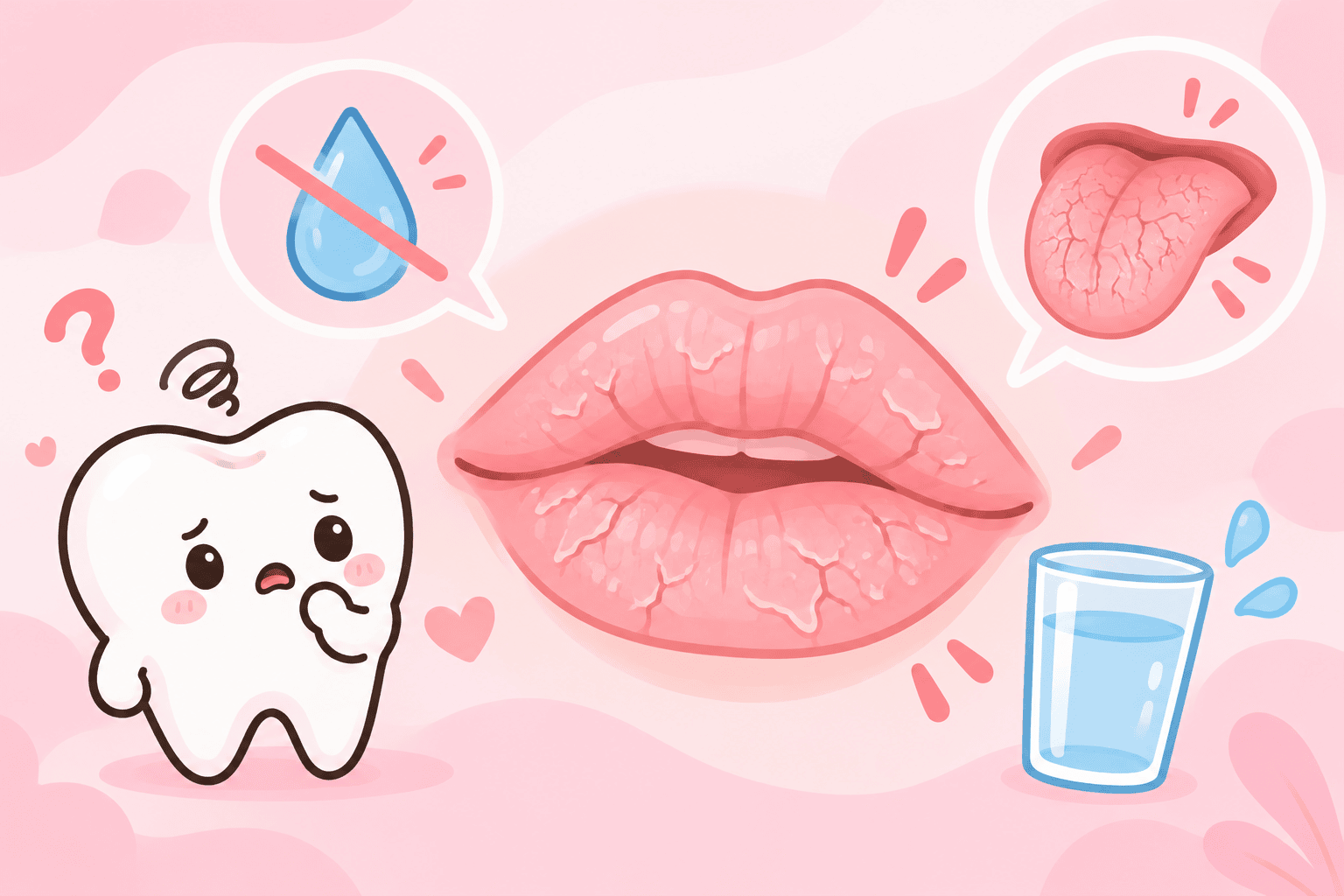
Dry mouth is the sensation that your mouth doesn’t have enough saliva to feel comfortably moist. Some people only notice it occasionally, like after a stressful meeting or one cup of kopi too many, while others feel it most of the day. You may also see this called xerostomia, that’s simply the dental and medical term for dry mouth, not a separate condition.
In Singapore’s warm, air-conditioned environment, dry mouth is something many people brush off as normal. It can range from a mild annoyance to a sign that saliva flow needs closer attention, and understanding what’s behind it makes it easier to know when a simple fix will do and when it’s worth a proper check.
Common Symptoms of Dry Mouth
Dry mouth doesn’t feel the same for everyone. For some, it’s a persistent thirst that a glass of water never quite satisfies. For others, it shows up as a rough tongue, cracked lips, or a change in how food tastes. The table below covers the symptoms people report most often.
| Symptom | What It May Feel Like | Why It Matters |
|---|---|---|
| Sticky or dry sensation | Mouth feels tacky or parched soon after drinking | Can make talking and eating less comfortable |
| Constant thirst | Needing to sip water throughout the day, even during meals | Signals saliva isn’t replenishing as it should |
| Trouble chewing or swallowing | Food feels like it sticks or needs extra liquid to go down | May affect appetite and nutrition over time |
| Rough tongue or cracked lips | Tongue feels coated; lips split at the corners | Can lead to soreness and minor infections |
| Bad breath or taste changes | Unusual odour or an altered taste | Often points to reduced saliva flow washing away bacteria |
Dry Mouth at Night
Waking up with a parched mouth is one of the most common ways people first notice dry mouth, and it’s especially familiar in Singapore, where many households and offices run air-conditioning through the night. Cool, dry air pulls moisture from the mouth and throat, and this effect is often worse if you sleep with your mouth open due to a blocked nose or snoring.
Saliva production naturally slows during sleep for everyone, so even a small habit like keeping the aircon at a low temperature or skipping water before bed can make the dryness more noticeable by morning. If this happens most nights, it’s worth mentioning to your dentist, since ongoing nighttime dryness raises the risk of cavities forming while you sleep.
Causes and Risk Factors of Dry Mouth
Dry mouth rarely has just one cause. It’s often a mix of daily habits, the climate, and sometimes an underlying health condition or medication. Knowing the common triggers makes it easier to describe what’s happening when you see a dentist or doctor.
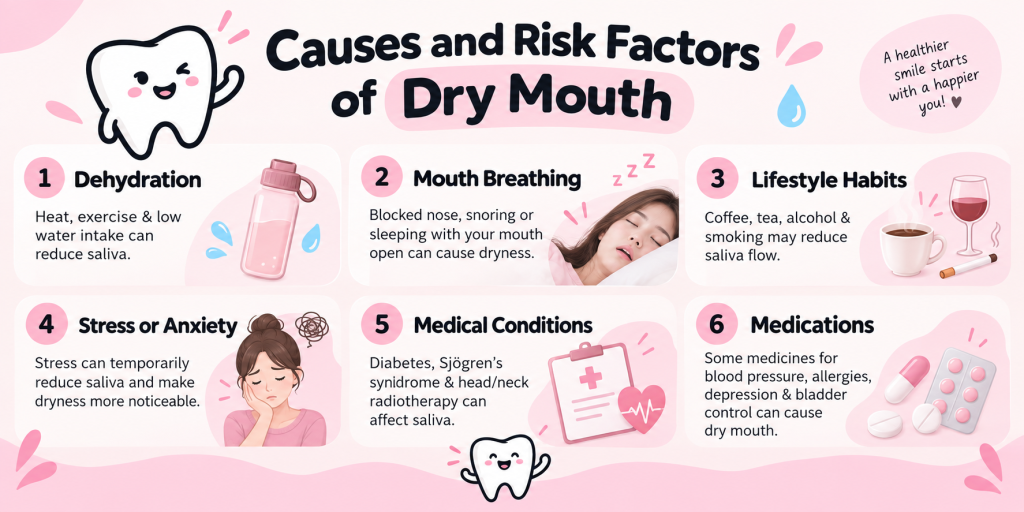
Dehydration
Not drinking enough water, spending time in the heat, exercising, or sweating heavily can all reduce the fluid your body has available to produce saliva. This is especially common in Singapore’s humidity, and it’s usually the easiest cause to fix — dryness from dehydration typically eases once you rehydrate.
Mouth Breathing
Breathing through the mouth instead of the nose, whether from a blocked nose, snoring, or sleep position, dries out the mouth quickly. This is often the reason behind waking up with a parched mouth, even if there’s no dryness during the day.
Lifestyle Habits
Frequent coffee, tea, alcohol, or smoking can all reduce saliva flow over time. In Singapore, where coffee and tea are part of daily routine for many people, this is one of the more overlooked contributors to ongoing dryness.
Stress or Anxiety
A dry mouth before a presentation or during a stressful day is a familiar experience for most people. This is a temporary nervous system response, and it usually fades once the stress passes, though it can become more noticeable during especially demanding periods.
Medical Conditions
Certain health conditions affect saliva production more directly, including diabetes, Sjögren’s syndrome, and radiotherapy for head and neck cancer. These causes usually don’t resolve with simple lifestyle changes and are worth discussing with a doctor.
Medications
Medication is one of the most overlooked causes. Many common prescriptions for high blood pressure, allergies, depression, and bladder control list dry mouth as a side effect, which becomes more relevant for older adults managing several conditions at once.
Anyone undergoing radiotherapy or chemotherapy for head and neck cancer may also experience dry mouth as the salivary glands are affected; National Cancer Centre Singapore has more detailed guidance for managing this during cancer treatment. If you suspect a medicine is the culprit, don’t stop taking it on your own, speak with your doctor about adjusting the dose or switching to an alternative.
Also Read: Dry Socket: Symptoms, Causes and Treatment
How Dry Mouth Is Diagnosed
Diagnosing dry mouth usually starts with a conversation rather than a test. Your dentist will want to understand the pattern of your symptoms before deciding whether further examination is needed.
What Your Dentist May Ask
- How long the dryness has lasted, and whether it’s constant or comes and goes
- Other symptoms, such as persistent thirst, trouble swallowing, or a burning feeling
- Current medications and any recent changes to your health
- Sleeping habits, including snoring or breathing through the mouth
Possible Exams or Tests
- A visual check of the mouth, tongue, and salivary gland areas for irritation or infection
- A simple saliva flow test in some cases, to measure how much saliva is being produced
- Bloodwork if an underlying condition such as diabetes or Sjögren’s syndrome is suspected
These steps help guide next actions rather than confirm a single cause right away.
Treatment Options for Dry Mouth
Treatment depends on what’s driving the dryness, and it often combines addressing the root cause with day-to-day relief.
Addressing the Underlying Cause
When dry mouth is linked to a medication, a doctor may adjust the dose or suggest an alternative that doesn’t carry the same side effect. If an underlying condition such as diabetes or Sjögren’s syndrome is behind the dryness, managing that condition is usually the most effective long-term approach, with your dentist and physician working together.
Over-the-Counter Relief Products
For day-to-day comfort, saliva substitutes and dry mouth-specific gels, sprays and mouthwashes are widely available at pharmacies in Singapore. Look for alcohol-free formulas, since alcohol-based mouthwash can dry the mouth out further. Sugar-free lozenges or gum with xylitol can also help stimulate whatever natural saliva flow remains.
Simple Self-Care Habits
Sipping water throughout the day, cutting back on caffeine and alcohol, and running a humidifier at night if you rely on air-conditioning can all reduce mild dryness. These habits won’t resolve dry mouth caused by an underlying condition, but they make a noticeable difference for everyday cases.
When to See a Dentist
Dry mouth doesn’t always need a dental visit, but there are signs that call for a proper check rather than waiting it out. Left unaddressed, ongoing dryness raises the risk of cavities, gum irritation, and mouth infections, all of which are easier to manage the earlier they’re caught.
| Sign | What It May Suggest | Why Follow-Up Helps |
|---|---|---|
| Dryness that doesn’t improve with water | Possible medication or health-related cause | Helps identify what’s actually driving it |
| Mouth sores or trouble swallowing | Irritation affecting daily comfort | Supports faster relief and prevents complications |
| New cavities or persistent bad breath | Reduced saliva allowing bacteria to build up | Guides targeted treatment before damage spreads |
| Dryness alongside fatigue or joint pain | A broader pattern that may need medical input | Helps coordinate care between your dentist and doctor |
A routine check-up is often when dry mouth first gets flagged, and the dentists at AllSmiles Dental Care can spot early signs of decay or gum irritation linked to reduced saliva before they become bigger problems.
Preventing Dry Mouth
A few consistent habits go a long way toward keeping your mouth comfortable, especially if air-conditioning or medication already plays a role.
Daily Habits That Help
- Sip water regularly throughout the day rather than large amounts at once
- Use a humidifier in air-conditioned bedrooms or offices
- Limit coffee, tea, alcohol and sugary drinks, especially in the evening
- Breathe through your nose where possible, and treat nasal congestion promptly
Managing Nighttime Dryness
- Keep a glass of water by the bed
- Set air-conditioning to a slightly warmer, less drying setting where possible
- Use an alcohol-free mouthwash before bed
- See a dentist if morning dryness continues despite these changes
Also Read: Periodontitis: Stages, Symptoms, Diagnosis, and What It Means
Manage Dry Mouth with AllSmiles Dental Care
Dry mouth is easy to overlook, but it’s worth paying attention to, especially if it’s affecting your comfort, your sleep, or your risk of cavities. Whether it’s linked to your daily habits, a new medication, or something that needs a closer look, understanding the cause is the first step toward relief.
The team at AllSmiles Dental Care can assess your symptoms during a routine check-up and recommend the right next step, whether that’s a simple change in your daily routine or a referral for further evaluation. If dry mouth has been bothering you, book a consultation with AllSmiles Dental Care today and let your dentist help you find lasting comfort.
Frequently Asked Questions
Is dry mouth the same as xerostomia?
Yes. Xerostomia is simply the medical and dental term for dry mouth, the two describe exactly the same condition.
What causes dry mouth?
Dry mouth can come from dehydration, mouth breathing, medications, lifestyle habits like caffeine or alcohol, or underlying conditions such as diabetes and Sjögren’s syndrome.
Is dry mouth serious?
On its own, dry mouth usually isn’t serious, but ongoing dryness increases the risk of cavities, gum irritation and bad breath. It’s worth checking if it doesn’t improve or comes with other symptoms.
Why is my mouth dry every morning?
Morning dryness is often linked to mouth breathing during sleep, overnight air-conditioning, or not drinking enough water before bed. Saliva production also naturally slows during sleep.
When should I see a dentist about dry mouth?
See a dentist if the dryness doesn’t improve with hydration, comes with mouth sores or trouble swallowing, or is paired with new cavities or persistent bad breath.
Can dry mouth go away on its own?
Sometimes, especially if it’s linked to a temporary cause like dehydration or a stressful day. Persistent dry mouth usually needs an evaluation to identify and address the underlying cause.