
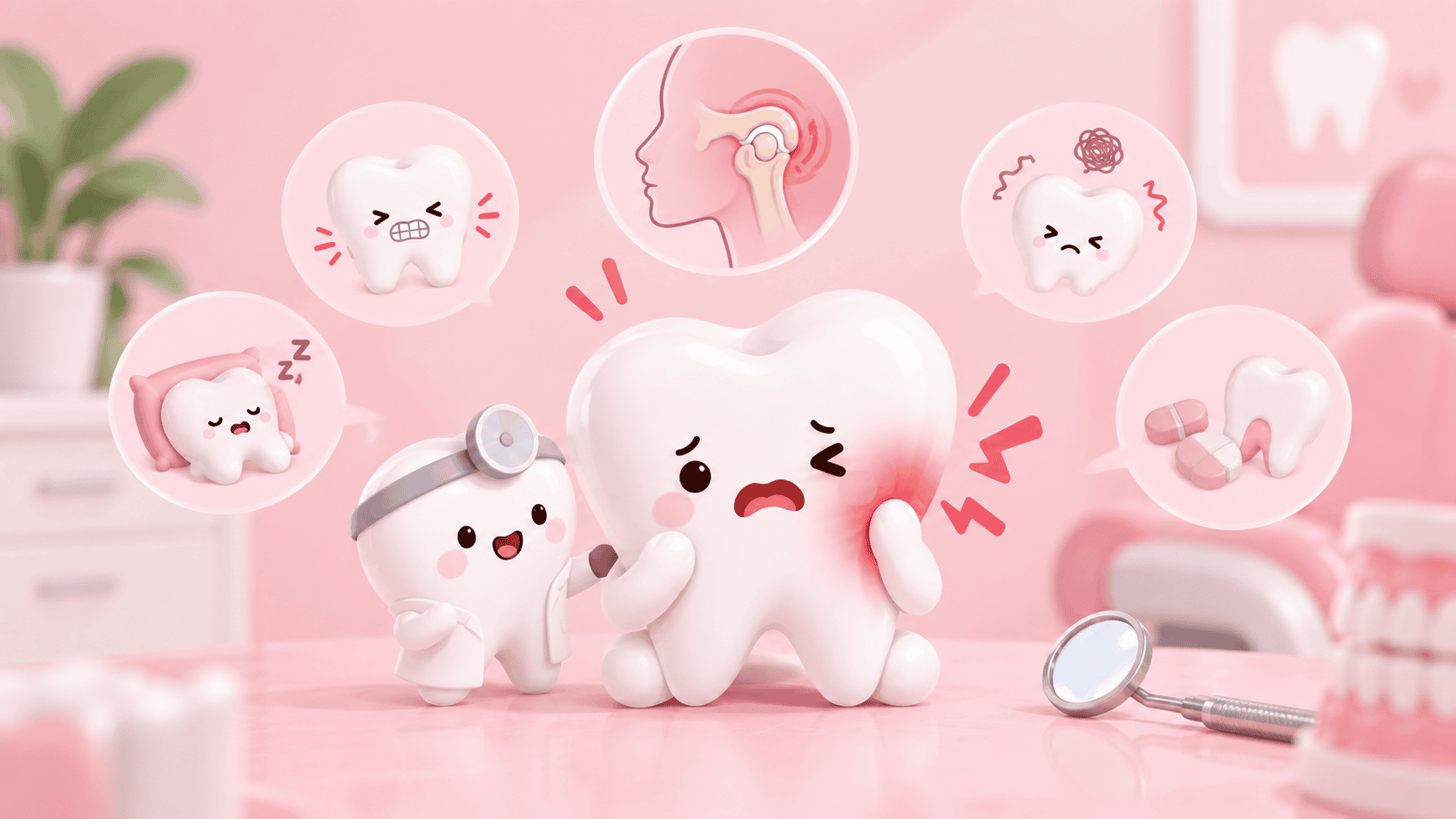
You’re mid-conversation, or halfway through a meal, when you notice it: a dull ache near your ear, a click when you open wide, or a jaw that suddenly feels tight. It’s easy to brush off as a one-off, especially when it fades within a few minutes and doesn’t come back for weeks.
But for a lot of people, that small discomfort turns out to be an early sign of TMJ disorder, a condition far more common than most realise. It often gets mistaken for an ear infection, a bad night’s sleep, or plain stress, which means many people wait months before connecting the dots. Understanding what TMJ disorder actually involves is the first step to knowing whether it’s something to keep an eye on or something worth getting checked.
What Is TMJ Disorder
TMJ disorder refers to problems affecting the temporomandibular joint, the hinge that connects your lower jaw to your skull, along with the muscles that control chewing and jaw movement. You have one of these joints on each side of your face, just in front of your ears, and they work together every time you talk, chew, or yawn.
Many people use “TMJ” loosely to describe jaw pain, but TMJ is actually just the name of the joint itself. The condition is more accurately called TMJ disorder or TMD, and it can range from occasional clicking with no pain at all to persistent discomfort that affects eating, speaking, and sleep. In Singapore, long work hours, high-stress periods, and time spent hunched over screens are common everyday contributors that many people don’t connect to their jaw symptoms until they start researching them.
Common Symptoms of TMJ Disorder
Symptoms of TMJ disorder vary widely from person to person, and some people have noticeable dysfunction with very little pain, while others experience the opposite.
| Symptom | What It Can Feel Like | Why It Happens |
|---|---|---|
| Jaw pain or soreness | Dull ache or tenderness after eating or talking | Muscle fatigue or joint strain from overuse |
| Clicking or popping sounds | Audible click when opening or closing the mouth | Often linked to shifting of the joint’s disc |
| Jaw stiffness or limited opening | Difficulty opening the mouth fully | Muscle tightness or joint restriction |
| Pain near the ear or headaches | Pressure, ache, or radiating pain beside the ear | The joint sits directly next to the ear canal |
| Locked jaw | Sudden inability to open or close the mouth fully | Displacement of the joint’s disc or muscle spasm |
Jaw Pain or Soreness
This is usually the first symptom people notice, often appearing after a long meal, a stressful day, or a night of teeth grinding. It can feel like a dull ache rather than sharp pain, and it may ease on its own with rest.
Clicking or Popping Sounds
A click or pop when opening or closing the mouth doesn’t always mean something is wrong. If it happens without pain or stiffness, it often doesn’t need treatment. It becomes more significant when it’s paired with discomfort or a change in how the jaw moves.
Jaw Stiffness or Limited Opening
Some people find they can no longer open their mouth as wide as they used to, which can make biting into larger foods or yawning uncomfortable. This stiffness tends to build up gradually rather than appearing overnight.
Pain Near the Ear or Headaches
Because the jaw joint sits so close to the ear canal, TMJ disorder is frequently mistaken for an ear infection or a tension headache. This overlap is one of the main reasons the condition often goes undiagnosed for months.
Locked Jaw
A jaw that suddenly won’t open or close properly is one of the more distressing symptoms, though it doesn’t always mean something serious. It can resolve within minutes or persist long enough to interfere with eating and talking, which is a sign it’s time to see a dentist.
Also Read: Malocclusion: Types, Causes & Treatment in Singapore
Causes and Risk Factors of TMJ Disorder
TMJ disorder rarely comes from a single cause. It’s usually the result of several overlapping factors that gradually place extra load on the joint and surrounding muscles.
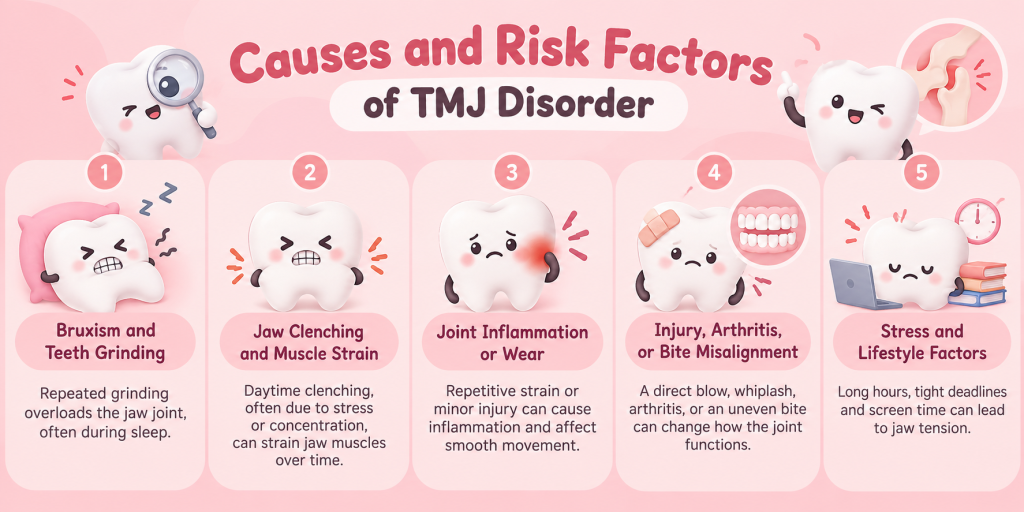
Bruxism and Teeth Grinding
Grinding your teeth at night, often without realising it, repeatedly overloads the jaw joint. Partners or family members often notice this before the person experiencing it does, since it happens during sleep.
Jaw Clenching and Muscle Strain
Daytime clenching, especially during periods of concentration or stress, is extremely common and easy to miss. Unlike grinding, it doesn’t make noise, so it can go unnoticed for years while quietly straining the jaw muscles.
Joint Inflammation or Wear
Repetitive strain or minor injury can lead to inflammation within the joint itself, which limits smooth movement. Over time, this can affect the cartilage and soft tissue that cushion the joint.
Injury, Arthritis, or Bite Misalignment
A direct blow to the jaw, whiplash, arthritis, or a bite that doesn’t sit evenly can all change how the joint functions. These causes tend to produce more persistent symptoms than stress-related clenching alone.
Stress and Lifestyle Factors
Stress is one of the most underestimated contributors to TMJ disorder. Long working hours, tight deadlines, and prolonged screen time are common in Singapore’s fast-paced work culture, and they often show up physically as jaw tension before someone consciously feels “stressed.”
How TMJ Disorder Is Diagnosed
There’s no single test that confirms TMJ disorder on its own. Diagnosis is built from a combination of your symptom history, a physical exam, and imaging when needed.
What Your Dentist Will Ask
- When the symptoms started and whether they’ve been getting worse
- Which activities make the pain better or worse, such as chewing or talking
- Whether you notice clicking, popping, or locking
- Any history of jaw injury, teeth grinding, or high stress levels
Physical Examination
- Checking how widely you can open your mouth
- Gently pressing around the jaw joint and muscles to find tender areas
- Listening for clicking, popping, or grating sounds during movement
- Reviewing your bite and how your teeth come together
When Imaging Is Needed
- MRI scans to check the position of the joint’s disc and surrounding soft tissue
- Dental X-rays to rule out other dental problems
- CT scans to assess the bony structure of the joint
TMJ Disorder Treatment
Most cases of TMJ disorder respond well to conservative treatment, and dentists typically start with the least invasive options before considering anything more involved.
Conservative Home Care
For mild symptoms, simple changes such as eating softer foods, applying warm or cold compresses, and being mindful of clenching can bring noticeable relief within a few weeks.
Dental Splints and Night Guards
A custom-fitted night guard is one of the most common treatments dentists recommend, particularly for people who grind their teeth during sleep. It cushions the jaw and reduces the pressure placed on the joint overnight.
Physical Therapy and Jaw Exercises
Gentle stretching and strengthening exercises can help restore normal jaw movement and ease muscle tension, especially when done consistently as part of a broader treatment plan.
Medication for Pain and Inflammation
Short-term use of anti-inflammatory medication can help manage flare-ups, particularly when pain is limiting daily activities like eating or speaking.
Specialist Referral for Complex Cases
When symptoms don’t improve with conservative care, or when imaging reveals structural issues, your dentist may refer you to an oral and maxillofacial specialist for further evaluation. Surgery is rarely the first option and is generally reserved for cases that don’t respond to non-surgical treatment.
Also Read: What Is an Underbite? Causes, Signs & Treatment Options
Preventing TMJ Disorder and Managing Flare-Ups
While not every case of TMJ disorder can be prevented, several habits can lower your risk and reduce how often symptoms flare up.
Reducing Daily Jaw Strain
- Avoid chewing gum for long periods
- Cut food into smaller pieces during flare-ups
- Take breaks from prolonged talking or singing
- Avoid resting your chin on your hand, which places sideways pressure on the joint
Recognising Your Triggers
- Notice whether symptoms worsen during stressful periods at work
- Track whether certain foods or chewing patterns bring on discomfort
- Pay attention to whether symptoms are worse in the morning, which can point to nighttime grinding
Tracking your symptoms is useful for spotting patterns, but it isn’t a substitute for a proper diagnosis. If symptoms persist despite these changes, it’s a sign the underlying cause needs to be assessed by a dentist rather than managed alone.
When to See a Dentist About TMJ Disorder
Occasional clicking or mild soreness that fades within a day or two usually isn’t a cause for concern. It’s worth booking an appointment when pain persists for more than a few weeks, keeps coming back, or is affecting your ability to eat and speak comfortably.
Locking, severe pain, or swelling around the jaw are signs that shouldn’t be left unaddressed, since delaying assessment can allow the underlying cause to progress. A dentist can determine whether your symptoms stem from the joint itself, your bite, or muscle tension, which shapes what treatment will actually help.
Get TMJ Disorder Care at AllSmiles Dental Care
If jaw pain, clicking, or stiffness has been affecting your daily life, AllSmiles Dental Care can help you get a clear diagnosis instead of guessing at the cause. Our dentists assess your bite, jaw movement, and grinding patterns to build a treatment plan suited to your specific symptoms, whether that means a custom night guard, targeted exercises, or a referral for further evaluation.
Book a consultation with AllSmiles Dental Care to have your jaw symptoms properly assessed before they become harder to manage. Early evaluation makes conservative treatment more likely to work, which means less disruption to your daily routine and a faster path to relief.
Frequently Asked Questions
What is TMJ disorder?
TMJ disorder is a condition affecting the temporomandibular joint and the muscles that control jaw movement, leading to pain, stiffness, or dysfunction when chewing, talking, or opening the mouth.
What causes TMJ disorder?
Common causes include teeth grinding, jaw clenching, stress, joint inflammation, arthritis, injury, and a bite that doesn’t align evenly. Often, more than one factor is involved at once.
Is TMJ disorder serious?
It isn’t always serious, but persistent pain, a locked jaw, or a noticeable change in how your jaw moves should be checked by a dentist. Left unaddressed, symptoms can gradually worsen.
Can TMJ disorder go away on its own?
Mild cases sometimes improve with rest and simple lifestyle changes, but not every case resolves without treatment. If symptoms keep returning, a dental assessment can identify the underlying cause.
When should I see a dentist for TMJ disorder?
See a dentist if pain lasts more than a few weeks, keeps recurring, or comes with locking, swelling, or difficulty opening your mouth fully.