You run your tongue over your teeth at the end of a long day and they feel fuzzy, or you spot a pale film along the gumline that wasn’t there this morning. That film is dental plaque. Everyone has it, so the real questions are how quickly you clear it and what happens when you don’t.
This guide explains what plaque is, how to tell if you have it, how a dentist checks for it, and what you can handle at home versus what needs a dentist.
What Is Dental Plaque
Dental plaque is a soft, sticky film of bacteria that builds up on your teeth, along the gumline and between teeth. It is made of bacteria, leftover food and saliva, and it is colourless to pale yellow, which is why it is so easy to miss until it thickens.
Plaque starts forming within hours of cleaning your teeth, so a little is always there. A thin layer that you clean away every day is normal. The trouble starts when it is left to sit.
Dental Plaque Formation
Dental plaque formation happens in a few stages, and the first one starts within minutes of cleaning.
A thin coating forms on your teeth
Your saliva leaves a thin coating on the surface of each tooth.
- It forms within minutes of brushing
- It gives bacteria something to hold on to
Bacteria stick and multiply
The first bacteria settle on that coating within hours.
- They feed on sugars and starches from what you eat and drink
- They produce sticky substances that bind them together
The layer thickens
Over the next day or two, more bacteria join and the layer gets thicker.
- Acids from the bacteria can weaken your tooth enamel
- Plaque along the gumline irritates your gums
Dental Plaque Causes
Plaque forms in every mouth, but some habits and conditions make it build up faster.
Sugary and starchy food and drinks
Plaque bacteria use sugar and starch to make acid and more sticky film. Frequent snacking and sipping sweetened drinks, such as bubble tea or sweetened kopi, keep your teeth exposed to that acid for longer.
Missed spots when brushing and cleaning between teeth
A toothbrush cannot reach between your teeth, and that is where plaque tends to build up. Rushed brushing, or skipping floss, leaves plaque behind to thicken.
Dry mouth
Saliva washes away food and helps neutralise acid. When your mouth is dry, plaque builds up more easily. Many common medicines, including some for allergies, blood pressure and depression, can cause dry mouth.
Smoking
Tobacco use is linked with more plaque and tartar, and with more severe gum disease.
Braces, crowded teeth and dental work
Braces, crowded teeth and some crowns or bridges create more spots where plaque can hide and make cleaning harder. If you have any of these, you may need extra tools to keep those areas clean.
Signs You Have Dental Plaque
Plaque is often invisible, so the clues are usually how your mouth looks and feels. Common signs include:
- A fuzzy or slimy film on your teeth
- Bad breath that keeps coming back
- Red, swollen gums, or gums that bleed when you brush or floss
- Stains on your teeth, because food particles cling to plaque
- Yellow or brown rough patches near the gumline, which are more likely to be tartar
Early gum problems are often painless, so you can have plaque buildup without feeling anything. A dentist can spot it before you do.
Also Read: 8 Oral Hygiene Habits for Healthy Teeth and Gums
How Dentists Diagnose Dental Plaque
Dentists can usually tell if you have plaque or tartar during a routine dental check-up. It is a quick, painless process.
A close look at your teeth and gums
The dentist uses a small mirror and a thin probe to check each tooth for plaque, tartar and stains. They also look at your gums for redness, swelling and bleeding.
Measuring the gaps between your teeth and gums
A thin, blunt measuring tool is gently slid into the small gap between each tooth and the gum. Gaps deeper than about 3mm can be a sign that plaque has started to affect your gums.
X-rays when needed
Plaque and tartar below the gumline and between teeth cannot always be seen directly. The dentist may recommend an X-ray to check the tissue and bone that support your teeth.
Questions about your habits
You may be asked how often you brush, whether you clean between your teeth, and whether you smoke. This helps the dentist work out why plaque is building up and how often you should come back.
Dental Plaque vs Tartar
Plaque is soft and can be cleaned away at home. Tartar is plaque that has hardened. The table below shows how they differ.
| Feature | Dental plaque | Tartar |
|---|---|---|
| Appearance | Colourless to pale yellow | Yellow to brown |
| Texture | Soft and sticky | Hard and rough |
| Removal at home | Yes, with brushing and cleaning between teeth | No |
| Who removes it | You, every day | A dentist, through scaling |
Hardened Dental Plaque
When plaque is not cleaned away, minerals in your saliva settle into it and it starts to harden. This can begin within about 24 to 72 hours, although visible tartar usually takes longer to appear. The result is hardened dental plaque, which is what we call tartar.
Tartar has a rough surface that gives fresh plaque more to cling to, and it can form above and below the gumline. Brushing cannot remove it. Professional cleaning is the only way to remove plaque that has hardened into tartar.
What Happens If Dental Plaque Is Left Untreated
The bacteria in plaque produce acids that wear down your enamel, which leads to tooth decay. They also release toxins that irritate your gums, causing redness and bleeding. Early gum disease can be reversed with good cleaning habits and a professional clean, but advanced gum disease cannot be reversed by brushing alone.
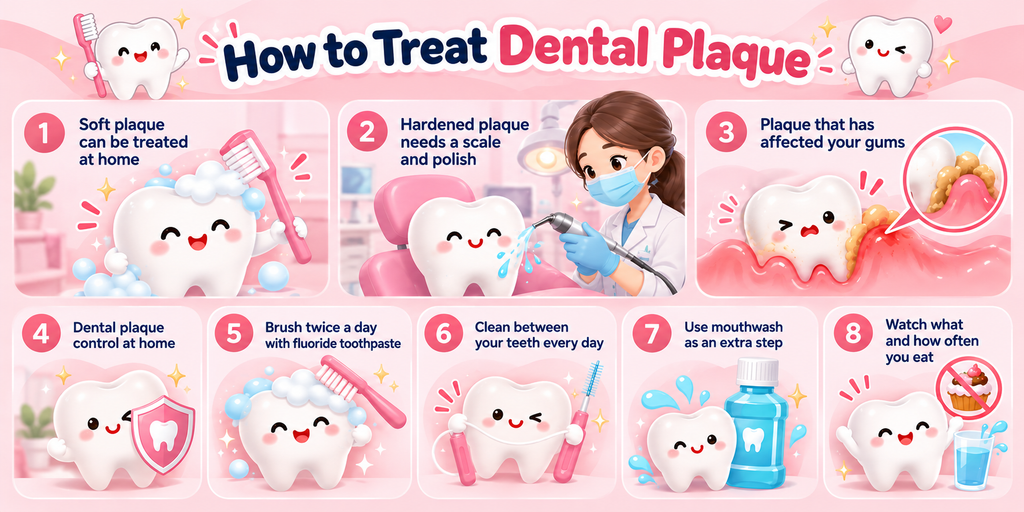
How to Treat Dental Plaque
The right treatment depends on whether your plaque is still soft, has hardened, or has started to affect your gums.
1. Soft plaque can be treated at home
If plaque is still soft, thorough daily cleaning is usually enough. Brush properly twice a day with fluoride toothpaste and clean between your teeth every day. Gums that bleed because of plaque often settle once you clean thoroughly and consistently. If the bleeding does not go away, see a dentist.
2. Hardened plaque needs a scale and polish
Once plaque has hardened, only a dentist can remove it. In professional dental plaque removal, the dentist uses a small vibrating tool with a cooling water spray to loosen and wash away plaque and tartar. Hand tools may be used for hard-to-reach spots. The teeth are then polished to remove stains and leave a smooth surface that is harder for new plaque to stick to. You can read more about scaling and polishing and what to expect.
3. Plaque that has already affected your gums
If tartar has built up below the gumline and your gums are already inflamed, you may need a deeper clean below the gums, with local anaesthetic for comfort. Your dentist may also recommend gum disease treatment and follow-up visits to keep your gums healthy.
Most people are advised to have a scale and polish about every six months. You may need to go more often if you smoke, have diabetes, stain easily or have had gum disease before.
4. Dental Plaque Control at Home
You cannot stop plaque from forming, but daily control keeps it thin enough that it does not harden or irritate your gums.
5. Brush twice a day with fluoride toothpaste
Good technique matters as much as how often you brush.
- Brush for about two minutes with a soft-bristled toothbrush
- Angle the bristles towards the gumline and use short, gentle strokes
- Cover every surface, including the backs of your teeth
6. Clean between your teeth every day
A periodontist at the National Dental Centre Singapore explains in this HealthXchange Q&A that brushing alone is not the most effective way to clean your teeth.
- Use floss for tight gaps
- Use small brushes made for gaps between teeth (interdental brushes) for wider spaces
- Be gentle, and curve the floss around each tooth rather than snapping it down
7. Use mouthwash as an extra step
Antiseptic mouthwash can reduce bacteria, but it cannot replace brushing and cleaning between your teeth.
8. Watch what and how often you eat
How often you eat sugary food matters as much as how much.
- Limit sugary snacks and sweet drinks between meals
- Rinse with water after meals when you cannot brush
Also Read: Pain After Tooth Extraction: What’s Normal and When to Check In
Give Your Teeth a Fresh Start at AllSmiles Dental Care
If your gums bleed when you brush, you can feel rough patches near the gumline, your bad breath will not go away, or it has been more than six months since your last clean, it is time to see a dentist. A check-up lets the dentist see how much plaque and tartar you have and tell you whether a regular scale and polish is enough or your gums need closer attention.
At AllSmiles Dental Care, our dentists provide check-ups, scaling and polishing and gum care across our clinics islandwide in Singapore. We accept CHAS, MediSave and CDC Vouchers where eligible, and walk-ins are welcome, though we encourage booking in advance. Visit our website to explore our dental services and book your appointment today.
Frequently Asked Questions
What does dental plaque look like?
Dental plaque is usually colourless or pale yellow, so it is hard to see until it thickens. You will often feel it first as a fuzzy film on your teeth. Yellow or brown rough patches near the gumline are more likely to be tartar.
How long does it take for dental plaque to turn into tartar?
Plaque can begin to harden within about 24 to 72 hours if it is not removed, and visible tartar usually takes longer to build up. Daily brushing and cleaning between your teeth interrupts this process.
Can I remove hardened dental plaque at home?
No. Once plaque has hardened into tartar, brushing and flossing cannot remove it. A dentist needs to scale it off with specialised instruments.
Does dental plaque cause bad breath?
Yes. Bacteria in plaque and tartar release smelly compounds, and persistent bad breath is a common sign of plaque buildup. If bad breath does not improve with better cleaning, see a dentist to check for gum disease or decay.
How often should I have my teeth scaled and polished?
A common guideline is every six months. Your dentist may suggest more frequent visits if you smoke, have diabetes, stain easily or have a history of gum disease.