
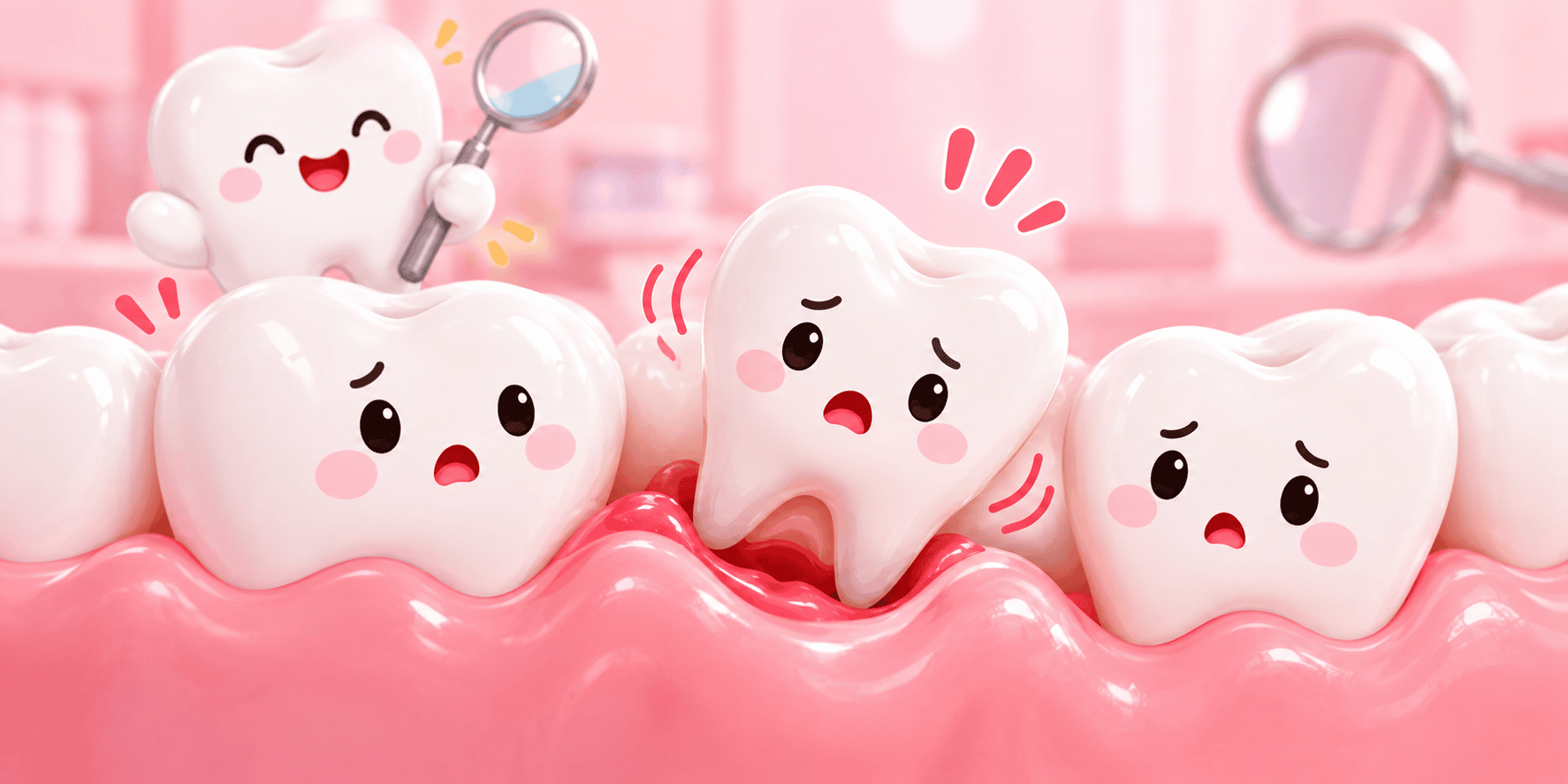
A tooth that wiggles when you press it with your tongue or bite into food is hard to ignore. In children, a loose tooth is a normal sign that a baby tooth is ready to fall out. In adults it is different, because permanent teeth are meant to stay firmly in place for life.
In Singapore, the most common reason behind a loose adult tooth is gum disease, which affects up to 90% of adults here according to National Dental Centre Singapore. This guide explains why teeth become loose, whether they can be saved and what dentists do to stabilise them.
What Is a Loose Tooth in Adults?
A loose tooth is a tooth that moves more than it should when you touch it or chew. Healthy teeth have a tiny amount of natural give that you cannot see or feel, so a tooth you can visibly wiggle has lost some of its support.
The loose tooth meaning is usually found beneath the surface. The problem is rarely the tooth itself, but the gum, ligament and bone that hold it in place. This is why a loose adult tooth should be treated as a warning sign and not left to settle.
Loose Tooth Causes
Several things can loosen an adult tooth, but gum disease is by far the most common in Singapore. Here is how each cause works.
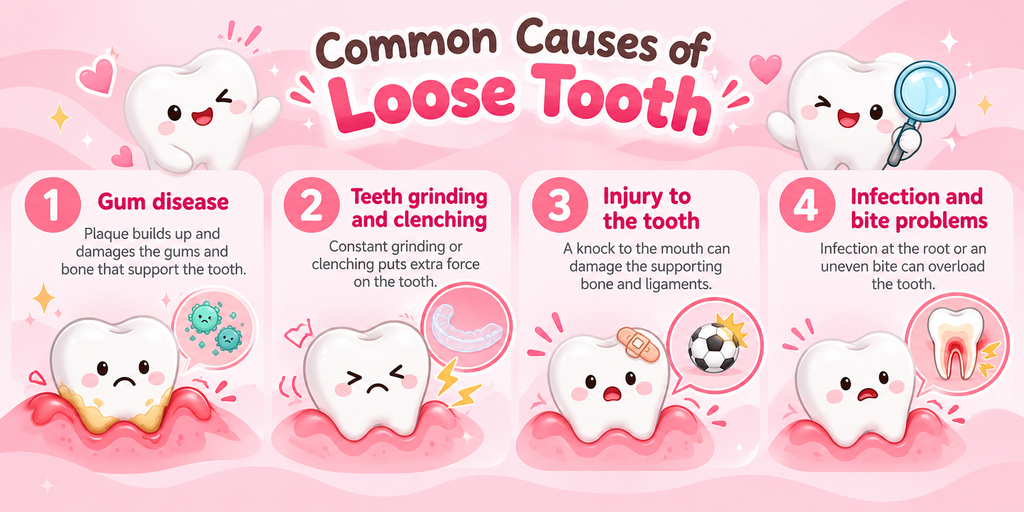
Gum disease
Gum disease starts when plaque, a sticky film of bacteria, builds up along the gumline and inflames the gums. This early stage is gingivitis. If plaque and tartar stay in place, the gums pull away from the teeth and form infected pockets. As the pockets deepen, the bone and ligaments anchoring the tooth are gradually destroyed, and periodontitis makes the tooth loose.
Early gum disease is often painless, so many people only notice a problem when a tooth starts to shift. Smoking, vaping and poorly controlled diabetes are linked with more severe gum disease and slower healing.
Teeth grinding and clenching
Constant grinding or clenching puts heavy force on the teeth and strains the ligaments around them. On healthy gums this may cause only mild movement. When gum disease has already weakened the support, the extra force can make a tooth loosen faster.
Injury to the tooth
A knock to the mouth from a fall, a sports collision or an accident can damage the ligament and bone around a tooth. A tooth that feels loose after an injury should be seen the same day, as early stabilisation gives the supporting tissues the best chance to heal.
Infection and bite problems
An infection at the root tip can destroy the bone around a tooth and make it mobile. A high filling, an ill-fitting crown or a misaligned bite can also overload one tooth. These causes are less common than gum disease and are only identified through an examination and X-ray.
Also Read: Swollen Gums: Causes, Signs and Treatment
Signs Your Loose Tooth May Be Caused by Gum Disease
Gum disease is often called a silent condition, but there are usually clues in the gums around the tooth. According to SingHealth, by the time symptoms appear the disease may already be advanced. Look out for these signs alongside a loose tooth:
- Gums that bleed when you brush or floss
- Red, swollen or tender gums
- Persistent bad breath or a bad taste in the mouth
- Gums that have pulled back, making teeth look longer
- Pus or a small boil on the gum
- Teeth that shift, develop new gaps or change how your bite feels
These signs do not replace an examination. A dentist measures the depth of your gum pockets and uses X-rays to see how much bone support is left.
Can a Loose Tooth Be Saved?
In many cases, yes, especially when the problem is caught early. It depends on how much bone and ligament still support the tooth and whether the cause can be brought under control. A tooth that is only slightly mobile has a better outlook than one that moves easily in several directions.
It helps to be realistic about what treatment can do. Gingivitis can be reversed, but periodontitis cannot be undone by brushing alone, and bone that has already been lost does not usually grow back with routine cleaning. What treatment can do is remove the infection, stop further damage and let the remaining support settle, so the tooth may feel firmer over time. In end-stage gum disease, teeth may become loose and need to be extracted, which is why early assessment matters.
How to Tighten a Loose Tooth
A loose tooth cannot be tightened at home. The way to tighten a loose tooth is to treat what is loosening it, and for gum disease that usually involves one or more of the steps below.
Gum assessment and X-rays
Your dentist checks how far the tooth moves, measures the gum pockets and takes X-rays to see the bone level. This shows whether the tooth can be saved and which treatment suits you.
Deep cleaning
For periodontitis, deep cleaning (scaling and root planing) removes plaque and tartar from below the gumline and smooths the root surfaces. Local anaesthesia is usually given, and treatment may be spread over more than one visit. Once the infection is controlled, the gums settle and the tooth may become more stable.
Splinting
Splinting bonds the loose tooth to stronger neighbouring teeth using a thin wire or resin, so biting forces are shared across several teeth. It supports the tooth while the gums heal, but it does not cure gum disease, so it is used together with gum treatment.
Night mouthguard or bite adjustment
If grinding or a high bite is adding to the problem, your dentist may recommend a custom night mouthguard or a small bite adjustment to reduce the force on the loose tooth.
Gum surgery or specialist care
When pockets stay deep after deep cleaning, gum surgery or referral to a periodontist may be considered to clean areas that instruments cannot reach and, in selected cases, to rebuild lost support.
Extraction and replacement
If too little bone support remains, removing the tooth may be the safest option. A dental implant or dentures can then restore chewing and your smile.
Tooth Glue for a Loose Tooth Is Not a Safe Fix
Searches for tooth glue and dental glue for a loose tooth are common, but household adhesives such as super glue are not made for use in the mouth. They can irritate the gums, trap plaque against the tooth and make it harder for the dentist to examine the area. Most importantly, glue does nothing about the infection and bone loss behind the looseness, so the real problem keeps progressing.
Dentists stabilise teeth with splints made from materials designed for the mouth, and only after the cause has been addressed.
Should You Pull Out a Loose Tooth?
Pulling out a loose adult tooth yourself is not advisable. Even if it moves freely, part of the root may still be held in the bone, and forcing it out can cause bleeding, infection and damage to the surrounding gum and bone. It also removes any chance of saving the tooth. If a tooth does need to come out, a dentist can remove it safely and plan how to replace it.
How to Keep a Loose Tooth in Place Until You See a Dentist
You cannot make a loose tooth firm again at home, but a few habits can protect it until your appointment.
Protect the tooth when eating
- Choose soft foods and chew on the opposite side
- Avoid hard, crunchy or sticky foods that put pressure on the tooth
Keep the area clean
- Brush gently with a soft toothbrush, including the gumline around the tooth
- Clean between the teeth carefully without tugging at the loose tooth
Ease discomfort safely
- Rinse with warm salt water to soothe the gums, knowing it will not treat the infection
- Avoid pressing or wiggling the tooth, and avoid smoking or vaping
Seek same-day dental care if the tooth loosened after an injury, or if you have significant pain, swelling, pus, fever or difficulty swallowing.
Also Read: Tooth Discoloration: Causes, Signs and Treatment
Get Your Loose Tooth Checked at AllSmiles Dental Care
Any loose adult tooth is worth a prompt dental check, even if it does not hurt. Gum disease is often painless in its early stages, and the sooner the cause is found, the more options there are to keep your natural tooth.
At AllSmiles Dental Care, your dentist will examine your gums, assess how stable the tooth is and recommend a suitable plan, from deep cleaning to further periodontal care. Learn more about our gum disease treatment in Singapore and book a consultation today. Walk-ins are welcome, though advance bookings are encouraged.
Frequently Asked Questions
Can a loose tooth tighten on its own?
In adults this is unlikely. A loose permanent tooth usually means the gum, ligament or bone around it has been weakened, and that does not repair itself without treatment. A tooth that feels slightly tender after a minor knock may settle, but it should still be checked by a dentist.
Is a loose tooth a dental emergency?
A loose tooth after an injury, or one that comes with swelling, pus, fever or significant pain, needs same-day dental care. A tooth that has loosened gradually should still be seen promptly, as delay can reduce the chances of saving it.
Does scaling make teeth loose?
No. Scaling removes plaque and tartar and does not loosen healthy teeth. Teeth already affected by gum disease may feel different once heavy tartar and swelling are removed, which is why your dentist checks how stable each tooth is before and after treatment.
Is it normal for an adult tooth to be slightly loose?
Healthy teeth have a tiny amount of natural movement that you cannot see or feel. If you can notice a tooth moving when you press it or chew, it is worth having it checked.
How much does loose tooth treatment cost in Singapore?
The cost depends on the cause, how many teeth are affected and the treatment needed, such as deep cleaning, splinting or gum surgery. A dentist needs to examine you before giving an accurate quotation. Contact AllSmiles Dental Care for the latest fee information, and ask whether MediSave can be used for your procedure.