
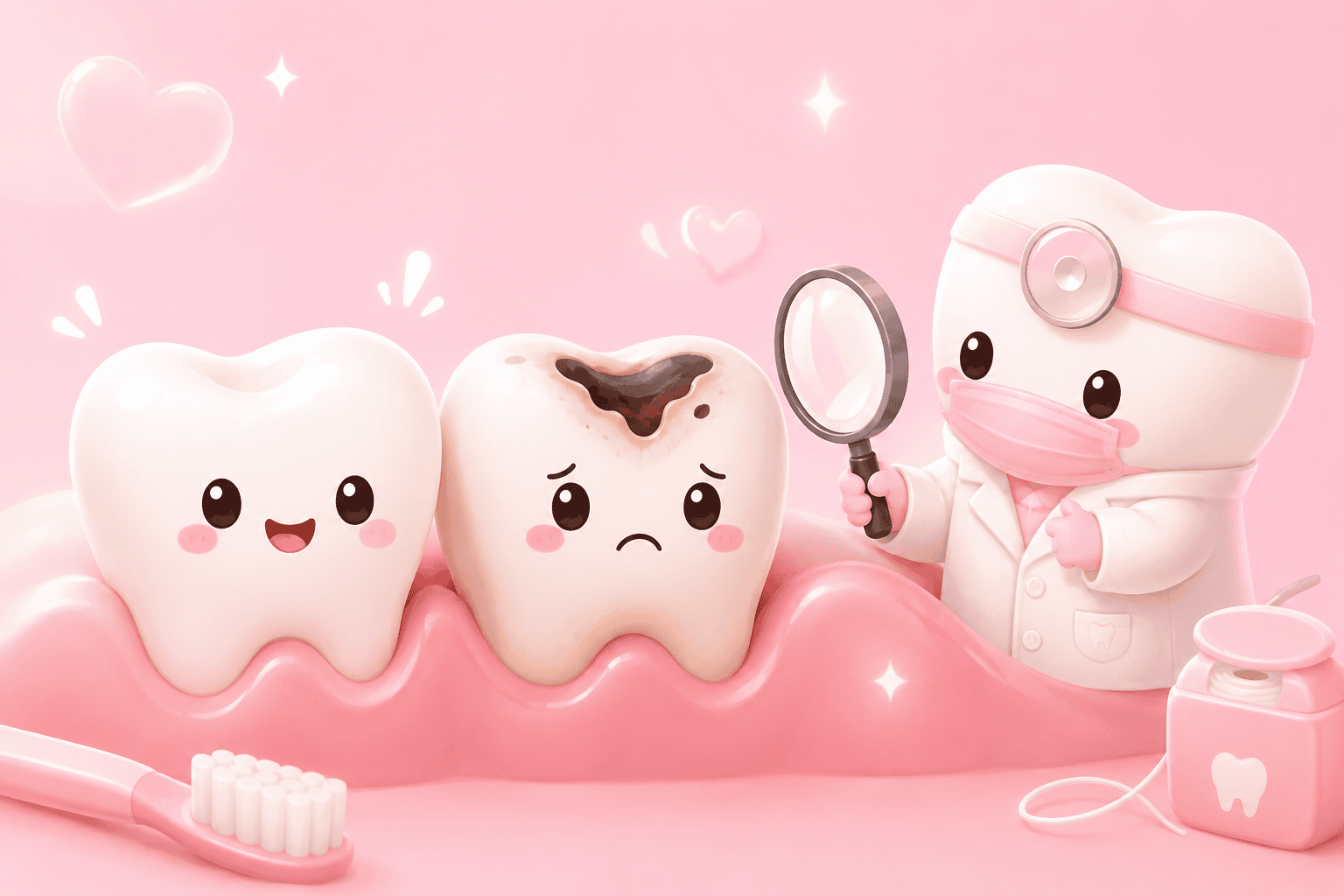
Tooth decay is one of the most common dental concerns affecting people of all ages, yet it often goes unnoticed until it has already progressed. Left unaddressed, it leads to cavities, holes that form in the tooth’s surface and require professional treatment to restore.
It starts quietly — a brief sensitivity when drinking something cold, or a faint spot on a back tooth — and can develop into a more significant issue if left unaddressed.
Understanding the signs, causes, and options available helps you take the right steps before decay advances. This article covers what tooth decay is, how it develops, and what you can do to protect your teeth over the long term.
What Is Tooth Decay?
Tooth decay is the gradual destruction of a tooth’s structure caused by acids produced by bacteria in dental plaque. These acids attack the enamel, which is the hard outer layer of the tooth. Over time, the damage can progress deeper into the tooth, resulting in cavities and more serious dental problems.
Tooth decay, also known as dental caries, can affect anyone. When decay progresses, it forms a cavity, a permanent hole in the tooth that cannot heal on its own. It often begins without noticeable symptoms, making routine dental examinations important for early detection.
A simple example of how decay can begin
Consider a typical day with frequent snacks. Plaque builds on the tooth surface after eating. Over time, this can lead to early changes in the enamel, especially if cleaning is not thorough. The process remains manageable when addressed through regular care.
Why back teeth and molars are common sites
Back teeth and molars have deeper grooves that trap food particles. These areas are harder to clean completely during daily brushing. As a result, tooth decay molar concerns and back teeth decay appear more often in routine dental checks.
5 Stages of Tooth Decay
Tooth decay does not happen overnight. It progresses through distinct stages, and the earlier it is identified, the simpler the management tends to be. Understanding these stages helps explain why regular dental visits matter even when no obvious pain is present.
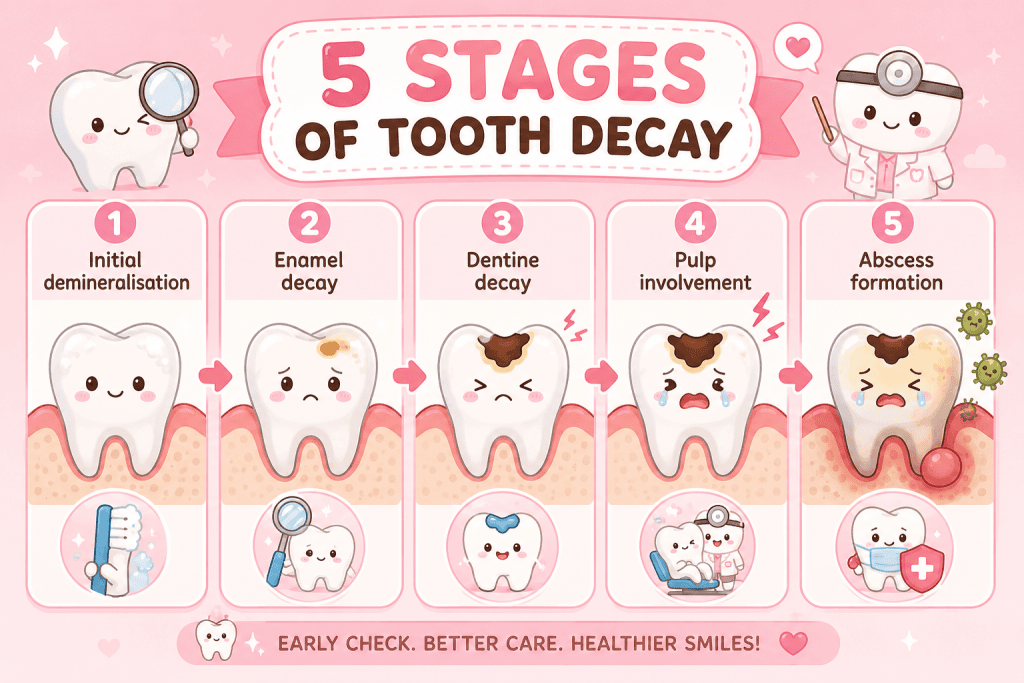
Stage 1: Initial demineralisation
The first sign of decay appears as white or chalky spots on the tooth surface. At this point, the enamel is losing minerals due to acid exposure from plaque bacteria. There is usually no pain, and the damage may still be reversible with improved cleaning and fluoride use.
Stage 2: Enamel decay
When demineralisation continues without intervention, the enamel begins to break down. The white spot may turn brown or yellow, and the surface can become rough. A small cavity may start to form. Professional assessment is needed at this stage, as the damage can no longer reverse on its own.
Stage 3: Dentine decay
Once decay reaches the dentine — the softer layer beneath the enamel — it progresses more quickly. Sensitivity to hot, cold, or sweet foods often becomes more noticeable at this stage. A dental filling is typically required to stop further damage.
Stage 4: Pulp involvement
If decay reaches the pulp, which contains the nerves and blood vessels of the tooth, more significant symptoms can develop. These may include persistent toothache, swelling, or pain that lingers after eating. Treatment at this stage often involves more extensive dental procedures.
Stage 5: Abscess formation
In advanced cases, bacteria can infect the tissue surrounding the tooth root, leading to a dental abscess. This may cause severe pain, swelling, and general discomfort. Prompt dental care is essential at this point to address the infection and prevent it from spreading.
Also Read: What Is Cracked Tooth? Causes, Symptoms & Treatment You Should Know
Common Symptoms of Tooth Decay
Symptoms vary from person to person. Some individuals detect changes early through routine habits, while others notice them later.
| Symptom | Common Pattern | Why It May Matter |
|---|---|---|
| Sensitivity to sweets or cold | Mild twinge during or after eating | May indicate surface changes in enamel |
| Visible dark spots | Small discolored areas on chewing surfaces | Can reflect early or progressing decay |
| Discomfort when chewing | Brief pain on molars or back teeth | Suggests possible deeper involvement |
| Persistent ache | Dull or sharp, may signal cavity pain, sensation lasting longer | Warrants prompt dental review |
Early signs people may notice
Early signs often include minor sensitivity or faint spots. These may appear during brushing or flossing. Not everyone experiences clear signals at this stage.
Signs that can affect chewing or sensitivity
Some people report increased sensitivity to temperature or pressure. Chewing discomfort in certain teeth can also emerge. These patterns vary and benefit from professional evaluation.
Tooth decay molar and back teeth decay signs
Molars and back teeth may show decay through food trapping or localized pain. Their position makes visual checks harder at home, which is why dental visits help identify hidden issues.
Causes and Risk Factors
Tooth decay develops from interactions between daily habits and oral bacteria. Several elements increase the likelihood, yet many are within personal control through consistent routines.
| Risk Factor | Example | Why It Matters |
|---|---|---|
| Frequent sugar exposure | Multiple sugary snacks or drinks daily | Feeds bacteria that produce acids |
| Poor plaque removal | Incomplete brushing or flossing | Allows acid buildup on surfaces |
| Dry mouth | Reduced saliva from certain conditions | Less natural protection for enamel |
| Hard-to-clean molars | Deep grooves in back teeth | Traps debris and limits cleaning access |
Sugar, frequent snacking, and plaque
Sugars provide fuel for plaque bacteria. Frequent snacking extends acid exposure time. This combination supports the conditions for tooth decay to begin.
Bacteria, acid, and enamel wear
Bacteria in plaque convert sugars into acids. These acids gradually wear enamel. Over repeated exposure, the surface weakens and decay advances.
Factors linked to higher risk
Additional elements such as certain medications or crowded teeth can raise risk. Each person’s situation differs, making individualized dental advice valuable.
How Tooth Decay Is Diagnosed
Diagnosis occurs through standard dental procedures. It helps determine the stage and guides next steps in a calm, measured way.
- Dental exam and symptom review
A dentist examines teeth visually and discusses any noticed changes. This review forms the foundation for understanding tooth decay presence.
- X-rays and checking hidden decay
X-rays reveal decay between teeth or beneath surfaces. They support detection of issues not visible during examination alone.
- Why diagnosis matters before decay spreads
Early identification allows simpler management options. It prevents unnecessary progression and supports better long-term outcomes.
Treating Cavities and Tooth Decay: Your Options
The right treatment for a cavity depends on how far the decay has progressed. Your dentist will assess the extent of damage before recommending the most appropriate course of action.
1. Monitoring very early changes
When decay is detected at its earliest stage — before a cavity has fully formed — a dentist may recommend a period of close monitoring combined with enhanced cleaning habits. Fluoride treatments may also be suggested to help strengthen the enamel and reduce the risk of cavity formation. No immediate drilling or filling is needed at this point, making early detection particularly worthwhile.
2. Dental filling for decay
Once a cavity has formed, a dental filling is the most common treatment. The decayed portion of the tooth is removed and the area is restored with a filling material chosen to match the tooth’s function and appearance. This is a routine procedure that effectively stops the cavity from progressing further.
3. Crowns and advanced restorations
When a cavity has caused more significant damage to the tooth structure, a dental crown may be needed. A crown covers the remaining tooth to restore its shape, strength, and function. Other restorations may also be considered depending on the extent of the damage and the specific tooth involved.
4. Root canal treatment
If decay has reached the pulp — the inner part of the tooth containing nerves and blood vessels — a root canal treatment may be required. This procedure removes the infected pulp, cleans the inner canals, and seals the tooth to prevent further infection. It allows the natural tooth to be preserved rather than extracted.
5. Tooth extraction
In cases where cavity damage is too advanced to be treated with other procedures, extraction may be the recommended option. Removing the affected tooth prevents infection from spreading and allows for restorative options such as implants or bridges to be discussed at a later stage.
Also Read: Pain After Tooth Extraction: What’s Normal and When to Check In
When to See a Doctor or Dentist
Professional evaluation provides clarity when changes appear. It supports peace of mind and appropriate next steps.
- Symptoms that should not be ignored
Persistent pain, swelling, or visible holes merit attention. These signs can indicate progression beyond early stages.
- Changes after pain, swelling, or sensitivity
New or worsening symptoms after initial sensitivity call for review. Timely checks help address concerns before they expand.
- Why timely evaluation is useful
Early professional input often leads to simpler care. It aligns with the goal of maintaining oral comfort through routine attention.
How to Prevent Tooth Decay
Daily practices form the basis for lowering tooth decay risk. Consistent habits support enamel health over time.
Daily habits that support prevention
Brushing twice daily with fluoride toothpaste and flossing once daily help remove plaque. These steps reduce acid exposure in common sites like molars.
Food and drink choices that may help lower risk
Limiting frequent sugary items and rinsing after meals can decrease acid attacks. Water intake supports saliva flow for natural cleaning.
Routine dental visits and cleanings
Regular checkups and professional cleanings detect early tooth decay. They provide guidance tailored to individual needs and reinforce prevention efforts.
Concerned About Tooth Decay? Visit AllSmiles Dental Care
If you have noticed any signs of tooth decay, seeking professional care early can make a meaningful difference in the outcome. At AllSmiles Dental Care, our experienced and friendly dentists are equipped to assess and manage tooth decay and cavities at every stage — from early enamel changes to more advanced cases requiring restoration.
Our dental services for tooth decay include routine dental checkups, professional scaling and polishing, fluoride treatments, dental fillings, crowns and bridges, and root canal treatment. Whether decay has just begun or has progressed further, our team will recommend the most appropriate care for your individual needs in a comfortable and welcoming environment.
Book your appointment today and take the first step towards healthier teeth.
FAQ about Tooth Decay & Cavities
Is tooth decay serious?
It can become more serious if it spreads deeper into the tooth. Early decay is often easier to manage than advanced decay, so it is worth getting checked if you notice changes.
Can tooth decay go away on its own?
Decay does not usually reverse once a cavity has formed. Very early changes may sometimes be monitored by a dentist, but deeper decay needs professional assessment.
Are children more likely to get tooth decay than adults?
Children are often more vulnerable to tooth decay because they may consume more sugary foods and beverages and may not always brush effectively. However, adults can also develop cavities, especially around existing dental work or exposed tooth roots.
What is the difference between tooth decay and a cavity?
Tooth decay refers to the overall process of damage caused by bacterial acids. A cavity is the result — a hole or opening in the tooth that forms when decay has progressed through the enamel. In everyday use, the two terms are often used interchangeably, but technically, a cavity is one of the outcomes of tooth decay.