Healthy gums are easy to overlook, because when they are in good shape you barely notice them. Most people only start to wonder when something changes, such as a little pink in the sink after brushing, gums that look redder than usual, or a spot that feels tender. At that point, it helps to know what is normal, what is not, and whether your gums need more than a little extra care.
Knowing what healthy gums look and feel like gives you a reliable baseline to check against. This guide covers the signs of healthy gums, how they differ from the early stage of gum disease, and the everyday habits and foods that help keep them in good condition.
What Healthy Gums Look Like
Healthy gums are generally coral or light pink, although the exact shade varies with your skin tone. Natural pigmentation can make gums look darker in some people. This is normal as long as the colour is even and the tissue looks and feels healthy. The surface often has a finely dotted texture, called stippling, that many people compare to orange peel.
Healthy gums also feel firm and sit snugly around each tooth with a thin, neat edge. They fill the spaces between your teeth and do not bleed during gentle brushing or flossing. Your teeth should feel stable, and your breath should not stay unpleasant after you brush.
Healthy Gums vs Unhealthy Gums
Unhealthy gums are gums that are inflamed or infected, most often because plaque has built up around the gumline. The differences are easy to spot once you know what to look for, and the table below gives you a quick way to compare your own gums against the healthy baseline.
| Feature | Healthy gums | Unhealthy gums |
|---|---|---|
| Colour | Coral or light pink, with natural variation | Red, dark red or purplish |
| Texture | Firm, often stippled | Puffy, shiny and smooth |
| Bleeding | None with gentle brushing or flossing | Bleeds easily when brushing or flossing |
| Shape and fit | Snug, thin edge that fills the gaps between teeth | Swollen, rounded edge that may feel tender, or pulls away from the teeth |
| Breath | Fresh after brushing | Persistent bad breath may appear |
Healthy Gums vs Gingivitis
Gingivitis is the earliest stage of gum disease, and it is reversible. SingHealth notes that the first symptom is usually bleeding on brushing, and that pain is often absent. This is why gum disease is sometimes called a silent condition.
Healthy Gums vs Periodontitis
If gingivitis is left alone, it can progress to periodontitis, where the bone supporting the teeth is affected. Signs at this stage include receding gums, gum boils, teeth that feel loose or shift position, and a persistent bad taste or breath. Unlike gingivitis, periodontitis cannot be reversed by brushing alone and needs dental treatment.
Also Read: How to Whiten Teeth Naturally & Safely in 7 Simple Ways
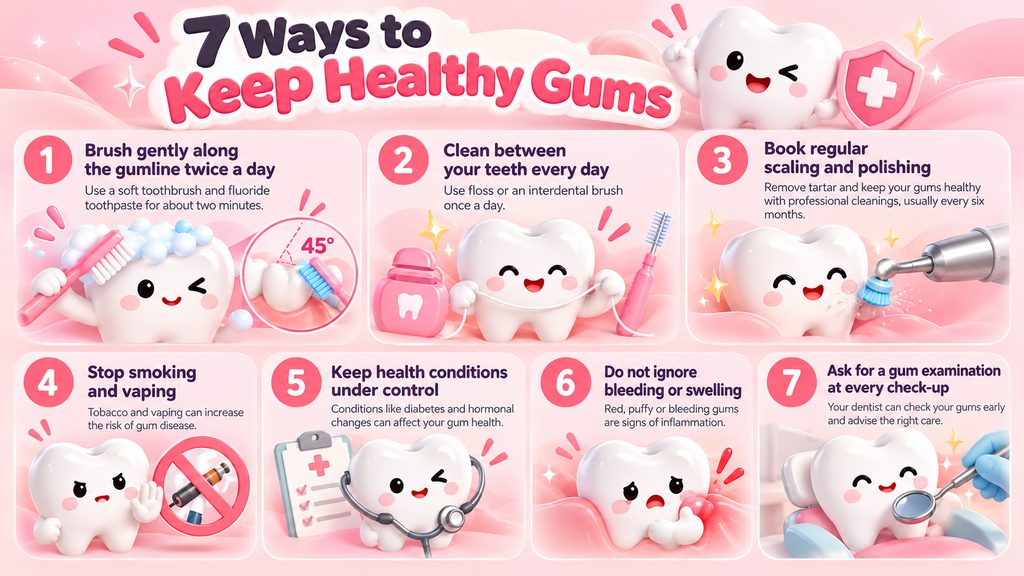
7 Ways to Keep Healthy Gums
Healthy gums rarely happen by accident, and these seven habits give you the best chance of keeping yours firm, pink and free from disease.
1. Brush Gently Along the Gumline Twice a Day
Use a soft toothbrush and fluoride toothpaste, and brush for about two minutes in the morning and at night. Angle the bristles towards the gumline at roughly 45 degrees and use small circular movements rather than hard scrubbing. Plaque builds up where the tooth meets the gum, and aggressive brushing can irritate the tissue. Replace your toothbrush every three to four months, or sooner if the bristles fray.
2. Clean Between Your Teeth Every Day
Brushing alone cannot reach the surfaces between your teeth, which is where gum disease often begins. Use floss or an interdental brush once a day. If you use floss, scoop it upwards against each tooth instead of sawing it back and forth, which can cut the gums. HealthXchange also recommends daily interdental cleaning as part of preventing gum disease.
3. Book Regular Scaling and Polishing
Even careful brushers build up tartar, and once plaque hardens into tartar, only a dental professional can remove it. Scaling and polishing every six months is the usual advice in Singapore, though your dentist may suggest a different schedule if you are prone to gum problems.
4. Stop Smoking and Vaping
Tobacco is one of the strongest lifestyle risk factors for gum disease. Smoking and vaping are both linked to more severe gum disease, and they can slow healing after treatment. Smoking can also mask the early signs, because it reduces the bleeding that would otherwise warn you.
5. Keep Health Conditions Under Control
Poorly controlled diabetes raises the risk of gum disease, and gum disease can in turn make blood sugar harder to manage. Hormonal changes, such as those during pregnancy, and some medicines can also make gums more sensitive. Tell your dentist about your medical history so your gum care can be planned around it.
6. Do Not Ignore Bleeding or Swelling
Occasional bleeding when you start flossing can settle within a few days as your gums adjust. Bleeding that keeps returning, or gums that stay red, puffy or tender, are signs of inflammation. They are not something to wait out. Avoid trying to self-diagnose, as only a dental examination can tell you whether you have gingivitis or something more advanced.
7. Ask for a Gum Examination at Every Check-Up
A quick clean is not the same as a gum assessment. Ask your dentist to check your gums, including measuring the depth of the pockets around each tooth. This is how early gum disease is picked up before symptoms appear, and it helps your dentist decide whether routine scaling or a deeper clean is more suitable.
Also Read: 8 Oral Hygiene Habits for Healthy Teeth and Gums
Foods for Healthy Gums
Food will not replace brushing or professional cleaning, but it can support the tissue around your teeth. Vitamin C helps your body make collagen, a protein that keeps gum tissue strong. Crunchy, fibrous produce encourages saliva flow and helps clear food particles. Frequent sugary snacks and drinks do the opposite by feeding plaque bacteria, so go easy on sweetened kopi and teh, bubble tea and soft drinks.
| Food | Key nutrient | How it helps your gums |
|---|---|---|
| Guava, papaya, oranges and kiwi | Vitamin C | Supports collagen production and gum tissue repair |
| Leafy greens such as kai lan and spinach | Vitamin C and folate | Supports healthy gum tissue |
| Apples, carrots, cucumber and celery | Fibre | Stimulates saliva and helps clear food debris |
| Plain yoghurt and milk | Calcium | Supports tooth minerals; choose unsweetened options |
Eating vitamin C-rich foods whole is better than drinking them as juice, which tends to be higher in sugar and acid. If you already have swollen or bleeding gums, a better diet alone will not fix them, as it cannot remove hardened tartar.
Keep Your Gums Healthy With AllSmiles Dental Care
See a dentist if your gums bleed repeatedly, stay swollen, start to recede, or if you notice persistent bad breath or loose teeth. Seek prompt advice if you have significant pain, pus, fever, facial swelling or difficulty swallowing.
At AllSmiles Dental Care, your dentist examines your gums, plaque levels and pocket depths, then explains whether routine scaling, deeper cleaning or ongoing maintenance suits your condition. Find out more about our gum disease treatment services, or book a consultation to find out where your gums stand today.
Frequently Asked Questions
Can I have healthy gums if they bleed occasionally?
Healthy gums should not bleed during gentle brushing or flossing. Bleeding is often an early sign of gingivitis. It can also happen when you start flossing for the first time or brush too hard. If bleeding continues for more than one to two weeks, arrange a dental examination.
What colour should healthy gums be?
Healthy gums are usually coral or light pink, but natural pigmentation can make them darker in some people. What matters is that the colour is even and the gums are firm, snug and free from swelling. Have your dentist look at any dark patch that is new, changing or on one side only.
How long does it take to get healthy gums back after gingivitis?
Many people notice improvement within two to four weeks of consistent brushing, daily interdental cleaning and a professional cleaning. Gums that have been inflamed for longer may take more time. Periodontitis cannot be reversed by home care alone and needs dental treatment.
Can diet alone fix unhealthy gums?
No. A balanced diet supports gum health, but it cannot remove plaque and hardened tartar from around the gumline. Professional cleaning and good daily oral hygiene are still needed.
How often should I see a dentist for my gums?
Most dentists in Singapore advise a check-up and scaling about every six months. If you have gum disease, you may be advised to come in more often.