
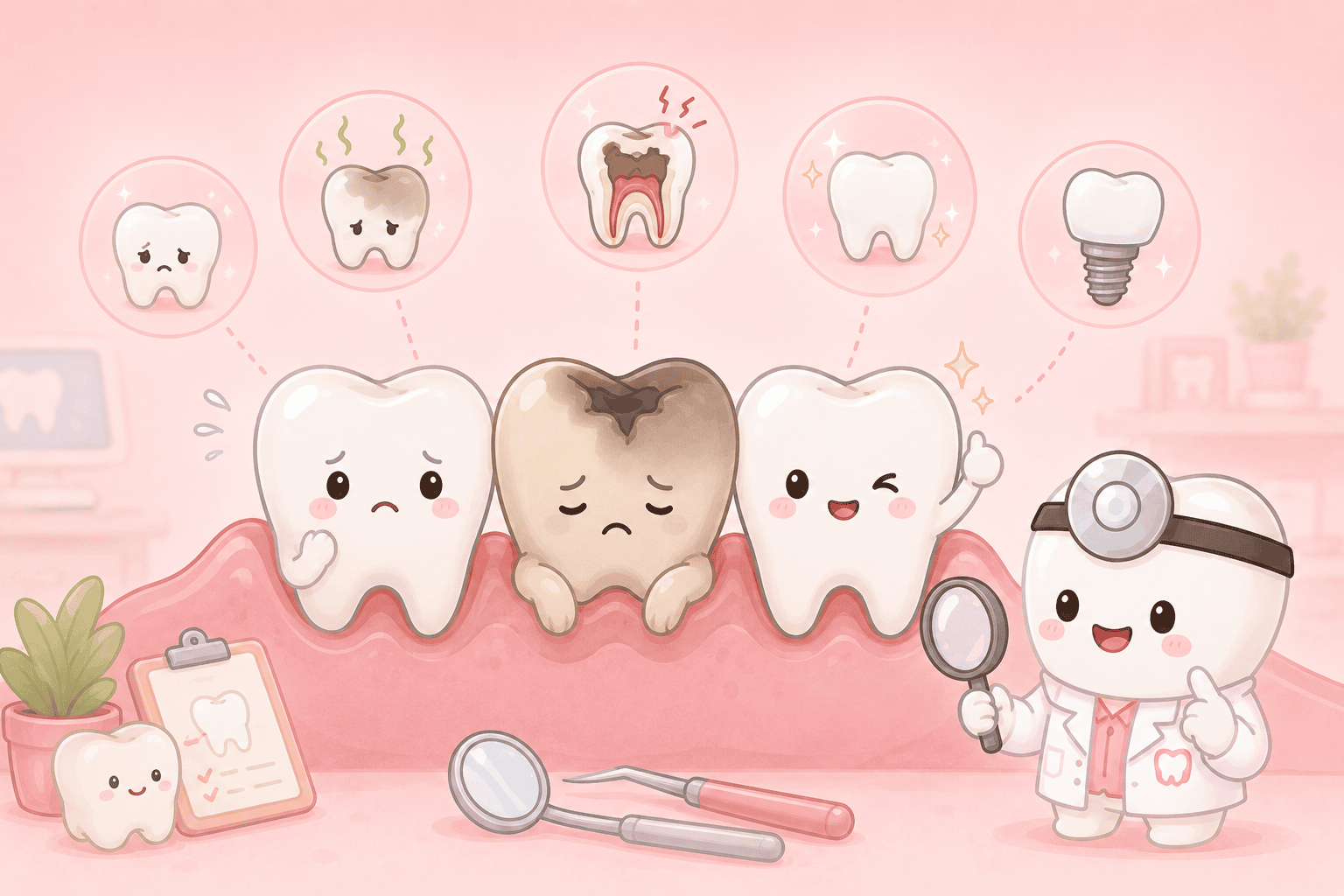
Noticing a tooth that’s turned a shade darker, or a toothache that suddenly went quiet instead of getting worse? Changes like these are what usually bring people to search for answers about a dead tooth. It can sound alarming, but understanding what’s actually happening inside the tooth makes it much easier to know what to do next.
A dental exam is really the only way to confirm what’s going on, since symptoms like these can point to a few different things. This guide walks through the common signs, what typically causes it, and the treatment options a dentist may discuss with you.
What Is a Dead Tooth?
A dead tooth, also called a non-vital tooth, is a tooth whose inner pulp has stopped receiving blood flow. The pulp holds the nerves, blood vessels, and connective tissue that keep a tooth alive, and once this supply is cut off, the tissue inside stops functioning even though the outer tooth structure often stays in place.
This usually happens after a hard knock to the mouth or when deep decay reaches the pulp chamber. The tooth can look unchanged at first, or it may darken, ache, or develop an odour as bacteria build up inside it. A dentist is the only one who can confirm whether a tooth has died and advise on the right next step.
Symptoms of a Dead Tooth
Dead tooth symptoms can appear gradually, and not every case looks the same. Some people notice a clear colour change first, while others only find out during a routine dental check-up.
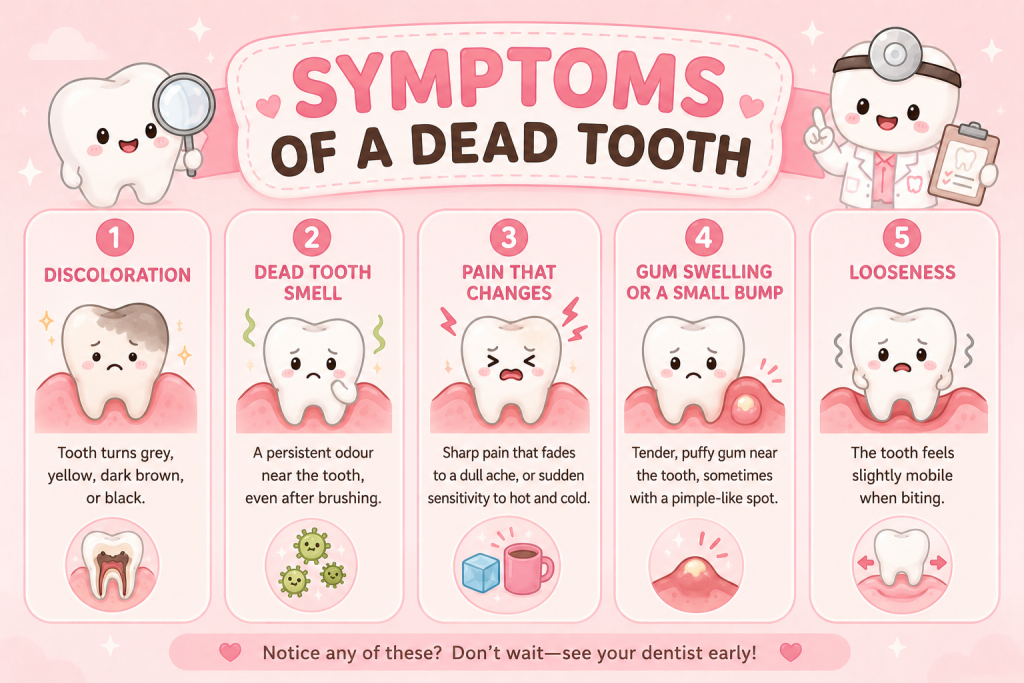
| Symptom | What It Looks Like | Why It Happens |
|---|---|---|
| Discoloration | Tooth turns grey, yellow, dark brown, or black | Without blood flow, breakdown products from the dying tissue build up inside the tooth |
| Dead tooth smell | A persistent odour near the tooth, even after brushing | Bacteria feed on the dead tissue inside the pulp chamber |
| Pain that changes | Sharp pain that fades to a dull ache, or sudden sensitivity to hot and cold | Nerve activity in the pulp drops as it dies, though surrounding tissue can still be sensitive |
| Gum swelling or a small bump | Tender, puffy gum near the tooth, sometimes with a pimple-like spot | Fluid or pus collects if the area becomes infected |
| Looseness | The tooth feels slightly mobile when biting | Supporting bone and ligament can weaken with prolonged infection |
Causes and Risk Factors of a Dead Tooth
A dead tooth is almost always the result of one of two things: an injury that cuts off blood supply, or decay that has been left untreated for too long. Knowing which teeth are most at risk can help with early prevention.
| Cause | How It Affects the Tooth |
|---|---|
| Trauma or injury | A fall, sports injury, or accident can sever blood flow to the pulp, even when the enamel looks undamaged from the outside |
| Deep decay or infection | Untreated cavities travel through the enamel and dentin until bacteria reach the pulp chamber |
| Repeated dental work or cracks | Multiple fillings, crowns, or hairline cracks on the same tooth place extra stress on the nerve over time |
Teeth with large existing fillings, previous trauma, or heavy chewing loads (such as molars) tend to be more vulnerable, since they’ve already absorbed more stress than the average tooth.
Also Read: Tooth Sensitivity: Causes, Symptoms and Relief
How Dentists Diagnose a Dead Tooth
A dead tooth can’t always be confirmed by appearance alone, so dentists usually combine a few checks to get a clear picture.
Visual Examination and Symptom Review
- Checks for colour changes compared to neighbouring teeth
- Reviews your pain history, including when it started and how it has changed
- Looks for gum swelling, tenderness, or signs of drainage
Dead Tooth X-Ray
- Reveals bone changes or dark areas around the root tip
- Shows internal decay that isn’t visible during a normal exam
- Helps confirm how far an infection may have spread
Nerve Response Testing
- A cold or heat test checks how the tooth reacts to temperature
- A gentle tapping (percussion) test checks for tenderness at the root
- Results help the dentist judge whether the pulp is still alive or has died
Dead Tooth Treatment Options
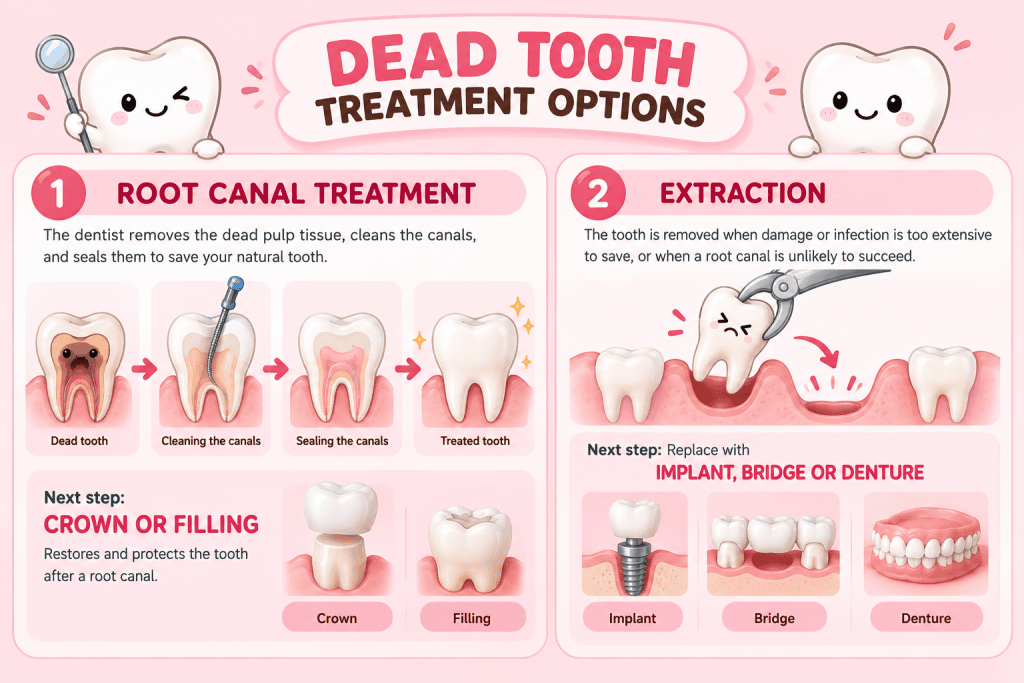
Once a dead tooth is confirmed, treatment generally follows one of two paths: root canal treatment to save the tooth, or extraction to remove it.
Root Canal Treatment
The dentist removes the dead pulp tissue, cleans the canals, and seals them. This is typically the option considered when enough healthy tooth structure remains to save the tooth. The procedure usually takes one to two visits, depending on how many canals the tooth has and whether infection has already set in. Most patients feel little to no pain during the treatment itself, since the area is numbed beforehand, and the goal is to keep the natural tooth in place rather than moving straight to extraction.
Next step: Crown or Filling: Once the root canal is done, the tooth still needs a crown or filling to restore its strength, since a treated tooth tends to become brittle and is more prone to cracking under normal biting pressure. A crown covers and protects the entire tooth and is almost always used for back teeth, while a smaller filling may be enough if the damage was limited to one area.
Extraction
The tooth is removed when damage or infection is too extensive to save safely, or when a root canal is unlikely to succeed. Extraction is generally seen as a last resort, but it can be the more practical option if the tooth has already lost significant structure or the bone support around the root has weakened.
Next step: Implant, Bridge, or Denture: Once the tooth is out, it’s usually replaced to restore chewing function and stop nearby teeth from shifting out of position:
- Denture: a removable option that can replace one or several missing teeth
- Implant: a titanium post placed in the jawbone that acts as an artificial root, topped with a crown
- Bridge: a false tooth anchored to the crowns of the teeth on either side of the gap
Dead Tooth Treatment Cost in Singapore
Dead tooth treatment cost in Singapore depends on the tooth’s location, how complex the case is, and whether a crown is needed afterwards. The ranges below are a general private-clinic guide, before GST.
| Treatment | Typical Private Cost (Before GST) |
|---|---|
| Consultation and X-ray | $50 – $150 |
| Root canal treatment | $300 – $1,500 per tooth |
| Crown after root canal | $750 – $2,000 |
| Simple extraction | $95 – $270 per tooth |
Eligible CHAS can offset part of the cost of root canal treatment and crowns through CHAS Dental Subsidies, and some cases may also qualify for MediSave. Subsidy amounts depend on your card tier, so it’s worth checking your eligibility on the CHAS website before your visit.
Dead Tooth Pain Relief
While a dead tooth still needs a proper diagnosis and treatment from a dentist, there are a few things that can help manage the discomfort while you’re waiting for your appointment. These aren’t a substitute for treatment, since the underlying cause won’t go away on its own, but they can make the wait more bearable.
- Rinse gently with warm salt water a few times a day to soothe irritation around the gum
- Apply a cold compress to the outside of the cheek to ease swelling and dull the ache
- Take an over-the-counter pain reliever such as paracetamol or ibuprofen, following the label instructions
- Avoid chewing on the affected side, and steer clear of very hot, cold, or hard foods that can trigger sharp pain
- Keep your head slightly elevated when lying down, since lying flat can increase blood flow to the area and make throbbing worse
- Book a dental appointment as soon as possible rather than relying on these steps for more than a day or two
When to See a Dentist
Some signs of a dead tooth are easy to dismiss, especially if the pain has faded rather than worsened. That fading is often a warning sign in itself, not a sign of healing.
- A tooth that darkens after a fall or impact
- Ongoing gum swelling or a small bump near the tooth
- A persistent bad taste or odour that doesn’t go away with brushing
- A tooth that feels loose or different when biting
- Pain that suddenly stops after a period of toothache
Also Read: Enamel Erosion: Symptoms, Causes, and When to Act
How to Prevent a Dead Tooth
Not every dead tooth can be prevented, but a few habits go a long way in lowering the risk.
- Wear a mouthguard during contact sports or activities with a fall risk
- Treat cavities as soon as they’re detected, rather than waiting for pain
- Get a cracked or chipped tooth checked promptly, even if it doesn’t hurt
- Keep up with routine check-ups and cleanings so changes are caught early
How Long Can a Dead Tooth Last
There’s no fixed timeline. Some dead teeth stay structurally stable for months with few symptoms, while others develop infection and complications much sooner. Oral hygiene, the tooth’s location, and how quickly it’s treated all play a role. What doesn’t change is the underlying cause, since a dead tooth doesn’t heal on its own. Leaving it unevaluated allows bacteria to keep affecting the surrounding gum and bone, which is why a dental visit matters even when there’s no pain.
Get Your Dead Tooth Checked at AllSmiles Dental Care
A tooth that has changed colour, stopped hurting, or developed an unusual smell is worth having looked at, even if it doesn’t seem urgent. Catching a dead tooth early usually means more options for saving it, and fewer complications down the road.
At AllSmiles Dental Care, our dentists can assess the tooth, confirm whether it’s non-vital, and walk you through the most suitable treatment, from root canal therapy to extraction and replacement if needed. Book a consultation with AllSmiles Dental Care to get a clear diagnosis and a treatment plan that fits your situation.
Frequently Asked Questions
What are the first signs of a dead tooth?
Discolouration is usually the most noticeable early sign, along with pain that either intensifies or unexpectedly fades. A bad taste or odour can also appear before other symptoms show up.
Can a dead tooth be saved?
Often, yes. If enough healthy structure remains, a root canal followed by a crown can preserve the tooth. Extraction is usually only considered when the damage is too extensive to restore.
Is a dead tooth dangerous if left untreated?
It can be. Bacteria trapped inside the tooth can spread to the surrounding gum and jawbone, leading to infection or abscess if it isn’t addressed.
Does a dead tooth always hurt?
Not always. Some people feel little to no pain, especially once the nerve inside has fully died, while others experience noticeable discomfort throughout.
Is root canal treatment for a dead tooth covered by CHAS or MediSave in Singapore?
Eligible CHAS, can receive subsidies toward root canal treatment and crowns at participating clinics, and some cases may also draw on MediSave. Coverage depends on your card tier and the clinic’s assessment, so it’s best to check your specific eligibility with your dentist.