
Many people notice their teeth aren’t quite as bright as they used to be, whether it’s a general yellowish tinge from years of coffee and tea, a brown line near the gums, or one tooth that looks darker than the rest. It’s a common enough concern that it’s worth understanding what’s actually going on before assuming the worst.
In most cases, a change in tooth colour is linked to everyday habits, diet or natural ageing rather than a serious problem. That said, certain patterns, like a sudden change or a single tooth turning grey, are worth having a dentist look at. This guide walks through what tooth discoloration actually is, why it happens, how it’s treated, and when it’s time to book a dental visit.
What is Tooth Discoloration?
Tooth discoloration refers to any change in the natural colour of the teeth, whether that shows up as an overall yellowing, a greyish tint, or darker patches on specific teeth. It can develop slowly over months or years, or appear more suddenly after an injury or dental procedure, and it may affect just one tooth or several at once. People often use the term “teeth staining” to describe the same thing, particularly when the change is limited to the surface.
Most cases are tied to ordinary factors like diet, age or oral hygiene rather than anything urgent. Still, knowing what type of discoloration you’re dealing with, and how deep it sits, makes a real difference to whether home care is enough or a professional treatment is needed.
Types of Tooth Discoloration
Dentists generally group tooth discoloration into a few categories, and knowing which one applies makes a real difference to how easily it can be lightened.
Extrinsic Staining
Extrinsic staining sits on the outer enamel layer and is usually caused by pigmented food, drinks, or tobacco building up on the tooth surface over time. Common culprits in Singapore include coffee, tea, dark sauces and curries, and red wine. Because this staining doesn’t penetrate the tooth, it responds well to professional cleaning and whitening.
Intrinsic Staining
Intrinsic staining forms within the dentin, the layer beneath the enamel, and is usually harder to shift with surface cleaning alone. It can result from trauma, certain medications taken during childhood, high fluoride exposure, or changes following dental treatments like root canals. This type typically needs a targeted whitening approach or a restorative option rather than simple polishing.
Age-Related Staining
As people get older, the enamel naturally thins and the dentin underneath, which is a darker yellow, becomes more visible through it. This kind of staining isn’t caused by poor hygiene and can’t really be prevented, though it can still be addressed with the same treatments used for intrinsic staining.
Also Read: Dead Tooth: Symptoms, Causes & Treatment Options
Common Signs of Tooth Discoloration
The way discoloration shows up can offer a useful clue about what’s causing it. Some patterns are purely cosmetic, while others are worth flagging to a dentist.
1. Yellow Teeth
An even, gradual yellowing across several teeth is the most common pattern, and it’s usually linked to surface staining from food and drink, or to the natural thinning of enamel with age.
2. Brown Spots or Lines
Brown patches or lines, especially near the gumline or on the chewing surfaces, often relate to tobacco use, tannin-rich drinks, or a buildup of plaque and tartar that hasn’t been removed during regular cleaning.
3. A Single Tooth Turning Grey or Dark
When just one tooth changes colour, particularly to a grey or darker shade, it can point to internal changes such as a past knock to the tooth or nerve damage. This pattern is different from general yellowing and usually needs a dental assessment rather than whitening alone.
4. White Flecks or Spots
White, chalky flecks that appear from childhood are often linked to higher fluoride exposure during the years teeth were forming, a condition known as fluorosis. It’s generally a cosmetic issue rather than a sign of current decay.
Causes of Tooth Discoloration
Understanding what’s driving the colour change helps guide which treatment, if any, actually makes sense.
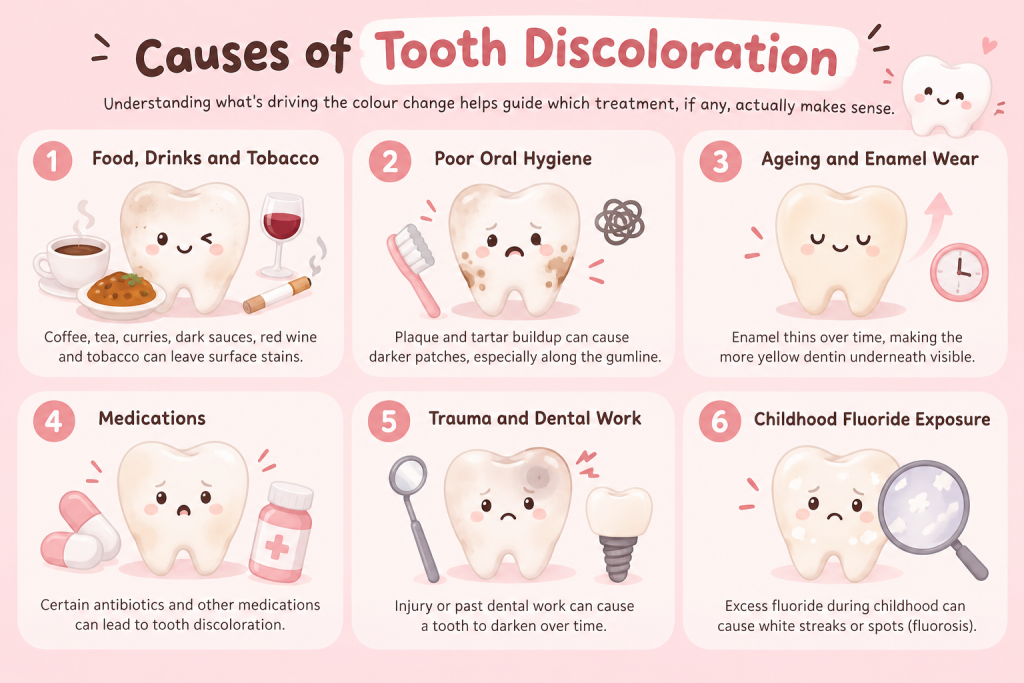
Food, Drinks and Tobacco
Coffee, tea, curries, dark sauces, and red wine all contain pigments that can gradually settle into the enamel, and tobacco use tends to leave brownish surface stains as well. This is the most common cause of extrinsic staining and is largely manageable with regular cleaning.
Poor Oral Hygiene
When plaque and tartar aren’t removed consistently through brushing, flossing and professional cleaning, they can build up and create darker patches, particularly along the gumline. This buildup also makes existing staining harder to remove on your own.
Ageing and Enamel Wear
Enamel naturally wears thinner over the years, letting the more yellow dentin underneath show through more clearly. This is a normal part of ageing and isn’t something brushing habits can fully prevent.
Medications
Certain antibiotics, such as tetracycline and doxycycline, can discolor teeth if taken during childhood while teeth are still developing. Some mouthwash ingredients, along with antihistamines, antipsychotics and certain blood pressure medications, have also been linked to staining in adults.
Trauma and Dental Work
An injury to a tooth can damage the nerve inside, sometimes causing the tooth to darken over time even without visible external damage. Past dental work, including fillings, bonding, or root canal treatment, can also cause the treated tooth to develop a different shade from the surrounding teeth.
Childhood Fluoride Exposure
Excessive fluoride intake while teeth are forming during childhood can lead to white flecks or streaks, known as fluorosis. This tends to be a cosmetic pattern rather than a sign of ongoing decay.
Treatment Options for Tooth Discoloration
The right treatment depends heavily on whether the discolouration is extrinsic, intrinsic, or age-related, and how deep it goes.
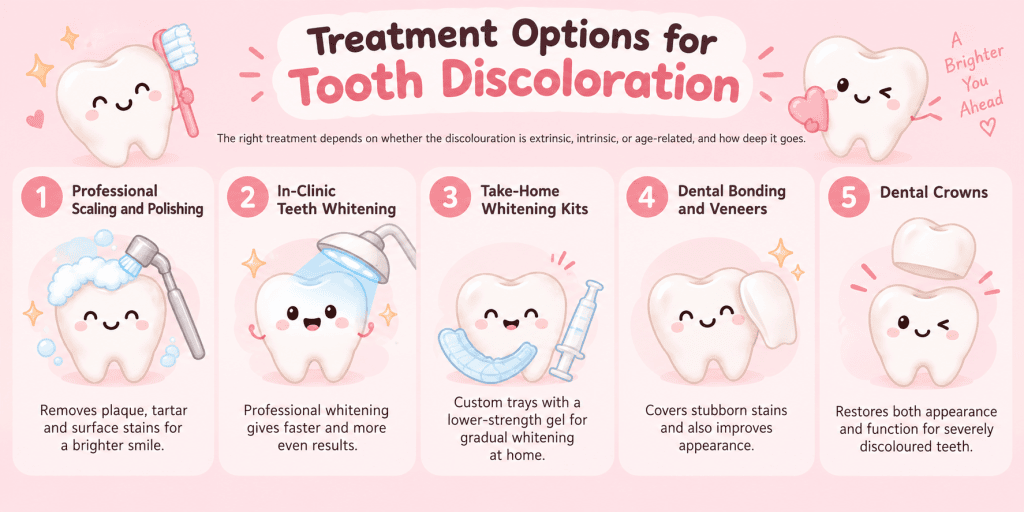
Professional Scaling and Polishing
A dental cleaning removes plaque, tartar and much of the surface staining that toothbrushing alone can’t reach, often making teeth look noticeably brighter without any bleaching involved. In Singapore, this typically costs in the range of $60 to $250 up and is often the first step before any whitening treatment.
In-Clinic Teeth Whitening
Professional in-clinic whitening uses a stronger bleaching gel activated under controlled conditions, giving faster and more even results than store-bought products. Pricing across Singapore clinics generally falls between $700 and $1,300, though it can range as low as $299 for basic packages or upwards of $1,500 at some premium providers, depending on the whitening system used and how many sessions are needed.
Take-Home Whitening Kits
Dentists can also prescribe custom trays with a lower-strength gel for gradual whitening at home over one to two weeks. This route is generally more affordable, typically around $400 to $700, and gives more control over the pace of the process, though results tend to build up more slowly than in-clinic treatment.
Dental Bonding and Veneers
For discoloration that whitening can’t fully address, such as deep intrinsic staining or damage affecting the tooth’s shape, a dentist may recommend bonding or a thin porcelain veneer to cover the front surface of the tooth. This is often considered when the discolored tooth also has other cosmetic concerns to address at the same time.
Dental Crowns
Where a tooth is both discoloured and structurally weakened, for example after significant decay or a root canal, a crown may be recommended instead. This restores both the appearance and the function of the tooth rather than addressing colour alone.
Also Read: TMJ Disorder: Signs, Causes & Treatment You Should Know
When to See a Dentist in Singapore
While most colour changes are harmless, a few patterns are worth having checked rather than waiting out.
| Sign | Possible Concern | Suggested Next Step |
|---|---|---|
| Sudden, unexplained colour change | Unclear cause, possibly internal | Schedule a dental review |
| Colour change with pain, sensitivity or swelling | Additional issue such as infection or decay | Seek dental care promptly |
| One tooth turning grey or dark | Possible nerve damage from past trauma | Get a professional assessment |
| Discolouration that doesn’t fade after cleaning | Deeper or different underlying cause | Discuss treatment options with a dentist |
Preventing Tooth Discolouration
While some causes, like ageing, can’t be avoided, a few habits can meaningfully slow down new staining.
Adjust Daily Habits
- Rinse your mouth with water after coffee, tea, curry-based meals or red wine
- Use a straw for dark, staining beverages where practical
- Cut back on tobacco use, which is a major contributor to brown surface stains
- Avoid brushing immediately after acidic food or drinks, as this can wear down softened enamel
Keep Up Oral Hygiene and Checkups
- Brush twice daily and floss to prevent plaque and tartar buildup
- Go for professional scaling and polishing at your regular dental checkups
- Flag any colour changes in older fillings or bonding to your dentist early, before they become more noticeable
Be Cautious With DIY Whitening Products
- Check the hydrogen peroxide concentration before buying any at-home whitening product
- Avoid whitening kits from unverified online sellers, since concentration and quality can’t be confirmed
- Have a dentist assess your teeth before starting any whitening product, especially if you have fillings, sensitive teeth or gum concerns
Getting a Professional Opinion at AllSmiles Dental Care
Since the right treatment depends so much on what’s actually causing the colour change, a proper assessment makes a real difference before spending money on whitening products that might not work for your specific case. AllSmiles Dental Care’s dentists can examine your teeth, review your history, and identify whether you’re dealing with surface staining, deeper discoloration, or something that needs a different approach altogether.
Book an appointment with AllSmiles Dental Care today to get a clear answer on what’s causing your tooth discolouration, and find out which treatment will actually work for your smile.
Frequently Asked Questions
What causes tooth discoloration?
Common causes include coffee, tea and other staining foods and drinks, tobacco use, poor oral hygiene, natural ageing, certain medications, and past dental trauma or treatments such as root canals or fillings.
Is tooth discoloration the same as teeth staining?
The two terms are largely used interchangeably. Teeth staining often refers more specifically to surface-level colour change, while tooth discoloration also covers deeper colour changes from within the tooth itself.
Can teeth whitening remove all types of discoloration?
Whitening works well on surface-level extrinsic staining and can improve many intrinsic and age-related cases too, but it isn’t effective for every case, particularly where a tooth is structurally damaged or the discoloration is due to a dead nerve, where bonding, a veneer or a crown may be more suitable.
Is it safe to use DIY teeth whitening kits in Singapore?
Only products with very low hydrogen peroxide concentrations can legally be sold for use without a dental professional, and unverified online kits have been linked to gum irritation and tooth sensitivity. It’s safest to have a dentist assess your teeth before starting any whitening product.
When should I see a dentist about discolored teeth?
It’s worth booking a visit if the colour change is sudden, affects only one tooth, comes with pain or swelling, or doesn’t improve after regular cleaning, since these patterns can point to an underlying issue rather than simple surface staining.