
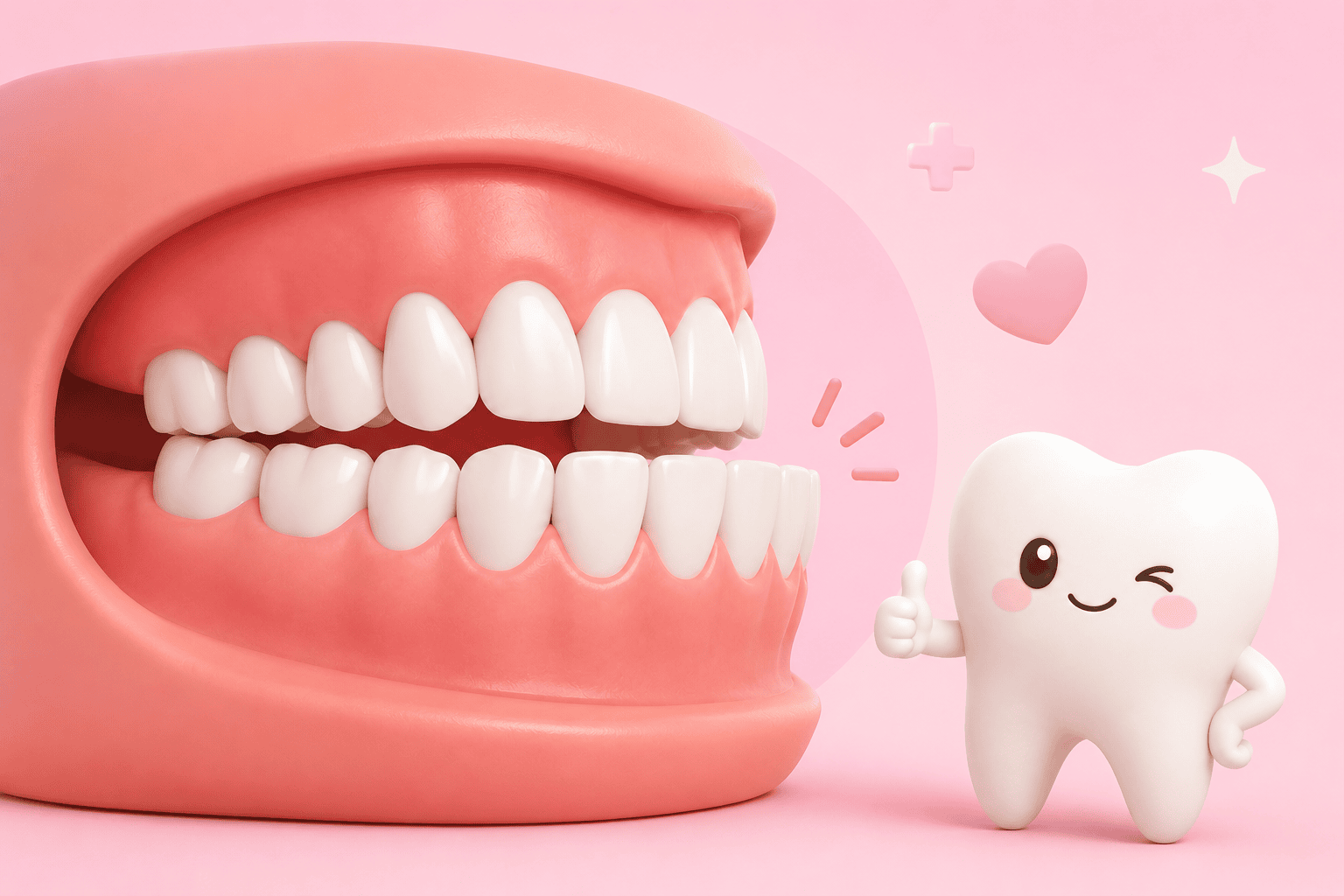
Have you ever noticed your lower teeth sitting in front of your upper teeth when you bite down? Or maybe your jaw feels slightly off when you talk or eat. For some, an underbite is visible in the mirror—but for others, it may go unnoticed until it starts to affect daily function.
Whether mild or more pronounced, an underbite can gradually lead to issues with chewing, speaking, and even jaw comfort. In this article, we’ll take a closer look at what an underbite is, what causes it, and how timely care can help realign both your bite and confidence.
What Is an Underbite?
An underbite occurs when the lower front teeth extend further forward than the upper front teeth. It’s a type of bite misalignment (or malocclusion) where the lower jaw juts out beyond the upper jaw.
Imagine trying to close a drawer that sticks out beyond the frame—it doesn’t quite sit right. That’s similar to how an underbite feels: the teeth don’t align naturally, which puts stress on the jaw and teeth. Left untreated, it can affect how you eat, speak, and even breathe over time.
Common Symptoms of an Underbite
Underbites can range in severity, and symptoms may build gradually—sometimes without causing pain in the beginning.
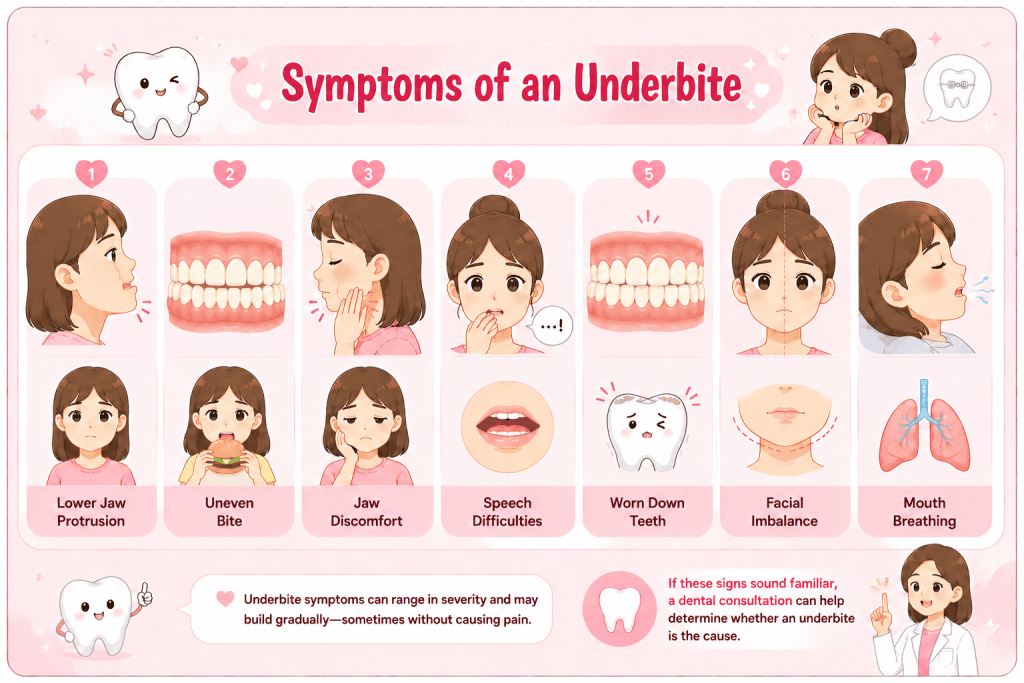
| Symptom | What It Feels Like |
| Lower Jaw Protrusion | Bottom teeth noticeably extend past the top teeth |
| Uneven Bite | Difficulty biting or chewing evenly |
| Jaw Discomfort | Tension, soreness, or fatigue in the jaw after eating or talking |
| Speech Difficulties | Slight lisp or trouble pronouncing certain words clearly |
| Worn Down Teeth | Uneven tooth wear due to misaligned chewing surfaces |
| Facial Imbalance | Chin may appear more prominent or face may look asymmetrical |
| Mouth Breathing | In some cases, underbites may affect airway space |
If these signs sound familiar, a dental consultation can help determine whether an underbite is the cause.
Also Read: Overbite: Symptoms, Causes & Treatment
Causes & Risk Factors of Underbite
Underbites can be caused by both genetics and external habits, especially during early jaw development.
Common Causes
- Genetics: Jaw structure and alignment are often inherited from parents.
- Early Childhood Habits: Prolonged thumb-sucking, pacifier use, or tongue thrusting can affect jaw growth.
- Injury or Trauma: Facial injuries that affect jaw alignment may result in underbite formation.
- Jaw Growth Imbalance: Faster development of the lower jaw compared to the upper can create underbite alignment.
- Missing Teeth or Dental Issues: Gaps or misaligned teeth can alter how the jaws sit together.
Who’s More at Risk?
- Children with Strong Habits: Especially those with tongue thrusting or pacifier use past toddler years.
- People with Family History: If parents or siblings have underbites, the risk increases.
- Those with Past Jaw Injuries: Fractures or trauma during growth can disrupt alignment.
- Patients with Untreated Orthodontic Issues: Over time, small issues can lead to larger bite discrepancies.
Underbite Treatment Options
The most appropriate treatment for an underbite depends on several factors, including the patient’s age, the severity of the bite discrepancy, and whether the issue involves the teeth, the jaws, or both. Early intervention often provides more treatment options, but adults can also achieve excellent results with modern orthodontic and surgical solutions.
1. Early Orthodontic Treatment for Children
Early orthodontic treatment can be highly effective for children whose jaws are still developing. By identifying an underbite during childhood, dentists and orthodontists can guide jaw growth and correct bite problems before they become more severe.
This approach may reduce the need for extensive treatment later in life and help improve facial development, chewing function, and overall dental alignment.
2. Braces for Underbite Correction
Traditional braces remain one of the most effective treatment options for correcting underbites. Braces gradually move teeth into their ideal positions using a system of brackets and wires, helping to improve both bite function and smile aesthetics.
Depending on the severity of the underbite, braces may be used alone or in combination with other orthodontic appliances. Treatment is suitable for both teenagers and adults and can address a wide range of alignment issues.
3. Invisalign Clear Aligners
For patients seeking a more discreet treatment option, Invisalign clear aligners may be suitable for mild to moderate underbites. These custom-made, removable aligners gradually shift teeth into proper alignment without the appearance of traditional braces.
Invisalign aligners can be removed for eating, drinking, brushing, and flossing, making them a popular choice among adults and older teenagers. However, not all underbite cases are suitable for clear aligner treatment, so a professional assessment is essential.
4. Functional Appliances for Growing Patients
Functional appliances are commonly used for children and adolescents whose jaws are still developing. These devices help guide jaw growth and encourage a more balanced relationship between the upper and lower jaws.
When used during key growth periods, functional appliances can improve jaw alignment and may reduce the severity of an underbite before permanent teeth and facial structures fully mature.
5. Tooth Extraction as Part of Orthodontic Treatment
In certain cases, tooth extraction may be recommended as part of a comprehensive orthodontic treatment plan. Removing specific teeth can create additional space within the dental arch, allowing crowded or misaligned teeth to move into better positions.
Tooth extraction is typically considered only when necessary and is carefully planned to support long-term bite correction and overall oral health.
6. Corrective Jaw Surgery for Severe Underbites
Severe underbites caused primarily by skeletal jaw discrepancies may require corrective jaw surgery, also known as orthognathic surgery. This treatment is usually recommended when orthodontic treatment alone cannot adequately correct the position of the jaws.
Jaw surgery involves repositioning the upper jaw, lower jaw, or both to create proper alignment and improve facial balance. It is often combined with braces before and after surgery to achieve the best possible outcome. Although this option is typically reserved for more complex cases, it can provide significant improvements in function, appearance, and quality of life.
Underbite Treatment Options at AllSmiles Dental
At AllSmiles Dental, underbite treatment begins with a thorough evaluation to assess jaw alignment, dental positioning, and overall bite function.
For younger patients, early orthodontic treatment (like braces or functional appliances) can gently guide the jaw into a more balanced position as they grow. For adults, options may include clear aligners, braces, or—in more severe cases—collaboration with specialists for jaw surgery.
Every case is different, and our team at AllSmiles Dental tailors the treatment plan to your needs, using advanced tools and a patient-first approach to ensure comfort and clarity throughout.
Aftercare & Prevention Tips of Underbite
Preventing underbite complications and maintaining results after treatment takes consistent care and follow-up.
Attend Regular Dental Check-Ups
Routine dental visits allow your dentist to monitor bite development, detect alignment changes early, and address potential issues before they become more serious. Regular check-ups are particularly important for growing children, as jaw development can significantly affect bite alignment.
Follow Your Orthodontic Treatment Plan
If you are undergoing orthodontic treatment, following your dentist’s instructions is crucial. Wear braces, aligners, elastics, or retainers exactly as prescribed to help ensure optimal results and prevent unwanted tooth movement.
Address Childhood Oral Habits Early
Prolonged thumb-sucking, pacifier use, and tongue thrusting can contribute to jaw misalignment and increase the risk of developing an underbite. Encouraging children to stop these habits at an appropriate age may help support healthier jaw and dental development.
Protect Your Teeth from Grinding
Teeth grinding (bruxism) can place excessive pressure on the teeth and jaw joints. If you grind your teeth at night, your dentist may recommend a custom nightguard to help protect your bite and reduce strain on the jaw.
Maintain Good Oral Health
Healthy teeth and gums provide a strong foundation for orthodontic treatment. Brushing twice daily, flossing regularly, and maintaining professional dental cleanings can help prevent cavities and gum disease that may interfere with treatment outcomes.
Monitor Jaw Discomfort and Bite Changes
If you notice jaw pain, difficulty chewing, clicking sounds in the jaw, or changes in your bite, seek professional advice promptly. Early intervention can help prevent minor issues from progressing into more complex orthodontic concerns.
Also Read: What Is Cracked Tooth? Causes, Symptoms & Treatment You Should Know
Why Choose AllSmiles Dental for Underbite Care?
We understand that bite issues like underbites can affect more than just your smile—they can impact how you speak, chew, and feel about yourself.
At AllSmiles Dental, we take a caring and comprehensive approach to each case. Whether it’s a child needing early orthodontic support or an adult exploring alignment correction, we’ll walk with you every step of the way.
With gentle care, clear communication, and a focus on long-term health, you’re in good hands with the team at AllSmiles Dental. Book appointment here!
FAQ about Underbite
How can I tell if I have an underbite?
If your lower front teeth sit in front of your upper ones when biting, or if your jaw looks more prominent than usual, you may have an underbite. A quick consultation at AllSmiles Dental can confirm it.
Can underbites be corrected without surgery?
Yes, especially if caught early. Orthodontic treatments like braces or clear aligners can often correct mild to moderate underbites without surgery.
Is it too late to fix an underbite as an adult?
Not at all! While treatment may take longer than in children, adults can still achieve great results with orthodontic options or surgical intervention if needed.
What problems can an untreated underbite cause?
Over time, an untreated underbite may cause uneven tooth wear, jaw pain, difficulty chewing, and speech issues. It can also affect appearance and confidence.
Where can I get underbite treatment in Singapore?
AllSmiles Dental provides personalised care for underbite issues, from early detection to advanced orthodontic or surgical referrals if needed. Book a visit to learn more.