
Puffy, tender or bright red gums are easy to shrug off until brushing starts to hurt. Most of the time the cause is plaque building up along the gum line, but swelling can also signal an infection that will not clear without dental care.
This guide explains what usually causes swollen gums, what you can safely do at home, which medicines help and when it is time to see a dentist in Singapore.
What is Swollen Gums?
Swollen gums are gum tissue that has become puffy, enlarged or tender because of inflammation. Healthy gums are typically pale pink, while swollen gums often look red and may bleed when you brush or floss.
Swelling is a symptom rather than a condition on its own, so finding the cause matters. It is also common locally: according to the National Dental Centre Singapore, periodontal disease affects the vast majority of adult Singaporeans, and early-stage gum disease is often painless, so warning signs are easy to overlook.
Swollen Gums Causes
The cause decides the treatment, so it helps to know the usual suspects.
Plaque and Gingivitis
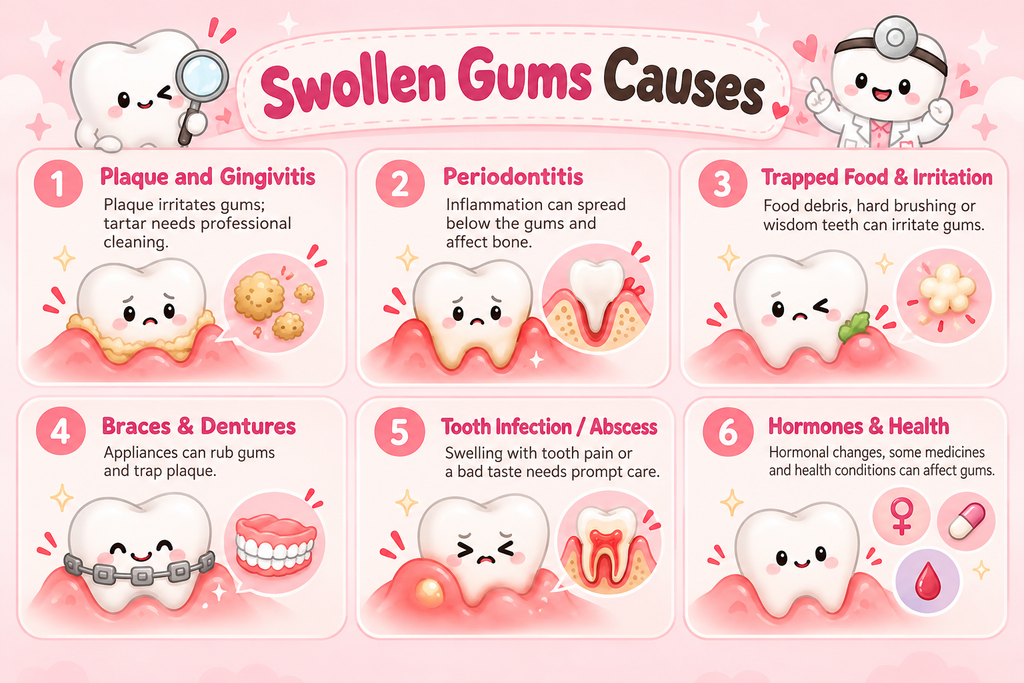
Gum disease is the most common cause of swollen gums. Plaque left along the gum line irritates the tissue, and once it hardens into tartar, brushing alone cannot remove it. Gingivitis is the earliest stage and is reversible, and bleeding on brushing is often the first sign.
Periodontitis
If gingivitis is left untreated, inflammation can spread below the gums and damage the bone that holds your teeth in place. Gums may swell and recede, and teeth can loosen. Established periodontal disease is usually managed rather than fully reversed, which is why early care matters. You can read more in our guide to periodontitis.
Trapped Food and Gum Irritation
Anything from a cavity to a piece of popcorn under the gum line can cause swelling. Brushing too hard can also inflame the tissue, and swelling near a wisdom tooth is a common trouble spot.
Braces, Dentures and Other Appliances
Ill-fitting dentures rub and press on the gums, and plaque builds up easily around braces. Both can leave the gums swollen and sore.
Tooth Infection or Abscess
A tooth abscess typically causes gum swelling and tenderness, tooth pain, bad breath and an unpleasant taste. Swelling limited to one tooth, especially with throbbing pain, deserves prompt attention.
Hormones, Medications and Medical Conditions
Pregnancy, puberty, menopause and monthly cycles can make gums more sensitive. Some medications, including certain blood pressure medicines, can also cause swollen gums. Poorly controlled diabetes increases susceptibility to gum disease and its severity, and vitamin B and C deficiencies are a less common contributor.
Swollen Gums Pain
Pain is usually not the first symptom of gingivitis, so a swollen gum that hurts often points to something more specific, such as an abscess, an injury or an irritating appliance. Sharp or throbbing pain, or pain at one tooth only, is a reason to book a dental visit sooner.
The other signs that appear alongside swollen gums can hint at the cause. The table below shows common patterns, although only a dentist can confirm what is behind yours.
| What you notice | What it may point to | What to do |
|---|---|---|
| Red, puffy gums that bleed when you brush or floss, with little or no pain | Gingivitis from plaque build-up | Clean carefully along the gum line and book a check-up for scaling and polishing |
| Swelling around one tooth with throbbing pain, a bad taste or a pimple-like bump | Tooth infection or abscess | See a dentist within a few days, or the same day if there is fever or facial swelling |
| Sore, swollen gums near braces or dentures | Plaque trapped around the appliance, or an ill-fitting fit | Clean around the appliance thoroughly and ask your dentist to check the fit |
| Swollen gums with receding gums, loose teeth or persistent bad breath | Periodontitis | Book a dental assessment soon, as this stage needs professional treatment |
| Swollen gums that started during pregnancy | Hormone-related gingivitis | Keep up gentle cleaning and mention it at a check-up |
Swollen Gums Home Remedy
Home care can bring relief while you wait for an appointment, but it cannot remove tartar or clear an infection. These measures can ease symptoms temporarily, but they should not be used to delay seeing a dentist.
Warm Salt Water Rinse
Add half a teaspoon of salt to a cup of warm water, swish gently for about 15 to 20 seconds and spit it out. It is soothing and low risk, but research on how well it works is limited, so treat it as comfort rather than treatment.
Gentle Brushing and Cleaning Between Teeth
Use a soft-bristled toothbrush and floss slowly rather than forcing the floss down. Do not skip the swollen area, because plaque is usually what keeps it inflamed. Brush twice daily with fluoride toothpaste.
Cold Compress
Holding a cold pack wrapped in a cloth against the outside of your cheek for short periods can ease soreness and puffiness.
What to Avoid
Alcohol-heavy mouthwashes can irritate the gums, and harsh or undiluted products applied directly to inflamed tissue can make things worse. Smoking and vaping are also linked to more severe gum disease and slower healing after treatment.
Also Read: Periodontitis: Stages, Symptoms, Diagnosis, and What It Means
Medicine for Swollen Gums
Medicines can manage symptoms, but none of them fixes the cause. Check with a pharmacist or your dentist first, especially if you are pregnant, have asthma, stomach or kidney problems, or take blood thinners.
Pain Relievers
For dental pain, ibuprofen is the usual first choice, with paracetamol as an alternative if you cannot take it. Follow the dose on the label.
Antiseptic Mouthwash
Chlorhexidine rinses are used to control plaque and gingivitis, but they are prescribed for temporary use because they can change taste, increase tartar and stain teeth. Serious allergic reactions are rare but possible, so read the HSA safety review and stop using it if you react.
Antibiotics
Antibiotics are only prescribed when a dentist or doctor finds a spreading infection. A dental abscess is treated by removing the source of infection and draining the pus, so tablets alone are not enough.
How to Treat Swollen Gums
Your dentist will check the gums with a periodontal probe to measure pockets and may take X-rays to assess the bone. Treatment then depends on what they find.
1. Scaling and Polishing
For gingivitis, scaling removes plaque and tartar along the gum line, and polishing smooths the teeth. Swelling from gingivitis may settle within days or weeks once effective treatment starts. Read more about scaling and polishing.
2. Deep Cleaning (Scaling and Root Planing)
For deeper infection, root planing cleans plaque, tartar and bacteria from beneath the gum line, usually under local anaesthetic. Dentists usually reassess the gums after at least eight weeks. See our gum disease treatment page for what to expect.
3. Treating the Source
If a tooth is the culprit, options can include a root canal, extraction or draining the abscess. If braces or dentures are rubbing, adjusting the fit removes the irritation.
4. Specialist and Medical Referral
Milder gum disease can be treated by a general dentist or oral health therapist, while severe forms are referred to a periodontist. If a medication or medical condition is involved, your dentist may refer you to a primary care provider.
Signs Swollen Gums Need Urgent Care
Some swelling should not wait for a routine appointment. See a dentist the same day if your swollen gums come with:
- Fever
- Swelling spreading to your face, jaw or neck
- Pus or a bad taste in your mouth
- Difficulty opening your mouth
Trouble breathing or swallowing is an emergency, so go to the nearest emergency department or call 995.
Also Read: Gum Abscess: Symptoms, Causes, Treatment, and When to Seek Dental Care
How to Prevent Swollen Gums
Because plaque is behind most swelling, prevention comes down to daily plaque control. Brush twice daily, especially before bed, with fluoride toothpaste, and spit out the toothpaste afterwards. Clean between your teeth once a day with floss or interdental brushes, and avoid smoking and vaping.
Regular check-ups catch problems early. People with good dental health are advised to see a dentist every six months to a year, while those with poorly controlled diabetes and poor dental health may need visits every two to four months. A routine check-up is also recommended during pregnancy.
Book a Gum Assessment at AllSmiles Dental Care
Visit your dentist if the swelling lasts more than a few days, keeps coming back, affects a single tooth or comes with pain, bleeding, bad breath or loose teeth. Even mild swelling should be checked if it lasts longer than two weeks or gets worse.
At AllSmiles Dental Care, our dentists can examine your gums, find out why they are swollen and explain your options, from scaling and polishing to deep cleaning, before the problem progresses.
Gingivitis is reversible, while gum disease that has reached the bone can only be managed, so the earlier swollen gums are assessed, the simpler treatment tends to be.
If your gums have been puffy, tender or bleeding, book a consultation with AllSmiles Dental Care. We will find the cause, treat it and show you how to keep your gums healthy.
Frequently Asked Questions
Can swollen gums go away on their own?
Sometimes. Swelling from a one-off piece of trapped debris may not need a dentist. If plaque or tartar is the cause, the swelling usually persists and needs professional cleaning. See a dentist if it lasts more than a few days, keeps returning or sits around one tooth.
How long do swollen gums take to heal?
Swelling from gingivitis may settle within days to weeks once effective treatment starts. Gum disease that has reached the bone takes longer, and healing depends on your oral hygiene, habits and the severity of the disease.
Why are my gums swollen around one tooth?
Swelling around a single tooth can come from poor oral hygiene, gum disease, injury, an abscess or a recent extraction. An abscess will not clear on its own, so book a visit within a few days, or sooner if there is throbbing pain, pus, fever or facial swelling.
Are swollen gums normal during pregnancy?
Hormonal changes make gums more sensitive, which makes gingivitis easier to develop. It is common, but still worth checking, and your dentist can advise on safe care.