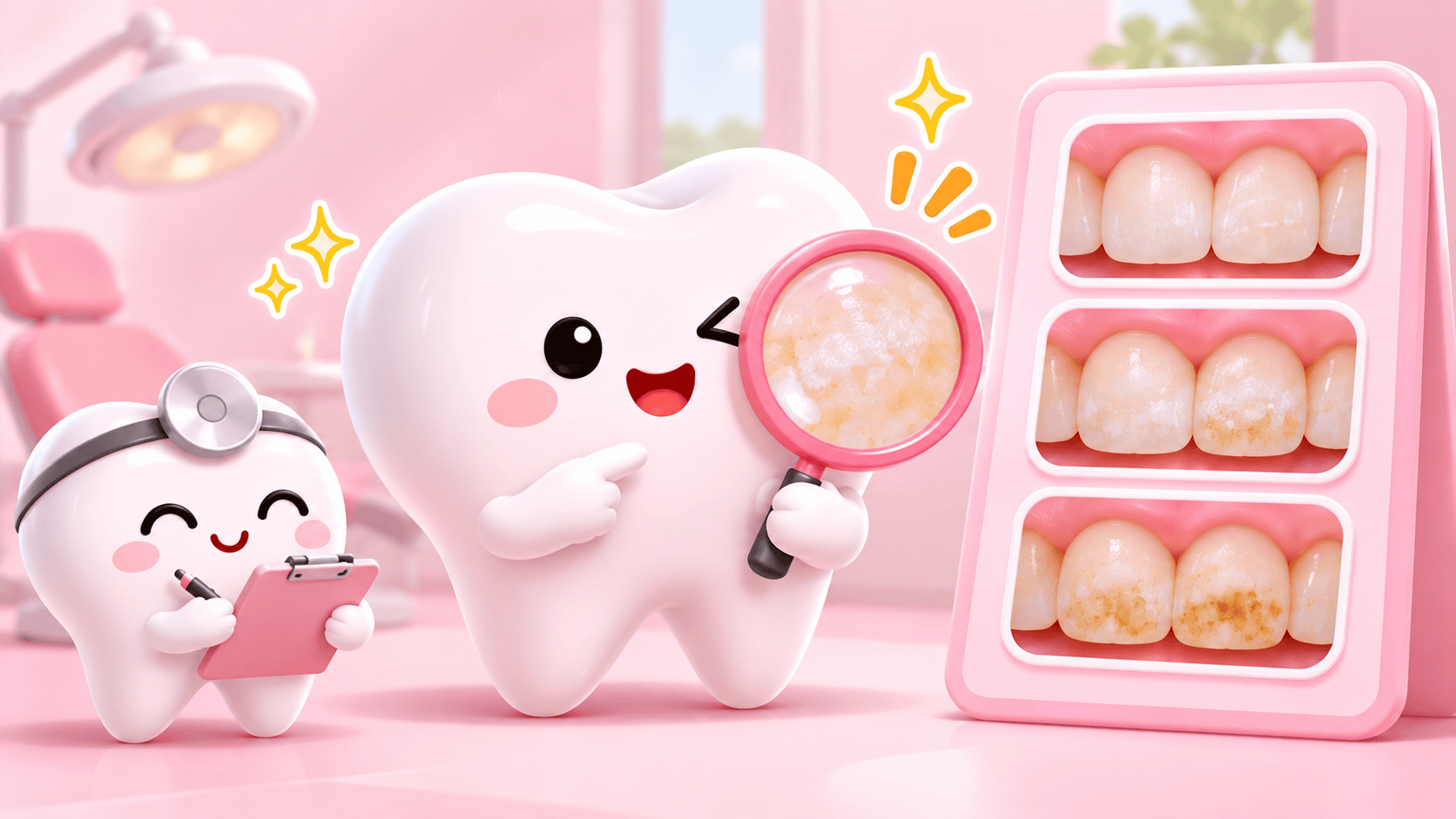
Spotting faint white lines, chalky patches or brown marks on your own or your child’s teeth can be unsettling, especially when brushing does not make them fade. In many cases, these marks are dental fluorosis, a change in the look of tooth enamel that begins while the teeth are still forming under the gums.
The reassuring part is that dental fluorosis is usually mild and cosmetic. This guide explains what it looks like, what causes it, how a dentist tells it apart from other enamel problems, and which treatments can improve the appearance of affected teeth.
What Is Dental Fluorosis
Dental fluorosis is a change in the appearance of tooth enamel caused by taking in too much fluoride while the teeth are still developing. The extra fluoride slightly alters how the enamel matures, leaving it more porous in places, which shows up as white or brownish marks once the teeth come through.
It only develops in childhood. Enamel on permanent teeth is fully formed by about age 8, so older children, teens and adults cannot develop new dental fluorosis. In most cases it is painless and does not affect how the tooth works.
Dental Fluorosis Symptoms and What It Looks Like
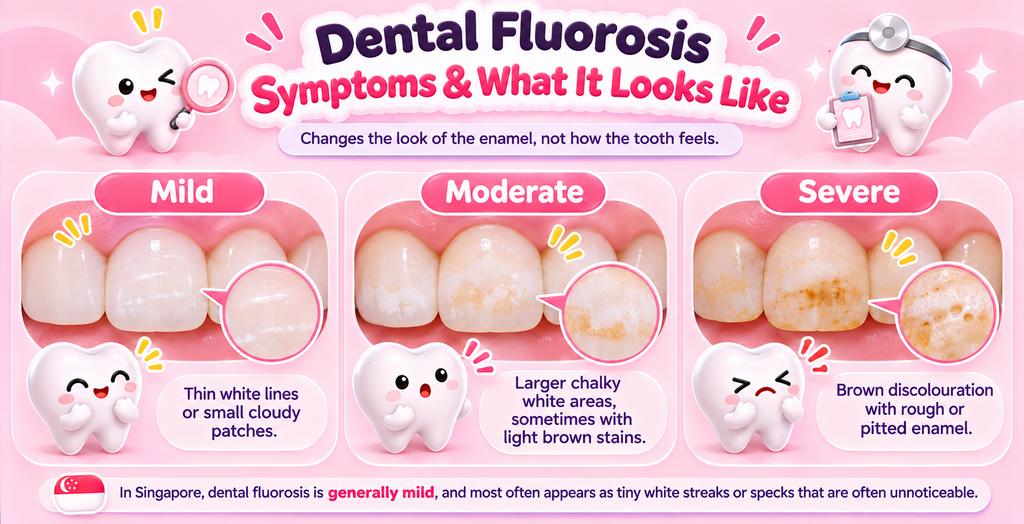
Dental fluorosis changes how the enamel looks, not how the tooth feels. The marks usually appear on several teeth at once, often in a matching pattern on both sides of the mouth, because those teeth formed at the same time. Mild cases can be so faint that only a dentist notices them under good lighting.
| Severity | What you may notice | Effect on the tooth |
|---|---|---|
| Mild | Thin white lines, flecks or small cloudy patches | Cosmetic only |
| Moderate | Larger chalky white areas, sometimes light brown staining | Mostly cosmetic, but the surface may pick up stains more easily |
| Severe | Brown discolouration with rough or pitted enamel | Enamel can be weaker and harder to keep clean |
Moderate and severe forms are uncommon. In Singapore, dental fluorosis is generally mild, and the most common form appears as tiny white streaks or specks that are often unnoticeable.
Dental Fluorosis Causes and Risk Factors
Fluoride protects teeth from decay, so the issue is not fluoride itself. Dental fluorosis happens when a young child takes in more than the recommended amount, repeatedly, during the years the enamel is forming.
Too Much Fluoride While Teeth Are Forming
The timing matters as much as the amount. The first three years of life are the critical period for the front permanent teeth, which is why fluorosis on these teeth is the most noticeable. How obvious the marks become depends on how much fluoride was taken in, how often, and for how long.
Swallowing Fluoride Toothpaste
Young children often swallow toothpaste instead of spitting it out. Using more than the recommended amount, or letting a toddler brush alone, can add up over months and years. Fluoride mouth rinses or supplements given without dental advice can add to the total.
Fluoride in Drinking Water
Singapore’s tap water has been fluoridated since 1957 to prevent cavities. According to PUB, fluoride levels are kept below the 0.7 mg/L maximum set in national regulations and well within the World Health Organization’s 1.5 mg/L guideline. Moderate or more noticeable fluorosis is more often linked to drinking water with naturally high fluoride levels, which can matter for adults who grew up overseas.
Dental Fluorosis in Adults
Adults cannot develop new dental fluorosis, but many carry it from childhood. The marks do not spread, and using fluoride toothpaste today will not make them worse. If white or brown marks appear for the first time in adulthood, the cause is usually something else, such as early decay, enamel wear, stains from food and drinks, or certain medicines. A dentist can tell these apart, and the same cosmetic treatments used for children and teens can be considered for adults.
How Dental Fluorosis Is Diagnosed
A dentist can usually diagnose dental fluorosis during a routine check-up, with no special tests needed.
Reviewing Your History
- When the marks were first noticed
- Toothpaste habits and fluoride products used in early childhood
- Where the person grew up and what water they drank
- Childhood illnesses or medicines that can also affect enamel
Examining the Teeth
- The teeth are dried and checked under good light
- The dentist looks for a matching pattern across several teeth
- The enamel surface is checked for roughness or pitting
Ruling Out Similar Conditions
- Early decay, which tends to appear as chalky spots near the gum line or around braces
- Molar incisor hypomineralisation, which causes well-defined patches mostly on molars and front teeth
- Enamel hypoplasia, where the enamel is thin or missing, with pits or grooves
Dental Fluorosis Treatment
Treatment for dental fluorosis is cosmetic and optional. Many mild cases need nothing beyond regular check-ups, while others can be improved with a range of options. Dentists generally start with the most conservative approach, and not every clinic offers every technique, so the right choice depends on severity, age and what bothers you most.
Monitoring With Regular Check-Ups
For very mild marks, a dentist may simply keep an eye on the teeth and reassure you that no treatment is needed.
Teeth Whitening
Whitening can lighten the surrounding enamel so that white patches blend in better, which works best on mild cases. Over-the-counter products in Singapore are limited to 0.1% hydrogen peroxide, and HSA states that stronger products should only be used by or supplied through registered dentists. Professional teeth whitening begins with an examination to make sure it suits the pattern of marks.
Enamel Microabrasion
This technique removes a very thin surface layer of enamel with a mild abrasive. It tends to suit mild surface stains and is often combined with whitening for a better result.
Resin Infiltration
A tooth-coloured resin is used to fill the porous enamel and mask white patches with minimal enamel removal. Studies suggest it works well for mild to moderate fluorosis.
Dental Bonding
Tooth-coloured composite resin is applied over the affected areas, then shaped and polished to match the natural tooth.
Dental Veneers
For moderate to severe cases, or stains that do not respond to other treatments, dental veneers can cover the front of the tooth with a thin porcelain or composite shell. Veneers require some enamel to be removed, so they are usually considered for adults, and crowns may be discussed for severely affected teeth.
In children and teens, dentists tend to favour conservative options first and leave more permanent restorations until the teeth and jaws have matured.
Also Read: Enamel Erosion: Symptoms, Causes, and When to Act
Dental Fluorosis Treatment Cost in Singapore
The cost of treating dental fluorosis varies widely because the options range from simple monitoring to full veneers. A dentist can only give an accurate estimate after examining your teeth. The main factors that affect the cost are:
- How many teeth are affected and how noticeable the marks are
- The type of treatment chosen, or a combination of treatments
- The number of visits needed and any follow-up care
For the latest pricing, you can contact AllSmiles Dental Care and the team will advise based on your consultation.
Preventing Dental Fluorosis in Children
Fluoride remains important for protecting children’s teeth, because tooth decay is still common among young children in Singapore. The goal is to use it correctly, not to avoid it.
Use the Right Amount of Toothpaste
- For children under 3, the Health Promotion Board advises a smear of 1,000 ppm fluoride toothpaste, about the size of a grain of rice, under adult supervision
- A dentist can assess your child’s decay risk and advise whether toothpaste is needed before age 3
- From age 3, a pea-sized amount is recommended, as outlined on HealthHub
Supervise Every Brushing
- Brush your child’s teeth for them, or watch closely while they brush
- Teach them to spit out toothpaste instead of swallowing it
- Keep toothpaste out of reach between brushing sessions
Use Other Fluoride Products Only on Dental Advice
- Fluoride rinses and supplements should only be given when a dentist recommends them
- An early visit helps your dentist decide what your child needs, and children’s dentistry check-ups are a good place to start
When to See a Dentist About White or Brown Marks on Teeth
Book a dental visit if the marks bother you, if they seem to be changing, if they look brown or feel rough, or if you are not sure what is causing them. This is especially important when marks appear for the first time in adulthood, because they are unlikely to be dental fluorosis. A dental check-up lets a dentist confirm the cause and rule out early decay.
For children, early visits help the dentist check the teeth and advise on the right toothpaste amount for their age. The dentists at AllSmiles Dental Care can examine your child’s teeth and explain what they see in a calm, clear way.
Book a Visit With AllSmiles Dental Care for a Clearer, More Confident Smile
Whether you are worried about marks on your child’s teeth or want to improve the look of your own smile, a proper assessment is the best first step. AllSmiles Dental Care offers a full range of dental services, from check-ups and children’s dentistry to teeth whitening and veneers, across clinics in Singapore.
Visit AllSmiles Dental Care to explore our dental services and book an appointment at a clinic near you.
Frequently Asked Questions
What does dental fluorosis look like?
Dental fluorosis usually appears as thin white lines, flecks or chalky patches on several teeth at once. In more noticeable cases, the teeth can have brown staining or a rough, pitted surface.
Is dental fluorosis harmful?
Mild dental fluorosis is a cosmetic concern and does not cause pain or affect how the tooth works. Severe cases can leave rough enamel that stains more easily and is harder to clean, so a dental review is worthwhile.
Can dental fluorosis go away on its own?
The enamel change is permanent and will not disappear by itself. It does not get worse from fluoride use once the teeth have formed, but treatments such as whitening, resin infiltration or veneers can make the marks far less noticeable.
Does fluoride toothpaste cause dental fluorosis?
Not when it is used in the recommended amount. The risk comes from young children swallowing more toothpaste than they should, which is why supervision and the right amount matter.