
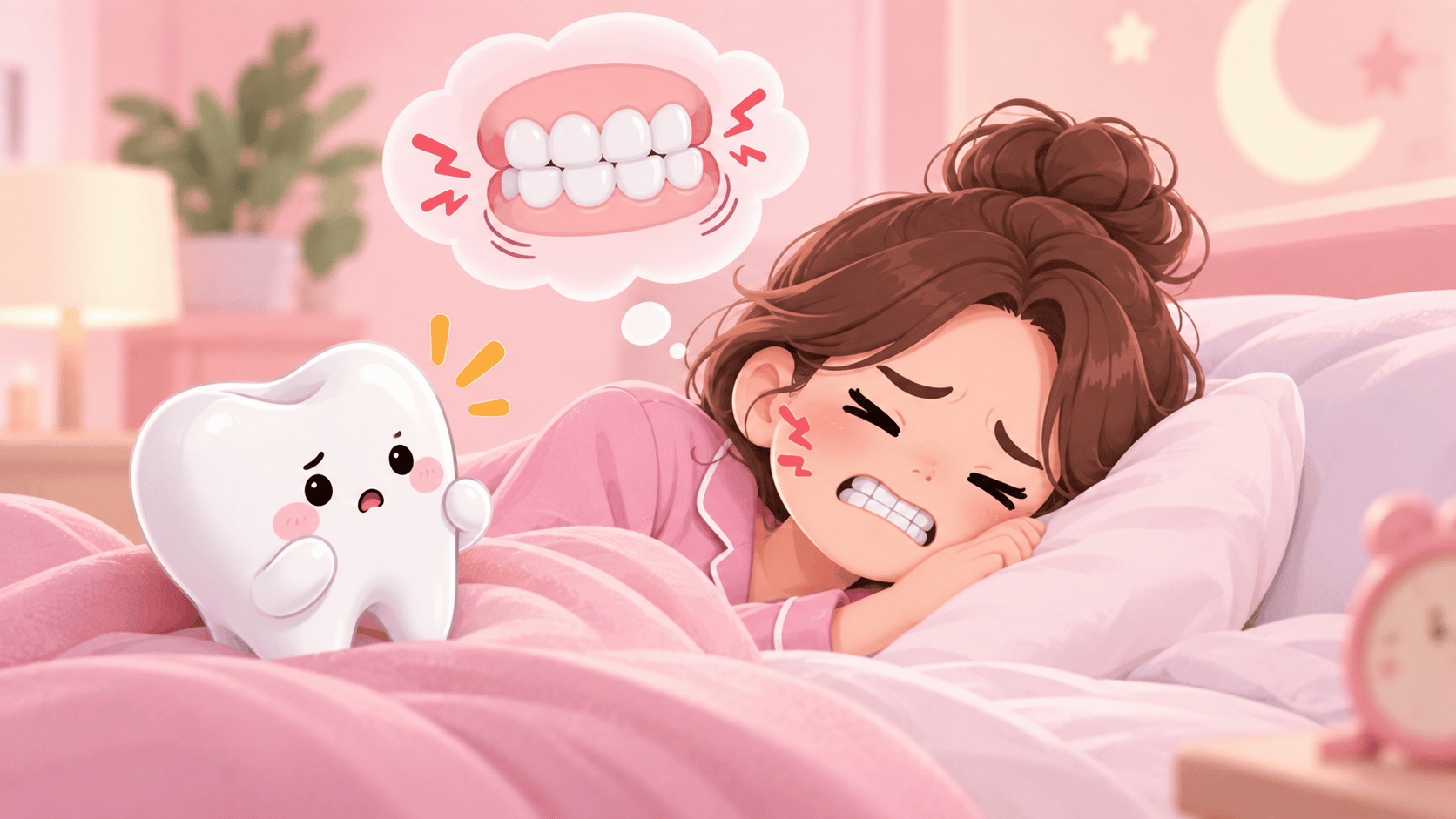
You wake up with a tight jaw, a dull ache near your temples, or teeth that feel oddly sensitive to your first sip of coffee. Or perhaps your partner mentions a scraping sound in the middle of the night that you have no memory of making.
If that sounds familiar, you are far from alone. Long work hours, exam pressure and late nights can keep you running on high alert, and the jaw is one of the places that tension quietly settles. Understanding what is happening is the first step to protecting your teeth.
What is Teeth Grinding?
Teeth grinding is the habit of clenching, gnashing or grinding your teeth together without meaning to. The clinical term is bruxism, and it can happen while you sleep or while you are awake and concentrating.
It is more common than most people realise. SingHealth reports that awake bruxism occurs in about 22 to 30% of adults, while sleep bruxism affects around 15% of adults. Because the most common form of sleep bruxism can occur without noticeable symptoms, many people only find out when a dentist points out worn teeth or a partner hears the noise.
Sleep Bruxism and Awake Bruxism
The two types behave differently, which affects how they are managed.
Sleep bruxism
Sleep bruxism happens during rest, in short bursts of jaw muscle activity that are often linked to brief disturbances in sleep. You are rarely aware of it, and you cannot moderate the force the way you might when awake.
Awake bruxism
Awake bruxism usually shows up as clenching rather than grinding, often during stress or deep focus, such as answering emails, driving in traffic or scrolling on your phone. It behaves more like a habit than a sleep problem, which is why simple awareness can help.
Teeth Grinding Symptoms
Symptoms are often subtle at first and are easily mistaken for other problems. The table below sets out the signs people notice most often.
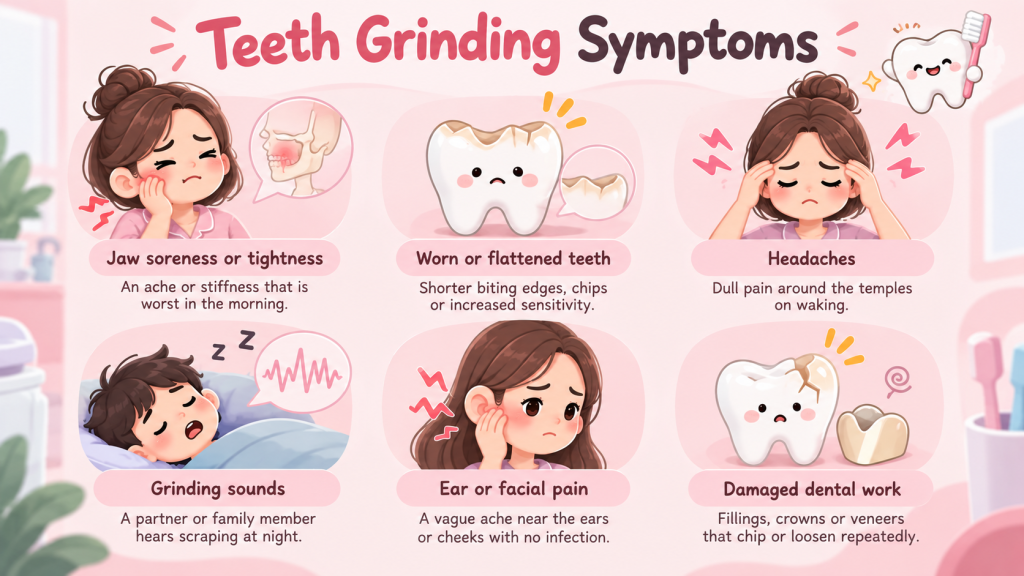
| Symptom | What you may notice | Why it matters |
|---|---|---|
| Jaw soreness or tightness | An ache or stiffness that is worst in the morning | Suggests the jaw muscles worked overtime during sleep |
| Worn or flattened teeth | Shorter biting edges, chips or increased sensitivity | Enamel does not grow back, so wear is permanent |
| Headaches | Dull pain around the temples on waking | Often linked to tension in the jaw and temple muscles |
| Grinding sounds | A partner or family member hears scraping at night | One of the few direct clues to sleep bruxism |
| Ear or facial pain | A vague ache near the ears or cheeks with no infection | Can come from the jaw joint or chewing muscles |
| Damaged dental work | Fillings, crowns or veneers that chip or loosen repeatedly | Grinding forces put extra stress on restorations |
A dentist can often spot the evidence even when you have no symptoms, such as flattened biting surfaces, tiny cracks or chips, and indentations along the edge of the tongue. These signs show up long before pain does. If a tooth feels sensitive, our guide to tooth sensitivity explains other possible causes.
It is also worth knowing that grinding-related jaw pain, especially on one side, can feel very much like a toothache or infection. That is why it is better to have a dentist find the cause than to guess.
Causes of Bruxism
There is rarely a single cause. Bruxism is usually a mix of psychological, physical and lifestyle factors.
Stress and anxiety
Stress is the most commonly reported trigger. Tense muscles can spill over into clenching, and deadlines, exams and long commutes are everyday pressures in Singapore.
Poor sleep and sleep apnoea
Noise, light, short sleep and irregular schedules have all been linked to sleep bruxism. According to NHG experts on HealthHub, bruxism in many adults is related to sleep apnoea, where breathing repeatedly stops and starts during sleep, so a dentist may refer you to a specialist.
Caffeine, alcohol and smoking
Heavy alcohol intake, caffeine and smoking are all linked to higher odds of sleep bruxism. A late kopi or a few drinks before bed may leave your sleep lighter.
Certain medications
Bruxism is an uncommon side effect of some medicines, including certain antidepressants. If it starts after a new medication, speak to your doctor rather than stopping it yourself.
Bite, jaw and family history
Missing or crooked teeth and jaw joint problems have been associated with bruxism, and sleep bruxism often runs in families.
Also Read: Tooth Discoloration: Causes, Signs and Treatment
How Teeth Grinding Is Diagnosed
There is no single test for teeth grinding. Diagnosis is based on your history and a careful examination.
What your dentist may ask
Your dentist will want to understand your symptoms and habits. Expect questions about:
- Whether jaw pain or headaches are worse in the morning
- Whether anyone has heard you grinding at night
- Your stress, sleep quality and any snoring
- Your caffeine, alcohol, tobacco and medication use
What the exam looks for
The exam checks for evidence of grinding on your teeth and jaw. Your dentist will typically look for:
- Flattened or worn biting surfaces
- Chips, cracks or damaged dental work
- Tender jaw muscles or a clicking jaw joint
When a sleep assessment may be considered
If you snore loudly, stop breathing in your sleep or feel tired despite a full night in bed, your dentist may suggest seeing a doctor.
Teeth Grinding Treatment
There is no single cure for bruxism, so treatment focuses on protecting your teeth, easing muscle strain and addressing what drives the habit.
Custom night guard
This is the most common first step. It sits between your upper and lower teeth so grinding forces land on the guard instead of your enamel. It does not stop the grinding itself, but it can reduce wear and ease jaw tension.
Stress and sleep management
Calming your system before bed is a real part of treatment. NHG experts suggest avoiding video games or action movies in the hour before bed and practising slow breathing.
Botulinum toxin injections
For severe cases, a qualified practitioner may inject small doses into the jaw muscles to reduce their strength. The effect lasts around three to four months and needs repeating, and long-term research is limited. It is usually considered after a night guard and lifestyle changes, and only a licensed practitioner should administer it.
Treating the underlying cause
If sleep apnoea, a jaw joint disorder or a bite problem is involved, treating it may reduce grinding. Worn teeth can also be rebuilt with fillings or crowns.
Mouth Guard for Grinding
A mouth guard for grinding is a removable plastic appliance worn over your teeth, usually at night. The type you choose affects comfort, protection and how long it lasts.
- Stock mouth guards: These are ready-made and cheap, but usually bulky and loosely fitted, so many people stop wearing them.
- Boil-and-bite mouth guards: These are softened in hot water and moulded at home. They fit better than stock guards but wear out faster.
- Custom-fitted mouth guards: These are made from an impression or scan of your own teeth, so they sit precisely and can be adjusted to your bite. Dentists generally recommend them for regular grinding because a guard that fits well is one you will actually wear.
Also Read: Is Your Wisdom Tooth Pain Normal? Here’s How to Tell
Teeth Grinding Prevention
You cannot always stop grinding, especially in your sleep, but you can lower the load on your jaw.
- Keep your lips together and your teeth apart: Awake clenching responds well to awareness. Check now and then whether your teeth are touching, and aim to rest with your lips together and your teeth slightly apart.
- Take short breaks from your screen: Long hours at a desk build tension in your shoulders and jaw, so short breaks to stretch and loosen up help.
- Limit alcohol and caffeine in the evening: Coffee, strong tea and bubble tea all contain caffeine, and alcohol may leave your sleep lighter, so cutting back on both later in the day can help.
- Keep regular sleep and wake times: Poor or irregular sleep has been linked to sleep bruxism, so a consistent routine helps.
- Keep up regular dental check-ups: Grinding can return during stressful periods. Regular check-ups let your dentist catch wear early and confirm that your guard still fits well.
Get Your Teeth Grinding Checked at AllSmiles
Book a dental visit if you often wake up with jaw pain or headaches, notice flattened, chipped or sensitive teeth, hear clicking in your jaw, or have been told you grind at night. Seek prompt care if a tooth cracks or the pain is severe. Leaving it usually means more wear and more involved treatment later.
At AllSmiles Dental Care, our dentists can check for wear during a dental check-up, assess your jaw and bite, and advise whether a custom night guard is right for you. If your symptoms point to sleep apnoea or a jaw joint problem, we will let you know when a doctor or specialist review is worth arranging.
Book an appointment at AllSmiles Dental Care and our team will guide you from assessment to a custom-fitted mouthguard. You can schedule an appointment online at a time that suits you.
Frequently Asked Questions
Is Teeth Grinding Serious?
Occasional grinding is usually harmless. The concern is regular grinding over months or years, when damage builds up quietly. Enamel wears away, biting edges flatten, and teeth can become sensitive, chipped or cracked. Crowns and bridges and dental implants also have to withstand the extra force, and the jaw muscles, jaw joint and your sleep can suffer too.
How do I stop grinding my teeth at night?
You usually cannot stop sleep grinding through willpower alone. A custom night guard protects your teeth, while managing stress, limiting evening caffeine and alcohol and keeping a regular sleep routine can reduce how often it happens.
Can teeth grinding go away on its own?
It can, especially when it is linked to a temporary period of stress or poor sleep. For many adults it continues on and off, so a dental review is sensible.
How much does a night guard cost in Singapore?
The cost depends mainly on the material, how the guard is made and how complex your bite is. Across Singapore clinics, custom guards generally range from about S$300 to over S$1,000, while at AllSmiles they typically fall between S$200 and S$600. Harder, longer-lasting materials cost more upfront but can work out cheaper than a soft guard that needs replacing sooner.
Can botulinum toxin treat teeth grinding?
It may reduce grinding and jaw pain in severe cases, but the effect lasts only a few months and long-term research is limited. It is usually considered after a night guard and should only be given by a licensed practitioner.