
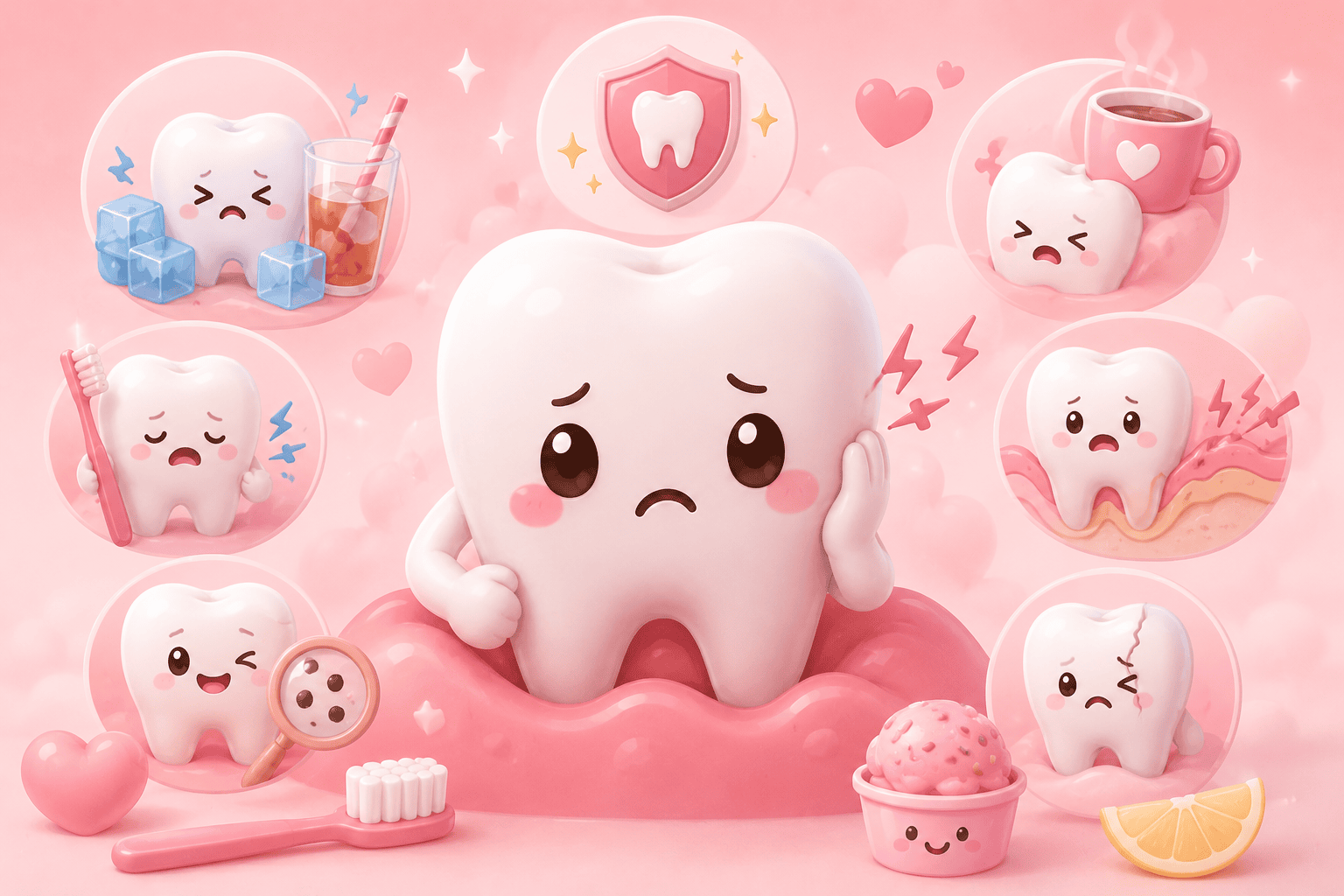
Many people notice a sudden twinge when sipping a cold drink or brushing their teeth. This brief discomfort often prompts questions about why it happens and whether it requires attention. Tooth sensitivity is a common experience that can appear in everyday situations — and understanding its patterns helps you decide when to seek professional input.
Cold water or brushing can trigger a quick response in teeth that have become more reactive. The sensation usually passes quickly but may recur with repeated exposure to the same trigger.
Similarly, recent dental procedures sometimes leave teeth temporarily more sensitive. The feeling often eases as the area settles, though it is worth monitoring to confirm improvement.
What Is Tooth Sensitivity?
Tooth sensitivity involves a short-lived reaction in teeth to certain stimuli. It is distinct from other forms of dental discomfort and commonly linked to changes in the tooth surface or surrounding tissues.
The sensation is typically described as a sharp, brief jolt rather than a constant ache — it appears suddenly and fades once the trigger is removed. General tooth pain, by contrast, tends to linger or throb. Tooth sensitivity is usually momentary and tied directly to specific triggers such as temperature or touch.
Common Symptoms of Tooth Sensitivity
The symptoms of tooth sensitivity are usually easy to recognize and often occur only when specific triggers are present.
Sharp Pain When Eating or Drinking
Many individuals experience a sudden, brief pain when consuming:
- Cold drinks
- Hot beverages
- Sweet foods
- Acidic foods and drinks
Unlike a toothache, the discomfort typically stops shortly after the trigger is removed.
Sensitivity When Brushing Teeth
Some people notice discomfort while brushing, particularly around the gum line or in areas where enamel has worn away.
Pain When Breathing Cold Air
Exposure to cold weather or air conditioning can sometimes trigger sensitivity, especially in teeth with exposed roots or worn enamel.
Sensitivity After Dental Treatment
Procedures such as fillings, crowns, whitening treatments, or deep cleanings may temporarily increase tooth sensitivity during the healing period.
What Causes Tooth Sensitivity?
Several dental and lifestyle factors can contribute to tooth sensitivity.
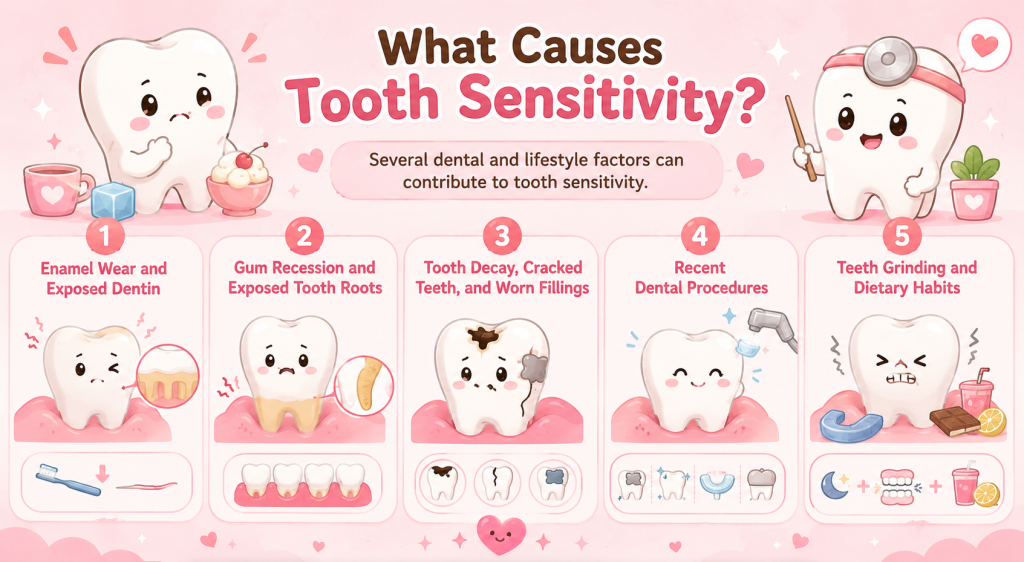
Enamel Wear and Exposed Dentin
Tooth enamel protects the inner layers of the tooth. When enamel becomes thinner due to wear, the underlying dentin becomes more vulnerable to external stimuli.
Gum Recession and Exposed Tooth Roots
As gums recede, root surfaces become exposed. Since roots are not protected by enamel, they can react more strongly to temperature changes and touch.
Tooth Decay, Cracked Teeth, and Worn Fillings
Dental problems such as cavities, small cracks, and deteriorating fillings can create pathways that allow sensations to reach the inner tooth structure.
Recent Dental Procedures
Some patients experience temporary sensitivity following fillings, dental cleanings, teeth whitening, or crown placement. This typically settles on its own, but should be monitored if it persists.
Teeth Grinding and Dietary Habits
Habitual teeth grinding and frequent consumption of acidic foods or beverages may gradually wear down enamel and increase the likelihood of sensitivity over time.
| Cause | How It Contributes |
|---|---|
| Enamel wear | Exposes dentin, making teeth more reactive to stimuli |
| Gum recession | Uncovers unprotected root surfaces |
| Decay, cracks, worn fillings | Creates pathways for sensations to reach inner tooth |
| Recent dental procedures | Temporarily heightens tooth response post-treatment |
| Teeth grinding | Gradually wears down enamel over time |
| Acidic diet | Erodes enamel with repeated exposure |
Also Read: Pain After Tooth Extraction: What’s Normal and When to Check In
How Tooth Sensitivity Is Diagnosed
A dental examination helps determine the underlying cause and identify the most appropriate treatment approach.
Reviewing Symptoms and Triggers
A dentist may ask questions about:
- When the sensitivity started
- Which foods or drinks trigger discomfort
- How long symptoms last
- Whether sensitivity occurs in one tooth or multiple teeth
Clinical Examination
The dentist may perform a visual examination and assess areas of enamel wear, gum recession, cavities, or damaged restorations.
Identifying the Root Cause
Understanding the exact trigger helps ensure treatment addresses the underlying issue rather than simply managing symptoms.
Tooth Sensitivity Treatment Options
Options depend on what a dental professional identifies after assessment.
1. Sensitivity Toothpaste
Specialised sensitivity toothpastes are commonly used as part of daily routines to help reduce surface reactivity over time. Regular use is generally recommended for best results.
2. Fluoride Mouthwash and Products
Fluoride mouthwashes or similar products may be suggested to support overall tooth resilience and help protect enamel from further wear.
3. Targeted Dental Treatment
Where a specific cause is identified — such as decay, a worn filling, or gum recession — the dentist will recommend appropriate treatment to address the source directly. This may include fillings, sealants, or gum-related procedures.
4. Behaviour and Habit Adjustments
Softer brushing technique, reducing acidic food and drink intake, and using a night guard for grinding are practical adjustments that can support recovery alongside professional care.
5. Home Remedies
Some people explore gentle adjustments at home while awaiting or alongside professional advice. Claims about home remedies vary widely, and professional evaluation remains the most reliable route for understanding individual cases.
Some people find relief by:
- Using a soft-bristled toothbrush
- Avoiding overly aggressive brushing
- Reducing acidic foods and drinks
- Using sensitivity-friendly oral care products
When to See a Dentist About Tooth Sensitivity
Occasional mild sensitivity may not require urgent care, but professional evaluation is recommended if symptoms persist or worsen.
Sensitivity That Does Not Improve
Persistent sensitivity lasting several weeks should be assessed to identify possible underlying causes.
Severe or Ongoing Pain
Pain that becomes intense, lingers after the trigger is removed, or occurs spontaneously may indicate a more significant dental issue.
Swelling or Other Symptoms
Sensitivity accompanied by swelling, visible damage, or signs of infection requires prompt dental attention.
Sensitivity After a Filling That Persists
Temporary sensitivity following a filling is common, but prolonged discomfort should be reviewed by the treating dentist.
How to Help Prevent Tooth Sensitivity
While not all cases are preventable, healthy oral care habits can help reduce risk.
1. Practice Gentle Brushing
Use a soft-bristled toothbrush and gentle pressure to avoid unnecessary enamel wear and gum irritation. Brushing too aggressively can gradually wear down the protective enamel layer and contribute to gum recession, both of which may increase tooth sensitivity.
Using proper brushing techniques and replacing worn toothbrushes regularly can help protect your teeth while maintaining good oral hygiene.
2. Limit Acidic Foods and Drinks
Reducing frequent exposure to acidic beverages and foods may help protect enamel over time. Drinks such as soft drinks, sports drinks, citrus juices, and wine can gradually weaken enamel, making teeth more vulnerable to sensitivity.
If you consume acidic foods or beverages, consider rinsing your mouth with water afterward and waiting at least 30 minutes before brushing to help minimize enamel erosion.
3. Protect Teeth from Grinding
A custom night guard may be recommended for individuals who grind or clench their teeth during sleep. Teeth grinding, also known as bruxism, can wear down enamel and create microscopic cracks that contribute to tooth sensitivity. Managing stress, improving sleep habits, and seeking professional dental advice may help reduce grinding-related damage.
4. Schedule Regular Dental Checkups
Routine dental visits help identify early signs of enamel wear, gum recession, and other conditions before symptoms become more noticeable. Regular examinations allow dentists to detect potential causes of sensitivity, such as cavities, worn fillings, or gum disease, at an early stage.
Professional cleanings and preventive care can also help maintain oral health and reduce the likelihood of sensitivity developing over time.
Also Read: How Smoking Affects Gums? And What You Can Do About It
Get to the Root of Your Tooth Sensitivity With Professional Care
Tooth sensitivity is one of the most common dental complaints — yet many people put off seeking help, assuming it will resolve on its own. While mild sensitivity can sometimes ease with the right toothpaste or habit changes, persistent or recurring discomfort often points to an underlying cause that needs professional assessment. The sooner it is identified, the simpler the management tends to be.
At AllSmiles Dental Care, our dentists take a thorough approach to diagnosing and managing tooth sensitivity — identifying the root cause rather than just addressing the symptom.
From detailed examinations and targeted treatments such as fillings, sealants, and fluoride applications, to guidance on daily habits that support long-term tooth health, our team is equipped to help you find lasting relief.
Book your appointment today and take the first step toward a more comfortable smile.
Frequently Asked Questions about Tooth Sensitivity
What causes tooth sensitivity?
Common causes include enamel wear, gum recession, tooth decay, cracked teeth, and recent dental work such as fillings. Acidic foods, grinding, and brushing too hard can also contribute.
How do I fix tooth sensitivity?
Treatment depends on the cause. Your dentist may recommend sensitivity toothpaste, fluoride application, or targeted treatment such as a filling or sealant. Adjusting brushing habits and reducing acidic food intake can also help.
Why is my tooth all of a sudden sensitive?
Sudden sensitivity can be triggered by a recent dental procedure, a new crack in the tooth, enamel erosion, or gum recession. If it appears without an obvious reason or does not settle within a few days, a dental check is advisable.
When should I worry about tooth sensitivity?
If sensitivity is severe, worsening, or accompanied by swelling or persistent pain, it is worth seeing a dentist promptly. Sensitivity that keeps returning or affects your ability to eat and drink normally also warrants professional review.
What is the difference between tooth pain and tooth sensitivity?
Tooth sensitivity is typically a brief, sharp reaction to a specific trigger — such as cold, heat, or sweets — that fades quickly. Tooth pain tends to linger, throb, or occur without an obvious trigger, and often indicates a more significant underlying issue.