
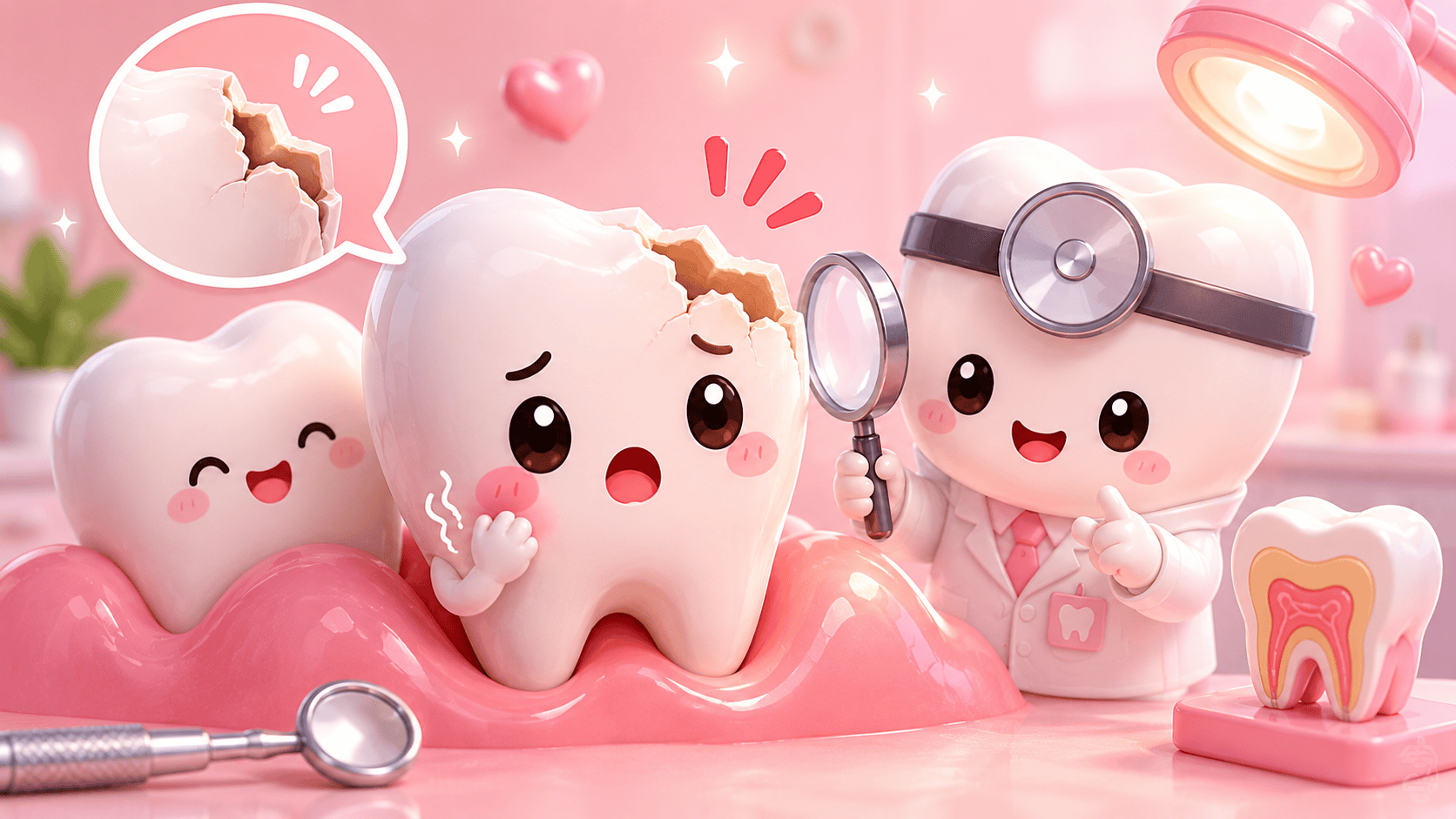
A chipped tooth is one of the most common dental injuries. It can happen suddenly after biting into something hard, during sports activities, or following an accidental fall. While some chips are purely cosmetic, others may expose sensitive tooth layers and require prompt dental attention.
Understanding the symptoms, causes, treatment options, and potential repair costs can help you decide when professional assessment may be needed.
What Is a Chipped Tooth?
A chipped tooth occurs when a small portion of the tooth structure breaks away. In many cases, the damage affects the enamel, which is the hard outer layer of the tooth. Depending on the size and location of the chip, the tooth may appear uneven, feel rough to the tongue, or become sensitive.
Many people describe the experience as having a “tooth chipped off,” especially when a visible piece of the tooth breaks away during eating or after an impact.
Does a Chipped Tooth Grow Back?
No. Tooth enamel does not regenerate once it is lost. Unlike skin or bone, enamel cannot repair itself naturally. Even if the chip seems minor, a dentist can determine whether treatment is necessary to protect the remaining tooth structure and prevent further damage.
Common Symptoms of Chipped Tooth
People often first notice changes in how the tooth feels or looks. These clues help decide whether quick attention is useful.
| Sign | What It May Suggest | Why It Matters |
|---|---|---|
| Small visible chip with smooth edge | Minor surface change | May affect appearance but often stable |
| Rough or jagged edge | Possible irritation to soft tissue | Can lead to discomfort when speaking or eating |
| Sensitivity to temperature or pressure | Deeper layer exposure | Indicates need for assessment to prevent further issues |
| Pain, swelling, or bleeding | More extensive damage | Warrants prompt professional review |
Visible chip or rough edge
A visible chip or rough edge is the most common first sign. The change may be small yet noticeable when running the tongue over the area.
Sensitivity to hot, cold, or pressure
Sensitivity can appear when the chip reaches closer to inner tooth layers. This sensation often improves once the area is protected.
Tongue or cheek irritation
Sharp edges may rub against the tongue or cheek, creating soreness over time. Smoothing the edge usually reduces this irritation.
Pain, swelling, or bleeding when the chip is deeper
Deeper chips sometimes cause pain or swelling. These signs suggest the need for earlier evaluation to avoid complications.
Also Read: What Is Cracked Tooth? Causes, Symptoms & Treatment You Should Know
Causes and Risk Factors of Chipped Tooth
Understanding common triggers helps people recognise situations that increase the chance of chips occurring.
| Cause | Typical Scenario | Risk Context |
|---|---|---|
| Biting hard foods or objects | Chewing ice, nuts, or pens | Direct force on enamel |
| Tooth grinding and wear | Night-time clenching over years | Gradual thinning of enamel |
| Sports impact or accidental trauma | Ball strike or fall | Sudden high-force event |
| Weakened enamel, old fillings, or existing decay | Previous dental work or untreated cavities | Reduced tooth strength |
Biting hard foods or objects
Chewing on ice, hard sweets, or non-food items places concentrated force on teeth and can cause chips.
Tooth grinding and wear
Habitual grinding wears down enamel over time, making teeth more prone to chipping during normal use.
Sports impact or accidental trauma
Contact sports or falls can deliver sudden force that fractures enamel, especially without a mouthguard.
Weakened enamel, old fillings, or existing decay
Teeth already compromised by decay or large restorations have less structural support and chip more easily.
How Dentists Diagnose a Chipped Tooth
Diagnosing a chipped tooth is typically straightforward and begins with a clinical examination.
Visual Examination
A dentist will inspect the damaged tooth and assess the size, location, and appearance of the chip.
Review of Symptoms
Information about sensitivity, pain, difficulty chewing, or recent trauma helps determine whether deeper structures may be involved.
Evaluation for Hidden Damage
In some cases, dental X-rays may be recommended to check for cracks, root injuries, or changes that are not visible during a standard examination.
How to Fix a Chipped Tooth
The most appropriate treatment depends on the severity of the chip and whether it affects appearance, function, or tooth health.
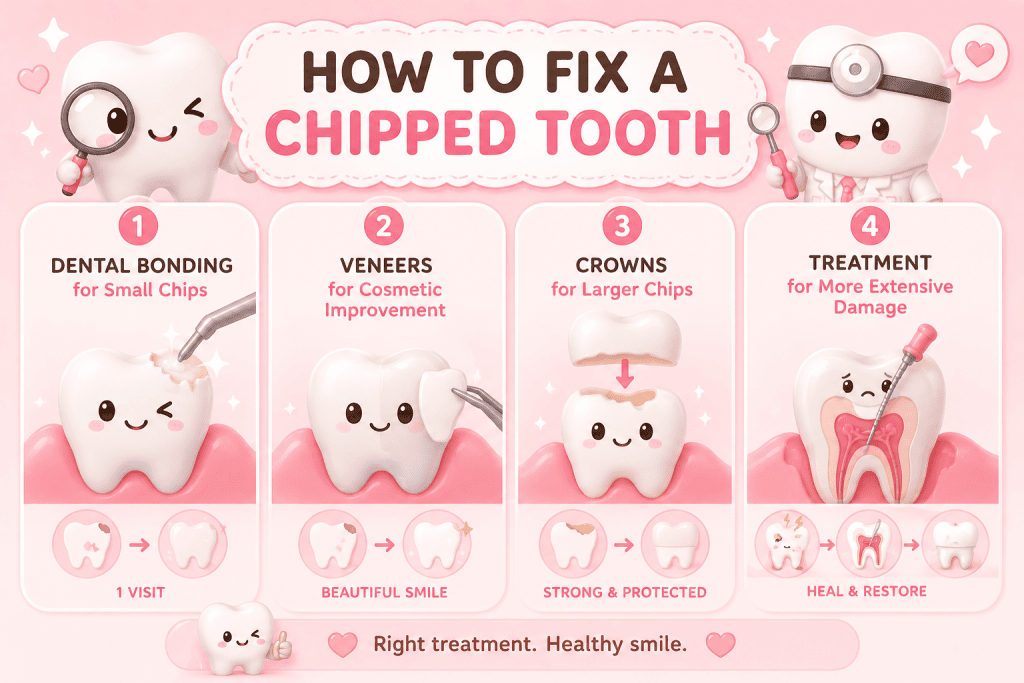
1. Dental Bonding for Small Chips
Minor chips are often repaired using tooth-colored composite resin. This procedure, known as dental bonding, restores the tooth’s appearance and can usually be completed in a single visit.
2. Veneers for Cosmetic Improvement
When a front tooth is chipped and aesthetics are a concern, porcelain veneers may be recommended to improve shape, color, and overall appearance.
3. Crowns for Larger Chips
If a significant portion of the tooth is missing, a dental crown may be used to cover and strengthen the remaining structure.
4. Treatment for More Extensive Damage
When a chip extends deeper into the tooth and affects the pulp, additional treatment such as root canal therapy may be necessary before restoration.
Chipped Tooth Repair Cost in Singapore
The cost of repairing a chipped tooth in Singapore varies depending on several factors, including the size and location of the chip, the repair method required, and the number of visits needed. There is no single fixed price, as each case is assessed individually by the dentist before a quote is provided.
As a general reference, the estimated price ranges below are based on common repair types available at dental clinics in Singapore:
| Repair Type | Estimated Cost Range (SGD) | Notes |
|---|---|---|
| Dental bonding | $150 – $400 per tooth | Suitable for minor chips; usually completed in one visit |
| Dental veneer | $500 – $1,500 per tooth | Often used for front teeth with cosmetic concerns |
| Dental crown | $1,000 – $2,500 per tooth | Recommended for larger chips or structurally compromised teeth |
| Root canal + crown | $1,500 – $3,500 per tooth | Required if the chip has affected the inner pulp |
Please note that the figures above are estimates only and do not reflect actual pricing at any specific clinic. The final cost will depend on the individual condition of the tooth, the materials used, the complexity of the treatment, and the dental clinic you visit. A proper in-person assessment is always needed before an accurate quote can be given.
When Should You See a Dentist?
Not every chipped tooth is an emergency, but professional evaluation is generally recommended.
You should seek dental care if you experience:
- Persistent pain or discomfort
- Increased sensitivity to temperature or pressure
- Swelling around the tooth or gums
- Bleeding associated with the injury
- A large or visibly deep chip
- A tooth that broke after a fall or impact
Even small chips can sometimes hide underlying damage that may worsen if left untreated.
How to Prevent Further Damage
If you have chipped a tooth and are waiting for an appointment, several precautions can help prevent additional problems.
- Avoid Hard Foods
Choose softer foods and avoid chewing on the affected side of your mouth whenever possible.
- Protect Sharp Edges
A sharp edge may irritate the tongue or cheek. Avoid touching it repeatedly and seek dental advice if irritation becomes significant.
- Do Not Use Teeth as Tools
Opening bottles, tearing packaging, or biting non-food objects can worsen existing damage.
- Manage Teeth Grinding
If you grind your teeth at night, a professionally fitted night guard may help protect your teeth from future fractures.
Also Read: Tooth Decay: Symptoms, Causes, Diagnosis, and Prevention
Repair a Chipped Tooth at AllSmiles Dental Care
A chipped tooth is best assessed sooner rather than later to prevent further damage or discomfort. At AllSmiles Dental Care, our experienced and friendly dentists provide a full range of chipped tooth repair services tailored to the extent of the damage and your individual needs.
Whether the chip is minor and requires simple smoothing or bonding, or more significant and calls for a crown or further restoration, our team will guide you through the most appropriate treatment in a comfortable and professional environment. We are committed to restoring both the function and appearance of your tooth with care.
Book your appointment today and let our team help you get your smile back.
FAQ about Chipped Tooth
Is a chipped tooth considered a dental emergency?
Not always. However, immediate attention may be needed if the injury causes severe pain, bleeding, swelling, or involves a large portion of the tooth.
Can a chipped tooth cause infection?
A simple enamel chip is unlikely to cause infection, but deeper damage that exposes inner tooth structures may increase the risk if not treated.
How long does chipped tooth repair take?
Minor bonding repairs can often be completed in a single appointment, while crowns, veneers, or more complex treatments may require multiple visits.
Can a chipped tooth get worse if left untreated?
Yes. Even a small chip can become larger over time, especially if the tooth is exposed to repeated chewing pressure or further trauma.
Can I eat normally with a chipped tooth?
It depends on the severity of the chip. Soft foods are generally recommended until the tooth is assessed, particularly if there is sensitivity or discomfort.