
Dental implants have always been seen as an effective and viable solution to replacing missing teeth in Singapore. Dental implants also serves as a permanent solution with minimum downsides, thus, improving your quality of life and self-confidence.
Unlike dentures, they do not slip in and out of their position, making it a stable, reliable option. Also, unlike bridges, they do not rely on the support of the surrounding teeth. This guide explains the benefits of dental implants, how they compare with dentures and bridges, and what Singapore patients should know about the process and MediSave.
Benefits of Dental Implants
The benefits of dental implants go well beyond filling a gap. They restore how your teeth look, feel and work, while protecting the jawbone and neighbouring teeth that other options leave exposed.
Implants are a long-term solution rather than a quick fix, so it helps to understand how they work before you decide.
What Are Dental Implants
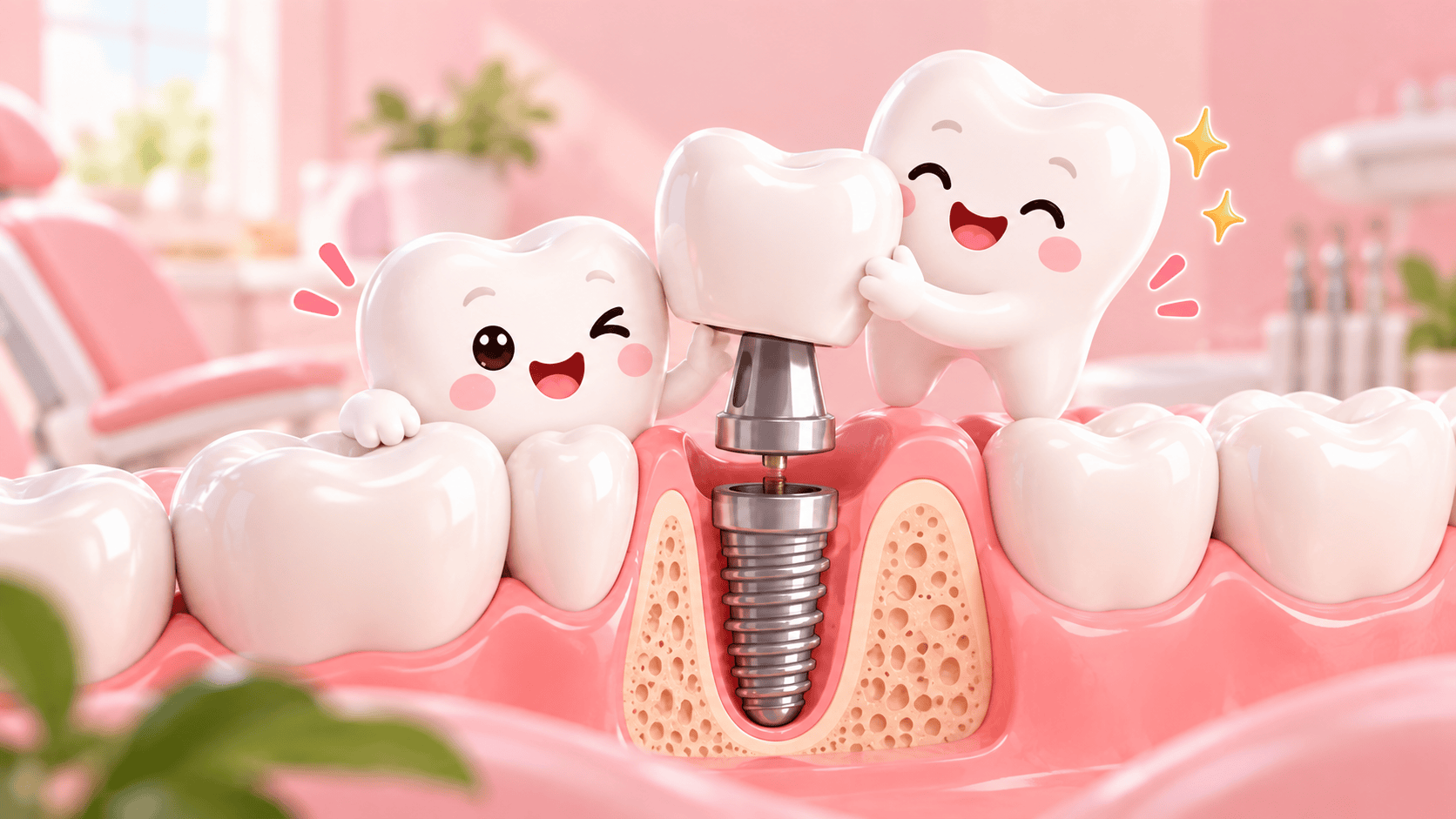
Dental implants are artificial tooth roots, usually made of titanium, that are placed into the jawbone to replace missing teeth. Over several months the implant fuses with the bone, creating a firm foundation for a crown, bridge or denture.
A complete implant has three parts: the implant post in the bone, a connector called an abutment, and the visible crown. Together they replace both the root and the tooth, which sets implants apart from options that only replace the part you can see. You can read more on our dental implants page.
8 Advantages of Dental Implants
These are the main advantages patients notice once treatment is complete.
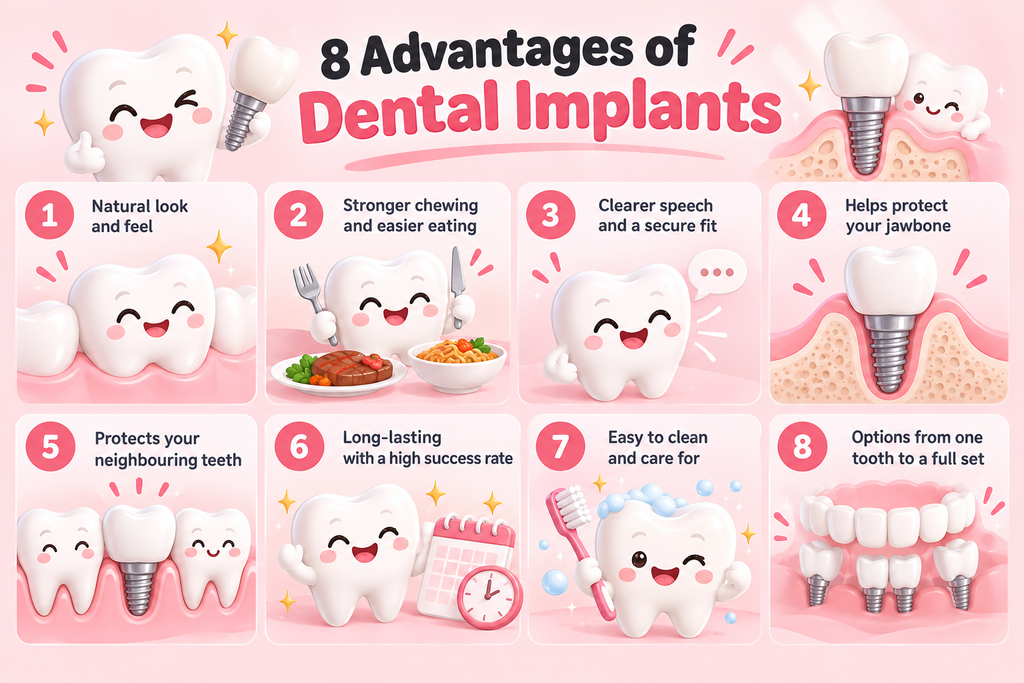
1. Natural look and feel
Once healed, an implant crown is shaped and shaded to blend in with your other teeth, and it feels like part of your mouth rather than an appliance. There is nothing to take out at night, so you can smile and talk without thinking about it.
2. Stronger chewing and easier eating
Because the implant is anchored in bone, it handles everyday chewing far better than a loose denture. Many patients find they can return to their favourite foods, from satay to chewy bak kwa, without worrying about slipping.
3. Clearer speech and a secure fit
Dentures that shift can affect how you pronounce words and may click when you talk. Implants stay firmly in place, so your speech stays clear and you do not need adhesives to hold anything steady.
4. Helps protect your jawbone
When a tooth is lost, the bone that held its root slowly shrinks because it is no longer stimulated. An implant takes over the root’s job, which helps preserve bone volume and the shape of your face. Bridges and dentures do not replace the root, so they cannot offer the same protection.
5. Protects your neighbouring teeth
The National Dental Centre Singapore points out that implants do not affect other teeth, unlike bridges, where the adjacent teeth have to be filed down. Your healthy teeth stay untouched and carry no extra load.
6. Long-lasting with a high success rate
With good care, implants can last many years, often decades. The same NDCS source reports success rates of about 95 per cent for lower jaw implants and 90 per cent for the upper jaw, though results depend on your bone, health and habits.
7. Easy to clean and care for
You look after implants the way you look after natural teeth. Brush twice a day, floss, and see your dentist for regular check-ups. Good hygiene protects the gums around the implant, which is the key to keeping it healthy over the long term.
8. Options from one tooth to a full set
Implants are not only for single gaps. Several can support a bridge, and as few as two can anchor a denture so that it clips on firmly. NDCS notes this is a popular choice for seniors who have lost most of their teeth.
Also Read: Teeth Grinding (Bruxism): Causes, Signs and Treatment
Pros and Cons of Dental Implants
Dental implants suit many patients, but they are not perfect for everyone. The table below puts the main pros and cons side by side so you can weigh them up.
| Pros | Cons |
|---|---|
| Looks and feels like a natural tooth | Requires minor surgery under local anaesthesia |
| Strong, stable chewing without slipping | Healing takes several months before the final tooth is fitted |
| Helps preserve jawbone and facial shape | Higher upfront cost than bridges or dentures |
| Leaves neighbouring teeth untouched | May need bone grafting first if the jawbone is thin |
| Can last many years with good care | Needs good hygiene and regular check-ups to stay healthy |
Dental Implants vs Bridges vs Dentures
Implants are not the only way to replace missing teeth. Crowns and bridges and dentures are still valid options, and the right choice depends on your bone, budget and how many teeth are missing. The table below shows how they differ.
Option | Neighbouring teeth | Jawbone | Upkeep |
|---|---|---|---|
Dental implants | Left untouched | Helps preserve bone | Brush and floss like natural teeth, with regular check-ups |
Dental bridges | Adjacent teeth are reshaped to hold the bridge | Root is not replaced | Needs careful cleaning under the bridge and eventual replacement |
Dentures | May rest on or clasp nearby teeth | Root is not replaced, so bone may keep shrinking | Removed and cleaned daily, and may need adjusting over time |
Who Is a Good Candidate for Dental Implants
Most healthy adults with missing teeth can be considered, but a few factors decide whether implants will work for you.
Enough healthy jawbone
NDCS notes that people with low bone density in the jaw may not be suitable for implants. If your bone has thinned, your dentist may suggest bone grafting first to rebuild support.
Healthy gums and good healing
Gum disease should be treated before an implant is placed. Medical conditions that slow wound healing can also affect suitability, so your dentist will review your health history.
Good oral habits and no smoking
Smoking and poor hygiene lower the success rate of implants. Looking after your gums and quitting smoking give your implant the best chance of lasting.
The Dental Implant Surgery Process
Knowing what happens at each stage makes the treatment less daunting. The exact plan varies from patient to patient.
Consultation and planning
- Your dentist examines your mouth and takes X-rays or scans to check your bone and gums.
- You discuss how many implants you need and whether bone grafting is required.
Implant placement
- A titanium implant is placed into the jawbone under local anaesthesia.
- The gum is closed over or around it so it can heal.
Healing
- The implant fuses with the bone over several months.
- Your dentist may recommend a temporary replacement while you wait.
Fitting the crown
- A connector and a custom-made crown, bridge or denture are attached.
- Follow-up check-ups make sure the implant and gums stay healthy.
Dental Implant Cost in Singapore
Dental implant cost in Singapore varies from clinic to clinic. As a rough guide, a complete single-tooth implant, which includes the implant, abutment and crown, typically costs between S$2,000 and S$6,000 per tooth at private clinics, with many cases falling around S$3,000 to S$5,000. The table below shows the average ranges.
| Treatment | Average cost range |
|---|---|
| Single-tooth implant (implant, abutment and crown) | About S$2,000 to S$6,000 per tooth |
| Full-arch implants such as All-on-4 | About S$20,000 to S$35,000 per arch |
Your final cost depends on how many implants you need, the type of implant, the position of the tooth, and whether you need extras such as a tooth extraction or bone grafting. These figures are only averages, so for an exact price based on your case, contact our team and we will give you a clear quote after assessing your mouth.
Also Read: Dead Tooth: Symptoms, Causes & Treatment Options
Book a Dental Implant Consultation at AllSmiles Dental Care
If you are weighing up the benefits of dental implants against other options, a proper assessment is the best place to start. At AllSmiles Dental Care, our dentists examine your teeth, gums and jawbone, explain whether implants suit you and walk you through alternatives such as bridges and dentures.
We offer dental implants alongside bone grafting, crowns and bridges and dentures at our clinics across Singapore, so your treatment plan stays under one care team.
Book an appointment at your nearest AllSmiles clinic today. Walk-ins are welcome, though we encourage advance bookings.
Frequently Asked Questions
Are dental implants painful?
The procedure is done under local anaesthesia, so you should not feel pain during placement. Some soreness, swelling or bruising afterwards is common and usually settles within days. Your dentist will advise you on pain relief and aftercare.
How much do dental implants cost in Singapore?
The cost depends on how many implants you need, the type of implant, the position of the tooth and whether extra procedures such as bone grafting are required. A dentist can give you an accurate quote after an examination and scans.
Can I use MediSave for dental implants?
Singapore Citizens and Permanent Residents may be able to use MediSave for the surgical part of dental implant treatment, subject to MOH withdrawal limits that depend on the complexity of the procedure. Non-surgical parts may not be claimable, so confirm with your clinic before treatment.
How long does the dental implant process take?
It usually takes several months, because the implant needs time to fuse with the jawbone before the final tooth is attached. The timeline can be longer if you need a tooth extraction or bone grafting first.