
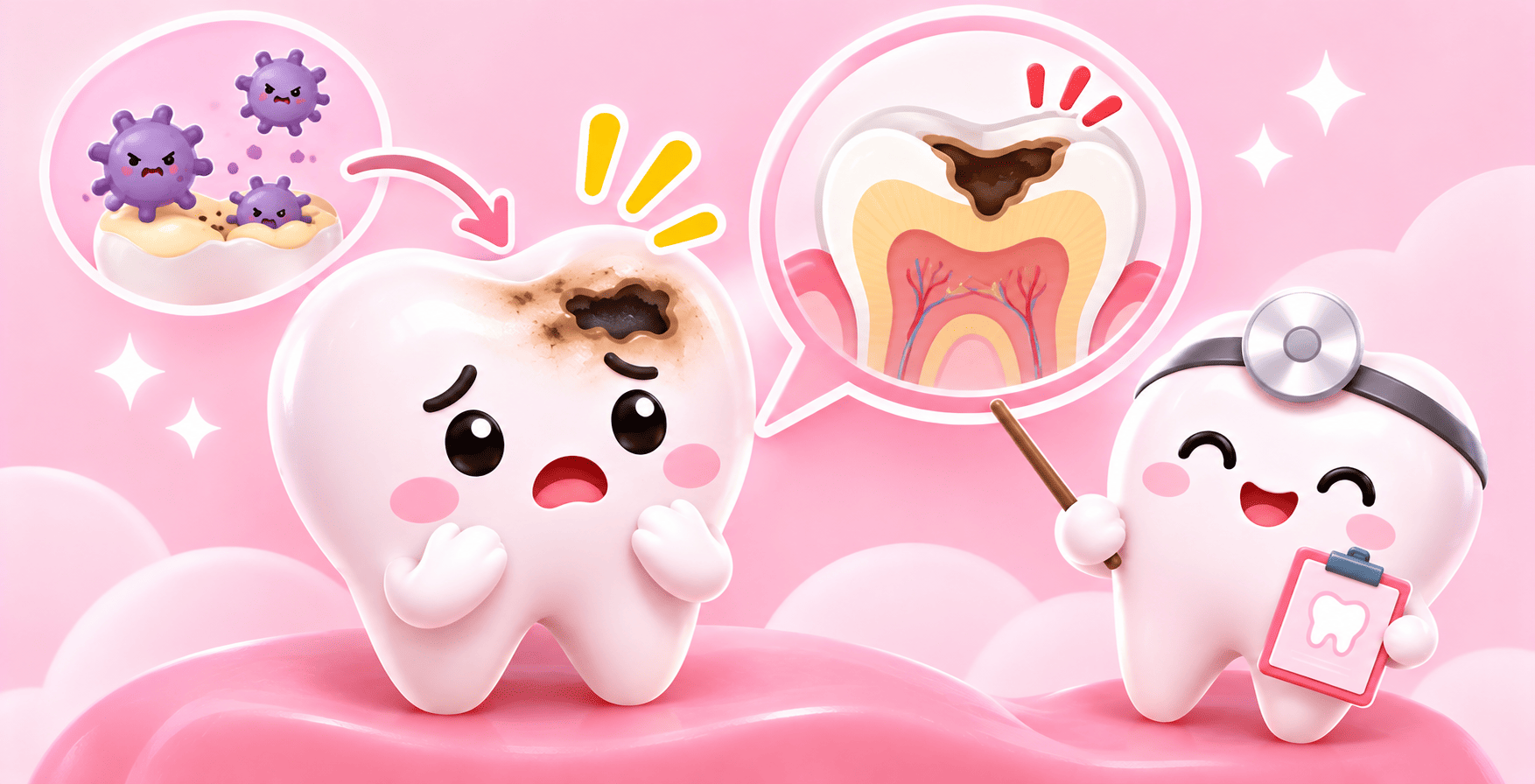
Noticing a black dot on a tooth can be worrying, especially when it won’t brush off. The good news is that not every dark spot means a cavity. Some are surface stains or hardened plaque that a dentist can clear in one visit, while others are early decay that needs treatment before it spreads.
A dark spot that stays smooth, painless and unchanged is often harmless. One that feels rough, keeps growing or comes with sensitivity is worth checking sooner. Here is how to tell the difference and what to do next.
What Are Black Spots on Teeth
Black spots on teeth are dark dots, patches or lines that appear on the surface of a tooth or in its grooves. They may look black, dark brown or grey, and they can affect one tooth or several. Some sit on top of the enamel as a stain or tartar deposit, while others form because the tooth itself is breaking down.
Because different causes can look alike, colour alone is not a reliable guide. Discoloured teeth separates stains into two groups. Extrinsic stains form on the surface and can be removed by scaling and polishing, while intrinsic stains form within the tooth structure and cannot be polished away.
Black Spots on Teeth Causes
Most black spots trace back to one of the causes below. A dentist can tell which one applies after an examination.
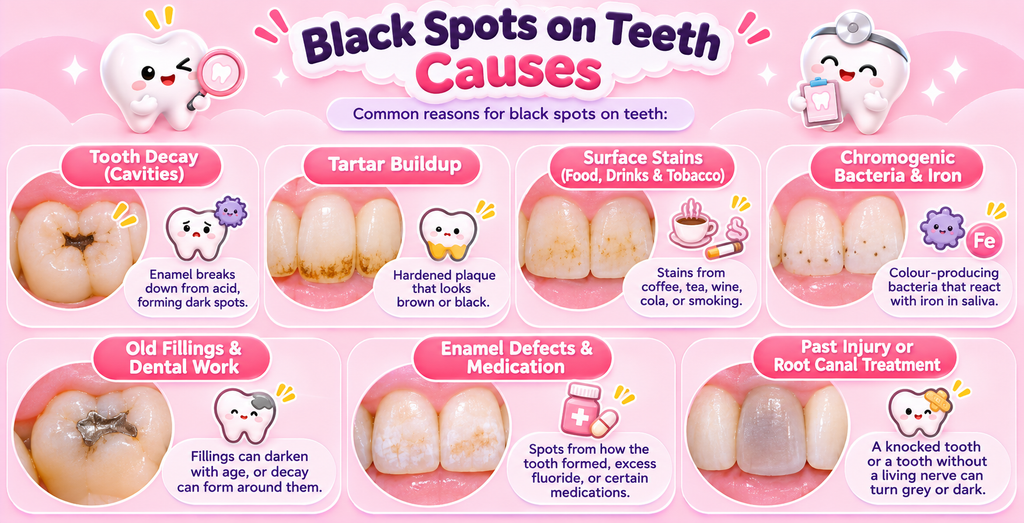
Tooth Decay (Cavities)
Decay is the cause that matters most, because it does not stop on its own. Acids from plaque bacteria weaken enamel, and as a cavity forms it can turn dark brown or black. This often happens in the grooves of back teeth, between teeth, around fillings or near the gum line. In Singapore, the 2019 National Adult Oral Health Survey found untreated tooth decay in 34.8% of the adults examined, so a dark spot is worth taking seriously.
Tartar Buildup
Plaque that is not removed hardens into tartar, also called calculus. Tartar absorbs color from food, drinks and tobacco, so it can look brown or black, especially along the gum line and on the inner surface of the lower front teeth. Brushing does not remove it, and only a dentist can scale it off.
Surface Stains From Food, Drinks and Tobacco
Coffee, tea, red wine, cola and curries can leave dark stains over time, as can smoking and chewing tobacco. These stains are usually smooth and flat, and they tend to appear on several teeth rather than a single spot. Professional cleaning can lift most of them.
Chromogenic Bacteria and Iron
Some people carry color-producing (chromogenic) bacteria that react with iron in saliva and leave fine black dots or lines near the gum line. It is more commonly reported in children, and it has been linked to iron-rich diets and iron supplements. This is a surface stain rather than decay, and a dentist can polish it off.
Old Fillings and Dental Work
Fillings can darken with age, and decay can form around their edges. A dark line around an existing filling is worth having checked, because a harmless stain at the edge and new decay underneath can look very similar.
Enamel Defects and Medication
Dark or brown spots that have been there since childhood may come from how the tooth formed. SingHealth lists excess fluoride during tooth development, medications such as tetracycline, and high fevers or illness as examples. These stains sit inside the tooth, so cleaning alone does not remove them.
Past Injury or Root Canal Treatment
A tooth that has been knocked, or that no longer has a living nerve, can slowly turn grey or dark. This typically darkens the whole tooth instead of leaving a small dot.
Also Read: Tooth Discoloration: Causes, Signs and Treatment
Are Black Spots on Teeth Cavities or Stains
Not always. Black spots on teeth that aren’t cavities are common, and surface stains, tartar and chromogenic stain can all look alarming without any decay. Texture and behavior over time give useful clues, although only a dental exam can confirm the cause.
| Sign | More likely a stain or tartar | More likely a cavity |
|---|---|---|
| Texture | Smooth and flat | Rough, pitted or sticky |
| Location | Several teeth, inner surfaces or along the gum line | Often one tooth, in a groove, between teeth or around a filling |
| Sensitivity | Usually painless | May cause sensitivity to hot, cold or sweet foods, or pain when biting |
| Over time | Stays much the same | Grows, deepens or darkens |
| After cleaning | May fade or lift | Stays and needs treatment |
Treat this table as a guide only. An early cavity can be small and painless, and chalky white spots can also be the first sign of decay, so a spot that looks like a stain still deserves a check-up.
Black Spots on Teeth After Braces
Spots around brackets are common because braces make thorough cleaning harder. Braces themselves do not create these spots directly. Plaque and acid sit on the enamel for longer and pull minerals out of the surface, leaving chalky white marks. Clear aligners can have the same effect if they are worn after eating without brushing or are not cleaned well.
A white spot is not black, but it matters because it is an early sign of decay. If the cause continues, the spot can stain darker and progress to a cavity. Brown or black marks around brackets, rough patches or sensitivity should be checked promptly. In the early stage, fluoride can help strengthen the enamel, but once a cavity forms it needs a filling.
Black Spots on Front Teeth and Near the Gum Line
Black spots on front teeth are more noticeable, so people tend to spot them sooner. On the outer surface they are often a stain, a small area of decay between teeth or a darkened old filling. On the inner surface of the lower front teeth, tartar is a frequent cause.
Black spots near the gum line usually point to tartar, chromogenic stain or decay at the neck of the tooth. This is where plaque collects most easily. Spots that keep returning after cleaning deserve a closer look, especially if the gums are red, swollen or bleed when you brush.
Black Spots on Baby Teeth
Tiny black spots on a child’s teeth are not always decay. A common cause is chromogenic stain, which appears as dark dots or a thin dotted line close to the gum line and does not brush off. Studies describe it as a harmless surface stain that is reversed by professional cleaning.
Decay is the other possibility, and it can progress more quickly in baby teeth. Dark spots in the grooves of back teeth, brown or black patches between teeth, or any spot with pain or swelling should be seen promptly. A dentist can usually tell stain from decay in one visit, so children’s dental care is a good place to start. If your child has had silver diamine fluoride applied to a cavity, that cavity will turn black, which is an expected effect of the treatment.
How Dentists Diagnose Black Spots on Teeth
A dentist works out the cause in a few steps, usually within a single visit.
Visual and Physical Exam
- The dentist checks the spot’s color, location and how many teeth are affected.
- The texture is checked gently to see whether the area is smooth and hard or rough and soft.
- You may be asked when the spot appeared, whether it has changed, and about habits such as smoking, coffee, iron supplements or braces.
Professional Cleaning
- Scaling and polishing removes tartar and polishes away surface stain.
- If the spot lifts, it was a stain or tartar. If it stays, the dentist looks further for decay or other changes.
Dental X-Rays
- X-rays show decay between teeth, under fillings and beneath the surface where it cannot be seen by eye.
- They are used when a cavity is suspected or to check how far it has spread.
How to Remove Black Stains on Teeth
How to remove black stains on teeth depends on what is behind them, which is why diagnosis comes first. Surface stains and tartar can be cleared in the dental chair, while cavities need to be restored.
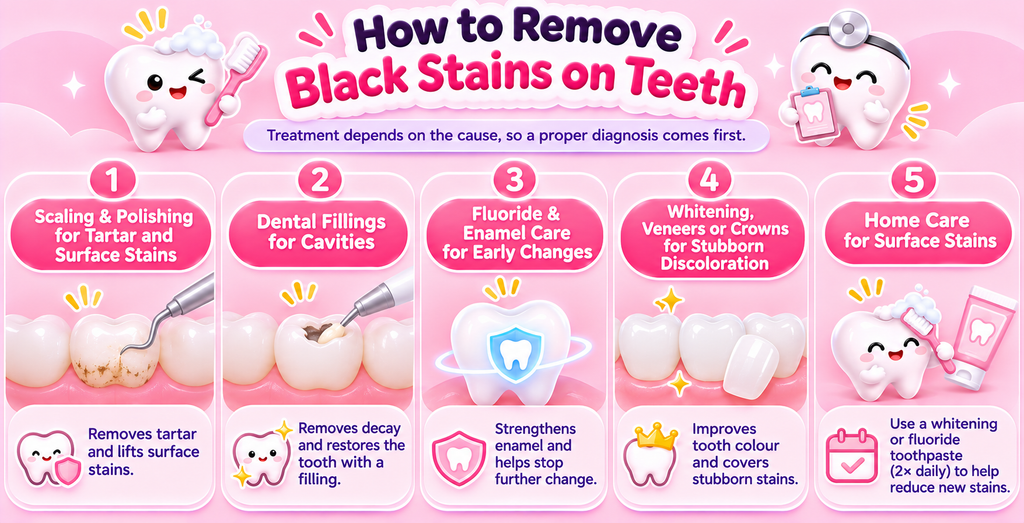
1. Scaling and Polishing for Tartar and Surface Stains
Scaling removes plaque and tartar, and polishing lifts surface stains and smooths the enamel. This is the usual first step for tartar, chromogenic stain and stains from food, drinks or tobacco. Scaling and polishing also helps protect the gums.
2. Dental Fillings for Cavities
When a spot is decay, the dentist removes the affected part of the tooth and restores it with a filling. Dental fillings in tooth-colored composite resin can be matched to the surrounding tooth. Treating decay early also keeps the filling small and the tooth stronger.
3. Fluoride and Enamel Care for Early Changes
If a spot is an early enamel change rather than a cavity, a dentist may recommend fluoride treatment and closer monitoring. This helps harden the enamel and stop it progressing, alongside better cleaning habits, especially around braces.
4. Whitening, Veneers or Crowns for Stubborn Discoloration
For intrinsic stains that polishing cannot remove, SingHealth notes that bleaching can sometimes improve the color. Teeth that resist bleaching can be covered with veneers or crowns. A dentist can advise which option suits the tooth once decay has been ruled out.
5. Home Care for Surface Stains
Surface stains can sometimes be lightened at home, but tartar and decay cannot. A whitening toothpaste may fade mild surface stains, and a fluoride toothpaste used twice a day helps slow new deposits. Hardened tartar can only be removed by a dentist, and a cavity will not heal with scrubbing. Avoid scratching at a spot or using abrasive or homemade whitening mixes, as they can wear down enamel and delay a proper diagnosis.
How to Prevent Black Spots on Teeth
Most causes of black spots respond to the same everyday habits.
- Brush twice a day with fluoride toothpaste and clean between your teeth daily, paying attention to the gum line.
- Limit sugary snacks and constant sipping of sweet or acidic drinks, and rinse with water after coffee, tea or red wine.
- Avoid smoking and tobacco.
- Brush after meals if you wear braces, and clean aligners and retainers properly.
- Visit your dentist for a check-up and scaling and polishing about every six months, or as advised.
- Do not stop iron supplements prescribed by a doctor because of staining. The stain can be polished off.
Also Read: Dental Plaque: What It Is and How to Remove It
When to See a Dentist About Black Spots on Teeth
See a dentist sooner if a black spot feels rough or pitted, is getting larger or darker, or comes with sensitivity, toothache or pain when biting. The same goes for spots around an existing filling, spots near the gum line that keep returning after cleaning, spots that appear during or after braces, and any dark spot on a child’s tooth. Even a spot that looks like a harmless stain can be an early cavity, so a quick check is better than waiting.
Early decay is usually quick to treat with a small filling, while decay left alone can reach the nerve and lead to root canal treatment or extraction. If a dark spot comes with facial swelling, a bump on the gum or severe pain, do not wait for a routine appointment.
Get Your Black Spots on Teeth Checked at AllSmiles Dental Care
At AllSmiles Dental Care, our dentists examine the spot, explain whether it is a stain, tartar or early decay, and recommend the simplest treatment that fits, from a polish to a tooth-colored filling. A dental check-up is a good place to start, and we also look after children’s teeth and teeth with braces.
With clinics across Singapore, including Punggol, Sengkang, Jurong, Bedok, Rochor and Holland Village, it is easy to book an appointment. CHAS, MediSave and CDC Vouchers are accepted, subject to eligibility and the treatment involved.
Frequently Asked Questions
Are black spots on teeth always cavities?
No. Stains, tartar and chromogenic bacteria can all cause black spots without any decay. A spot that is rough, growing or sensitive is more likely to be a cavity, but early cavities can be painless, so a check-up is the safest way to know.
Can black spots on teeth go away on their own?
Not usually. Surface stains and tartar do not fade by themselves, although a professional cleaning can remove them. Decay does not reverse once a cavity has formed and needs a filling.
Why do black spots appear after braces?
Plaque collects around brackets and wires, and its acids can weaken enamel and leave white spots that may darken or turn into cavities. Careful brushing, cleaning between teeth and regular dental visits during treatment lower the risk.
Are black spots on a child’s teeth serious?
Not always. A dotted dark line near the gum line is often a harmless chromogenic stain that a dentist can polish off. Dark spots in the grooves or between teeth may be decay and should be checked promptly.