
Your wisdom tooth is out, the numbness is fading, and you’re standing in front of the fridge wondering what you can eat without hurting yourself. The short answer is cool, soft food that needs almost no chewing, at least for the first few days.
This guide lists 12 soft foods that suit recovery, explains which foods and drinks to skip, and shows how long soft eating usually lasts, so you can plan your meals before or after the procedure.
What to Eat After Wisdom Tooth Surgery in the First Week
Straight after surgery, the extraction site is protected by a blood clot that needs to stay in place. That’s why the best foods are cool or lukewarm, smooth, and soft enough to swallow with little or no chewing. Guidance from Khoo Teck Puat Hospital on NHG Health recommends soft, cool food on the first day, then upgrading the diet gradually.
Most people stay on easy-to-eat foods for about three to seven days, according to Cleveland Clinic. The exact timing depends on how complex the removal was and how quickly you heal, and your dentist’s instructions always come first.
Also Read: 8 Oral Hygiene Habits for Healthy Teeth and Gums
12 Soft Foods to Eat After Wisdom Tooth Surgery
If you’re planning what to eat after wisdom tooth surgery, these 12 foods run from the gentlest options for day one to firmer choices later in the week.
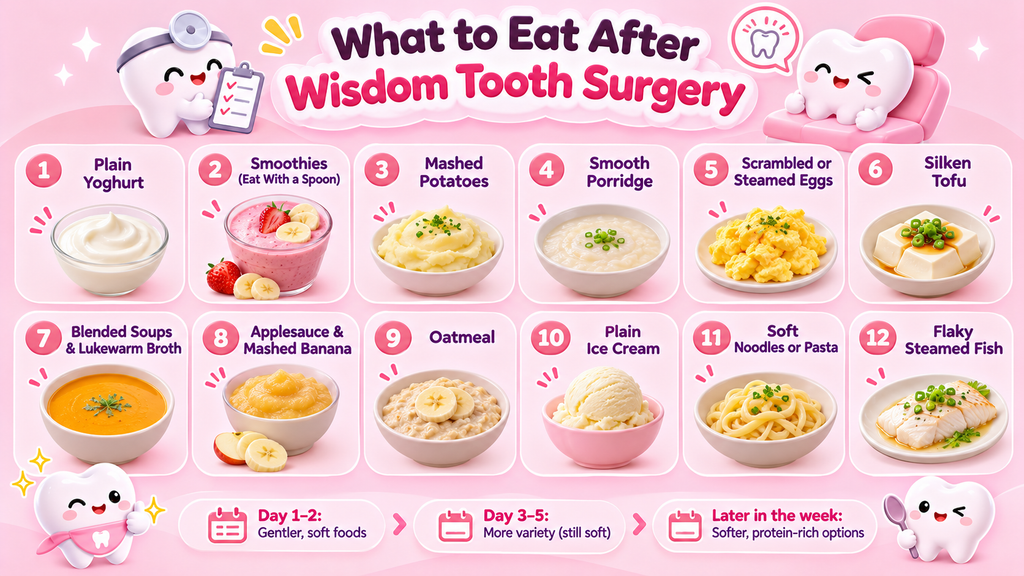
1. Plain Yoghurt
Cool, smooth and chew-free, plain yoghurt soothes a sore mouth and adds protein. Choose varieties without granola, nuts or fruit chunks, and eat it with a spoon.
2. Smoothies Eaten With a Spoon
A thick smoothie sits between a drink and a meal, and you can blend in banana, avocado or milk. Use seedless fruit and spoon it up instead of sipping through a straw, because suction can dislodge the blood clot.
3. Mashed Potatoes
Soft, fluffy mash fills you up without stressing the extraction site. Let it cool to lukewarm and keep it smooth, with no skins or crispy bits.
4. Smooth Porridge
Plain porridge is one of the soft foods suggested in Singapore hospital guidance. Cook it until silky, let it cool before eating, and rinse gently afterwards, since small rice grains can lodge near the socket.
5. Scrambled or Steamed Eggs
Eggs give you protein for tissue repair with almost no chewing. Soft scrambled eggs or silky steamed egg both work well. Keep the flavours mild, because chilli and spicy sauces can sting.
6. Silken Tofu
Silken tofu (beancurd) is easy to swallow and another gentle source of protein. Serve it cool or lukewarm with a little soy sauce rather than sambal or chilli.
7. Blended Soups and Lukewarm Broth
Brothy or blended soups provide fluids and nutrients without chunks. Let them cool to lukewarm first, as very hot soup can loosen the clot, trigger bleeding and increase swelling.
8. Applesauce and Mashed Banana
Smooth applesauce and ripe mashed banana need minimal chewing, and their mild taste won’t irritate the wound. Avoid chunky applesauce that makes you chew.
9. Oatmeal
A bowl of warm, not hot, oatmeal is gentle and filling once chewing feels comfortable. Cook it until smooth rather than chewy, and skip crunchy toppings such as nuts or seeds.
10. Plain Ice Cream
A scoop of plain ice cream can ease tender gums, and the NHG patient guide lists it among suitable first-day foods. Skip cones, nuts, cookie pieces and sticky swirls.
11. Soft Noodles or Pasta
A few days in, well-cooked noodles or pasta make a more substantial meal. Cook them past al dente, let them cool, and keep the sauce mild.
12. Flaky Steamed Fish
Once the first few days have passed, soft white fish gives you protein and breaks apart easily. Steam it plainly and check carefully for small bones before each bite.
Warm vs Cold Foods After Wisdom Tooth Surgery
Cool and lukewarm foods are the safest choice on the first day. Cool foods such as yoghurt can feel soothing on tender gums, while very hot food may loosen the clot, set off bleeding and make swelling worse.
As the first couple of days pass and bleeding settles, warm (not hot) foods like oatmeal or broth are usually fine. Hot drinks such as kopi or teh are commonly advised against in the early days, so let them cool first and drink from a cup rather than through a straw.
Foods to Avoid After Wisdom Tooth Surgery
The foods to avoid are the ones that irritate the extraction site, get trapped in it, or disturb the clot protecting it. These are the main groups to skip.
Hard, Crunchy and Chewy Foods
Nuts, keropok, crispy prata edges, raw carrots and crackers can scrape the socket, and hard fragments can lodge in it. Chewy foods such as bagels, satay and bubble tea pearls strain a stiff, sore jaw.
Hot and Spicy Foods
Steaming soups, curry, laksa and sambal-heavy dishes combine heat and spice, which can raise swelling and sting the wound. Save them for after you’ve healed.
Sticky Foods and Tiny Particles
Peanut butter, caramel and marshmallows cling to the area and are hard to clean. Rice grains, sesame and seeds can slip into the socket and cause irritation or infection, so rinse gently after any meal that includes them.
Alcohol, Smoking and Straws
Alcohol can interfere with clotting and clash with pain medication or antibiotics. Straws create suction that can pull the clot away and lead to dry socket. Smoking delays healing and raises dry socket risk, and the NHG patient guide advises avoiding both smoking and alcohol for a week.
Also Read: Healthy Gums: What They Look Like and How to Keep Them
How Long to Eat Soft Foods After Wisdom Tooth Surgery
Most people eat soft foods for roughly three to seven days. Swelling is usually worst on the second or third day, so there’s no need to rush back to normal meals. Add texture gradually and let comfort guide you.
| Time After Surgery | Food Texture | Example Foods |
|---|---|---|
| First 24 hours | Cool, smooth, almost no chewing | Yoghurt, spooned smoothie, lukewarm blended soup, plain ice cream |
| Days 2 to 3 | Soft and mashed | Porridge, mashed potato, eggs, silken tofu, oatmeal |
| Days 4 to 7 | Soft solids with light chewing | Soft noodles or pasta, steamed fish, well-cooked vegetables |
| After about a week | Gradual return to regular textures | Normal meals, with very hard, spicy or sticky foods added back last |
Healing varies from person to person, and surgical removal of an impacted tooth may need a longer soft-food period. A review is typically scheduled around five days after surgery, when stitches are removed, and that’s a good time to ask what you can add back.
Tips for Eating Comfortably During Recovery
A few small habits make soft-food meals easier and protect the healing socket.
Protect the Blood Clot
- Use a spoon or a cup instead of a straw
- Avoid vigorous swishing and spitting
- Skip smoking and alcohol
Eat Slowly in Small Mouthfuls
- Take small spoonfuls and chew gently on the side away from the surgical site
- Stop and switch to a softer food if anything hurts
Keep the Area Clean
- After the first day, rinse gently with water after meals to clear trapped food
- If you were given a syringe, start using it from the fourth day, following your dentist’s instructions
Stay Hydrated and Nourished
- Sip cool water through the day
- Include protein such as eggs, tofu, yoghurt or fish in your meals
When to See a Dentist After Wisdom Tooth Surgery
Some bleeding, swelling and soreness are expected, but certain signs deserve a call to your dentist. These include fresh bleeding that keeps welling up despite biting on gauze, pain that worsens after the first few days (which may point to dry socket), swelling that keeps increasing after the third day, fever, pus or a lingering bad taste, and numbness that doesn’t fade. Our guide on pain after tooth extraction can help you tell normal healing from warning signs.
If you’re struggling to eat or drink enough, or just unsure whether your recovery is on track, it’s better to ask than to wait. This article is general information and doesn’t replace the instructions your dentist gives you.
Get Gentle, Guided Wisdom Tooth Care at AllSmiles Dental Care
At AllSmiles Dental Care, our dentists assess your wisdom teeth and, when removal is needed, carry out wisdom tooth extraction under local anaesthesia. We send you home with care instructions and medication to support your healing.
Our clinics in Punggol, Sengkang, Bedok, Jurong, Rochor and Holland Village welcome walk-ins, though we encourage advance bookings. Book an appointment or ask our team which subsidies and vouchers may apply to your treatment.
Frequently Asked Questions
How long after wisdom tooth surgery can I eat?
Wait until the numbness from the local anaesthetic wears off, as it’s easy to bite your lip or cheek without feeling it. Then start with cool, soft foods such as yoghurt, porridge or mashed potato.
Can I eat rice after wisdom tooth surgery?
Plain rice grains are small enough to lodge in the socket, so it’s best to hold off for the first few days. Smooth porridge is a safer alternative, followed by a gentle rinse. When your dentist says you’re ready, reintroduce soft cooked rice slowly.
Can I drink coffee, tea or bubble tea after wisdom tooth surgery?
Hot drinks are best avoided in the early days because heat can loosen the clot. Let coffee or tea cool to lukewarm before drinking. Bubble tea is best skipped until you’ve healed, because of the straw and the chewy pearls.
Is it normal if eating still hurts a few days after surgery?
Some soreness, jaw stiffness and swelling are normal, and swelling usually peaks on the second or third day. If pain gets worse instead of easing, contact your dentist.
When can I go back to eating normally after wisdom tooth surgery?
Many people return to regular foods gradually after about a week, starting with softer choices. Your dentist can give more specific advice, especially after surgical removal of an impacted tooth.