
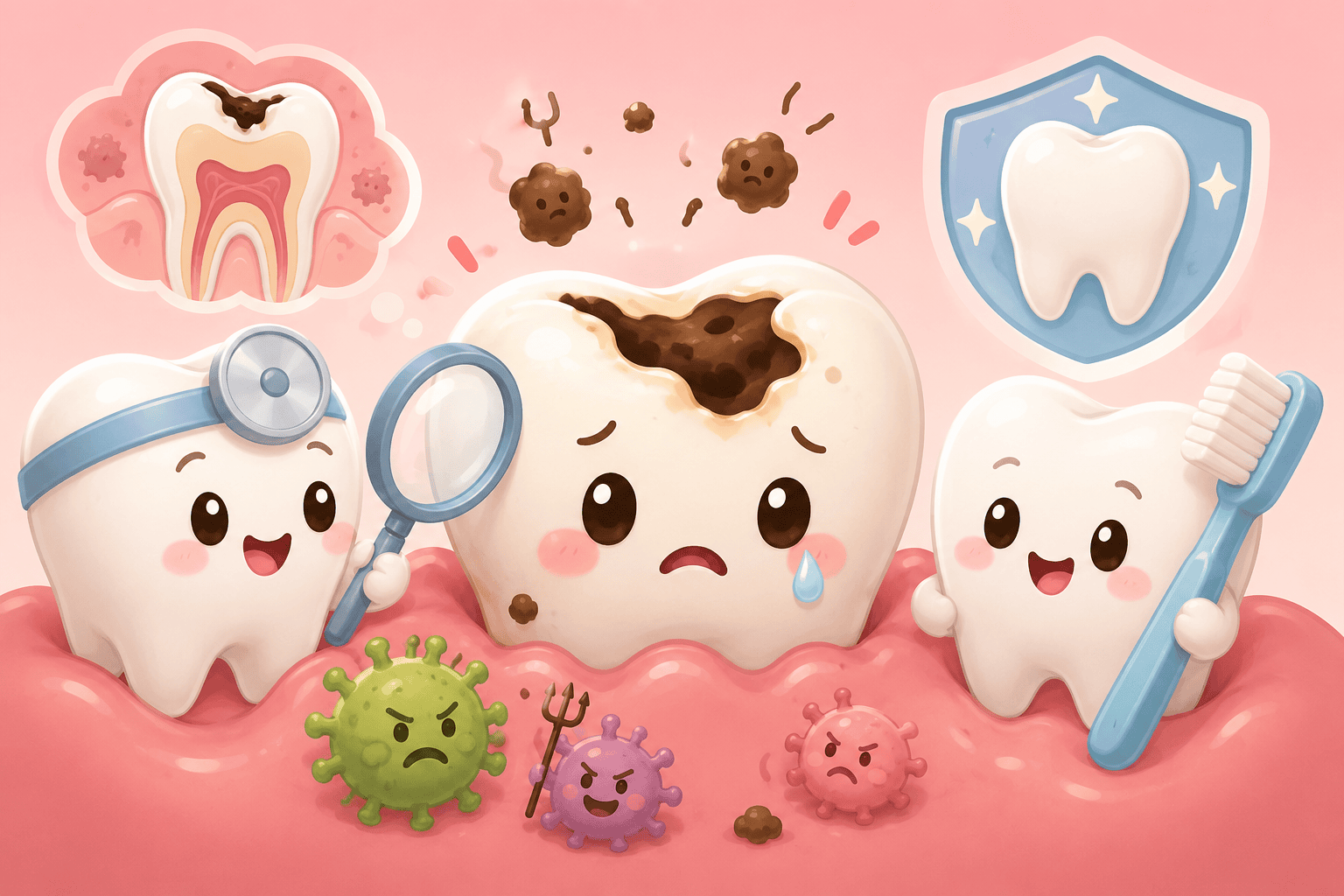
Cavities are among the most common dental problems affecting children and adults worldwide. While they may begin as minor damage to the tooth surface, untreated cavities can progress into deeper decay that affects the inner structures of the tooth.
Many people first notice a cavity when they experience sensitivity to cold drinks, discomfort when eating sweets, or spot a dark area on a tooth. Understanding the causes, symptoms, and treatment options can help you protect your oral health and prevent more serious dental complications.
What Are Cavities?
Cavities mean tooth decay has damaged the surface of a tooth — areas where enamel has broken down and can no longer protect the structure underneath. Left unaddressed, the damage can extend deeper into the tooth over time.
Bacteria naturally present in the mouth feed on sugars from food and drinks, producing acids as a byproduct. These acids wear away tooth enamel with each exposure. Over time, the repeated acid contact creates small openings or holes in the tooth surface.
Early stage cavities often remain near the surface and cause few or no symptoms. This is why they can go undetected without regular dental checks. Deeper decay, however, can reach the dentine or pulp — the inner layers of the tooth — and typically requires more involved treatment.
Cavities vs. Tooth Decay: What Is the Difference?
These two terms are often used interchangeably, but they are not exactly the same thing.
- Tooth decay refers to the overall process — the gradual destruction of tooth enamel caused by bacterial acids. It is the broader condition that unfolds over time.
- Cavities (also called dental caries) are the result of tooth decay — the actual holes or damaged areas that form in the tooth once enamel has been sufficiently worn away.
Think of it this way: tooth decay is the process, and a cavity is the outcome. Decay can be present and progressing before a cavity has fully formed. This is why early detection matters — catching decay before it becomes a cavity gives you more treatment options, including non-invasive approaches like fluoride remineralisation.
Also Read: Chipped Tooth Repair: Symptoms, Causes, Costs in Singapore
| Term | What It Refers To | Stage |
|---|---|---|
| Tooth decay | The process of enamel breakdown caused by acid and bacteria | Ongoing process |
| Cavity (dental caries) | The hole or structural damage that results from decay | End outcome |
| Early stage cavity | Enamel weakening before a visible hole forms | Reversible with intervention |
| Advanced cavity | Decay reaching dentine or pulp | Requires clinical treatment |
Common Symptoms of Cavities
Tooth Sensitivity
Sensitivity to hot, cold, or sweet items often appears as enamel begins to thin. The sensation is usually brief but can become more persistent as decay advances.
Visible Spots, Holes, or Discoloration
Dark spots, white patches, or small holes may become noticeable on the tooth surface. Any visible change in a tooth’s appearance warrants a dental check.
Pain When Eating or Drinking
Discomfort during chewing or when consuming certain foods and drinks can signal that decay has moved beyond the surface layer.
Symptoms That May Appear Late
Some cavities produce no clear signs until decay reaches deeper layers. Regular dental examinations are the most reliable way to identify hidden changes before symptoms develop.
| Symptom or Sign | What It May Suggest | Why It Matters |
|---|---|---|
| Sensitivity to cold or sweet | Possible early enamel wear | Early evaluation can catch changes before they advance |
| Visible dark spot or small hole | Surface decay present | Professional assessment determines extent |
| Pain when biting or chewing | Deeper involvement possible | Prompt care may prevent further complications |
| No symptoms but X-ray finding | Hidden early stage cavity | Regular exams catch issues before symptoms appear |
Causes and Risk Factors of Cavities
What Causes Cavities in Everyday Life
Daily habits play a significant role. Frequent sugary snacking, irregular brushing, and skipping floss allow plaque to accumulate — giving bacteria more opportunity to produce enamel-damaging acids throughout the day.
Plaque, Sugar, and Acid Exposure
Plaque is a sticky film that forms on teeth and harbours bacteria. Every time you consume sugar or refined carbohydrates, those bacteria produce acid. The more frequently this happens, the less time enamel has to recover.
Dry Mouth and Low Saliva Flow
Saliva plays a natural protective role — it neutralises acids and helps rinse away food particles. Reduced saliva flow, which can result from certain medications, medical conditions, or mouth breathing, leaves teeth more vulnerable to decay.
Wisdom Tooth Cavities and Hard-to-Clean Areas
Wisdom teeth and back molars are particularly prone to cavities because of their position and the deep grooves in their surfaces. These areas are harder to clean thoroughly, allowing plaque to build up unnoticed.
Factors That Can Raise Risk Over Time
Age, dietary patterns, limited fluoride exposure, and certain medications can all increase the likelihood of developing cavities. Children and older adults tend to face higher risk, though decay can affect anyone at any age.
How Cavities Are Diagnosed
Dental Exam and Symptom Review
A dentist will ask about any sensations you have noticed and examine your teeth visually for early signs of enamel wear or discolouration.
Dental X-Rays and Visual Checks
X-rays reveal decay between teeth or beneath existing fillings — areas that are not visible during a standard surface check. This makes routine X-rays a key part of cavity detection.
What Dentists Look for in Early Stage Cavities
Early assessments focus on enamel softening, small white spot lesions, or changes in tooth texture before a visible hole forms. Identifying these early gives more options for conservative management.
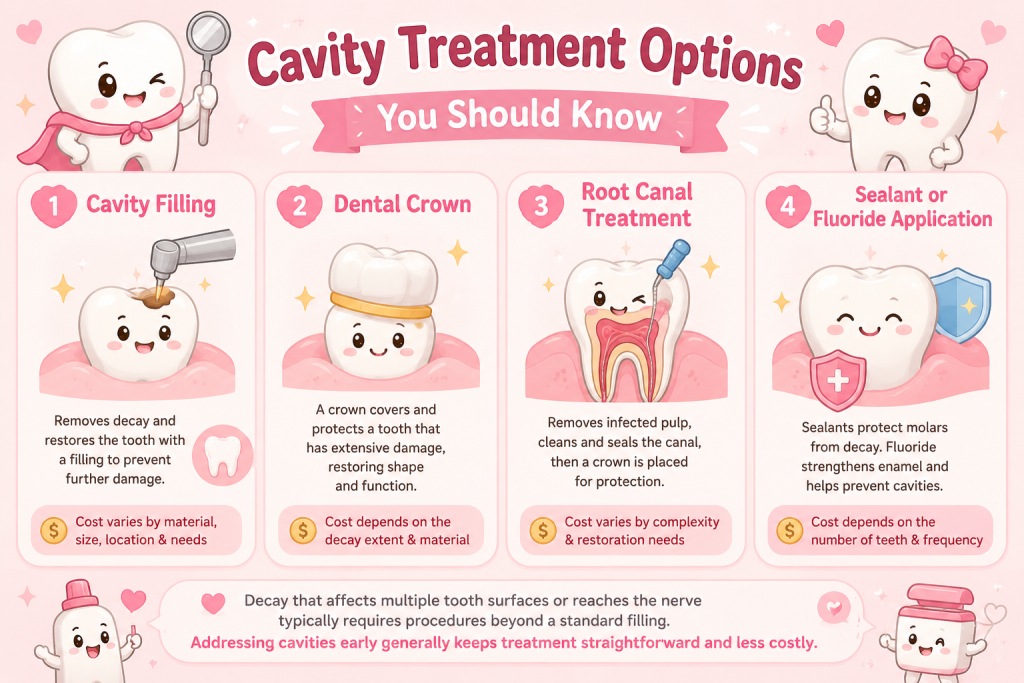
Cavity Treatment Options You Should Know
1. Cavity Filling
A filling is the standard approach for most cavities. The decayed material is removed and the area is restored using composite resin, amalgam, or another material — protecting the remaining tooth structure from further damage.
Filling costs vary based on the material chosen, the size and location of the cavity, and any additional steps needed during the procedure. Your dentist can advise on the most suitable option for your situation.
2. Dental Crown
More advanced cases where decay has extensively damaged the tooth may require a crown to cover and protect what remains. A crown restores the tooth’s shape and function while preventing further breakdown. Cost factors include the extent of decay and the material selected.
3. Root Canal Treatment
If decay has reached the inner pulp, where the nerves and blood vessels are located, a root canal treatment may be necessary.
This procedure removes the infected pulp, cleans the canal, and seals it before a crown is typically placed over the tooth. The complexity of the case and any additional restoration needs affect the overall cost.
4. Sealant or Fluoride Application
For teeth at higher risk of decay, sealants can be applied to the surface of molars to block out bacteria and food particles. Fluoride applications help strengthen enamel and slow early decay. These are primarily preventive measures, with costs depending on the number of teeth treated and frequency of application.
Decay that affects multiple tooth surfaces or reaches the nerve typically requires procedures beyond a standard filling. Addressing cavities early generally keeps treatment straightforward and less costly.
| Treatment Type | Typical Purpose | Key Cost Factors |
|---|---|---|
| Cavity filling | Restore damaged tooth area | Material type, tooth position, cavity size |
| Crown | Protect extensively damaged tooth | Extent of decay, material selected |
| Root canal | Address decay reaching inner pulp | Complexity, additional restoration needs |
| Sealant or fluoride application | Protect high-risk surfaces | Number of teeth treated, frequency |
How to Help Prevent Cavities
Preventive dental care plays a critical role in reducing the risk of tooth decay. Adopting healthy oral hygiene habits and making informed dietary choices can help protect teeth from cavities and support long-term dental health.
1. Maintain Good Oral Hygiene
Good oral hygiene is one of the most effective ways to prevent cavities. Removing plaque regularly helps reduce the buildup of bacteria that produce acids capable of damaging tooth enamel. Daily habits should include brushing twice a day with fluoride toothpaste, flossing once daily to clean between teeth, and replacing toothbrushes regularly to maintain effective cleaning.
2. Use Fluoride Products
Fluoride helps strengthen tooth enamel and makes teeth more resistant to acid attacks that can lead to decay. Using fluoride-containing products consistently can lower the risk of cavities and support enamel remineralization. Common sources of fluoride include fluoride toothpaste, fluoride mouth rinses, and professional fluoride treatments provided by a dentist.
3. Make Smart Food and Drink Choices
Diet plays an important role in cavity prevention. Frequent consumption of sugary foods and drinks can increase acid production in the mouth, raising the risk of enamel erosion and tooth decay. To help reduce cavity risk, limit sugary snacks, reduce the intake of soft drinks, drink water regularly, and avoid frequent snacking throughout the day.
4. Protect Hard-to-Clean Teeth
Certain teeth, especially back molars, can be more difficult to clean thoroughly due to their grooves and position in the mouth. Additional preventive measures may help protect these higher-risk areas.
These measures can include dental sealants on molars, regular dental checkups, professional cleanings, and personalized preventive recommendations from your dentist based on your oral health needs.
Also Read: What Is Cracked Tooth? Causes, Symptoms & Treatment You Should Know
When to See a Dentist About Cavities
Any persistent sensitivity, visible change on a tooth, or discomfort lasting more than a day or two is worth a prompt dental check. Swelling near a tooth or difficulty chewing may indicate decay has progressed and needs more urgent attention.
Delaying a visit allows decay to advance — often turning a straightforward filling into a more complex procedure. Early action is almost always the simpler path.
Address Cavities Early With the Right Dental Team
Cavities are common, but that does not mean they should be ignored. Whether you are noticing early sensitivity, a visible spot on a tooth, or simply want to stay ahead of potential issues, getting a professional assessment is always the right first step.
The earlier decay is identified, the more treatment options are available and the simpler the process tends to be.
At AllSmiles Dental Care, our experienced dentists take a thorough, patient-centred approach to cavity care, from detailed check-ups and digital X-rays to precise fillings, crowns, and root canal treatment when needed.
We also offer preventive treatments such as fluoride application and dental sealants to help protect your teeth before problems develop. Whether your concern is straightforward or more complex, our team is equipped to assess and manage it with care.
Book your dental check-up at AllSmiles Dental Care and take the first step toward a healthier smile.
Frequently Asked Questions about Cavities
Are cavities serious?
They can become more serious if decay reaches deeper parts of the tooth. Early cavities are generally easier to manage, so timely evaluation is important.
Can a cavity heal on its own?
Once a hole has formed, a cavity cannot reverse on its own. Very early enamel damage may be slowed with fluoride and better oral hygiene, but a dentist needs to assess whether active treatment is required.
What is the cause of cavities?
Cavities are caused by bacteria that feed on sugars and produce acids, which gradually wear down tooth enamel. Frequent sugary snacking, irregular brushing, and dry mouth can all raise the risk.
Are cavities very painful?
Not always. Early cavities often cause no pain at all. As decay progresses, you may notice sensitivity to hot, cold, or sweet foods. Significant pain or swelling usually means decay has advanced and needs prompt attention.
How to fix cavities?
The most common treatment is a dental filling. More advanced cases may require a crown or root canal treatment, depending on how far the decay has progressed.