
A small space between the front teeth is one of the first things people notice when they smile. Some people love it, some feel self-conscious about it, and many simply wonder whether a tooth gap is normal or a sign that something is wrong.
This guide explains diastema teeth in plain language, what they are, why a tooth gap forms, how dentists assess it, and which treatment options are available in Singapore. The short version is reassuring, because most gaps are harmless. A gap that is new or changing still deserves a proper check.
What is Diastema?
Diastema teeth are teeth with a space between them, which most people simply call a tooth gap. Diastema is the dental term for the same thing, and dentists generally use it for a visible space wider than about half a millimetre. It most often appears between the two upper front teeth, but a tooth gap can form between any teeth, including the lower front teeth and the back teeth.
According to Cleveland Clinic, most healthcare providers view diastema as a variation of normal dental development, and it often has no effect on oral health. That is why treating a tooth gap is frequently a personal choice rather than a medical necessity.
Signs of a Tooth Gap
The main sign of a tooth gap is a visible space between two teeth, usually at the front of the upper jaw. When the teeth and gums are healthy, there are often no other symptoms. Some people notice related changes that are worth being aware of:
- Food or plaque catching in the spacing between teeth
- A slight whistle or change in speech in some cases
- Red, swollen or bleeding gums near the gap
- A gap that is widening, or teeth that feel loose or look as if they are shifting
The last two signs matter most, because they can point to a gum problem rather than a simple cosmetic gap.
Tooth Gap in Children and Adults
Many children develop a gap between the upper front teeth when their permanent teeth first come through, known as a midline diastema. This is often a normal stage, sometimes nicknamed the “ugly duckling” stage, and the gap commonly narrows or closes once the permanent canines erupt. For this reason, dentists usually monitor a child’s tooth gap rather than treating it early.
In adults, a gap between permanent teeth is much less likely to close on its own. A gap that has been stable for many years is usually part of a person’s natural tooth and jaw structure. A gap that opens or widens later in life is different and is worth having examined.
Causes of a Tooth Gap
The causes of a tooth gap usually fall into a few groups, and more than one can apply at the same time.
Tooth Size and Jaw Size Mismatch
Genetics play a large role. When the teeth are small relative to the jaw, there is simply extra space between them. This pattern often runs in families and is one of the most common reasons for a tooth gap.
Missing, Small or Extra Teeth
Missing teeth or undersized teeth, such as peg-shaped upper side teeth, leave room that neighbouring teeth can drift into. Extra teeth or baby teeth that have not fallen out can also push teeth apart.
A Large or Low Frenum
The frenum is the small band of tissue that connects the upper lip to the gum. When it is thick or attaches low between the front teeth, it can hold the teeth apart and create a gap in the middle.
Habits Such as Tongue Thrust and Thumb Sucking
Pressing the tongue against the front teeth when swallowing, sucking a thumb or finger, or habitually biting the lip can push the front teeth outward over time. Oral piercings placed between the teeth can have a similar effect.
Gum Disease
Advanced gum disease can weaken the bone and tissue that support the teeth, allowing them to drift or loosen. A new or widening tooth gap, especially with red, swollen or bleeding gums, should be checked early.
How Dentists Check a Tooth Gap
A dentist can usually identify a tooth gap during a routine examination. The purpose of the visit is less about confirming the gap and more about understanding why it is there.
Your dentist will look at the size and position of your teeth, the frenum, your gums and your bite, and may ask about habits such as tongue thrusting. X-rays can help show bone levels, extra or unerupted teeth and the roots of the teeth, which guides the choice of treatment.
Tooth Gap Treatment
Not every tooth gap needs treatment. When it is wanted, the right option depends on the cause, the size of the gap, and whether you prefer a quick cosmetic change or a lasting alignment change.
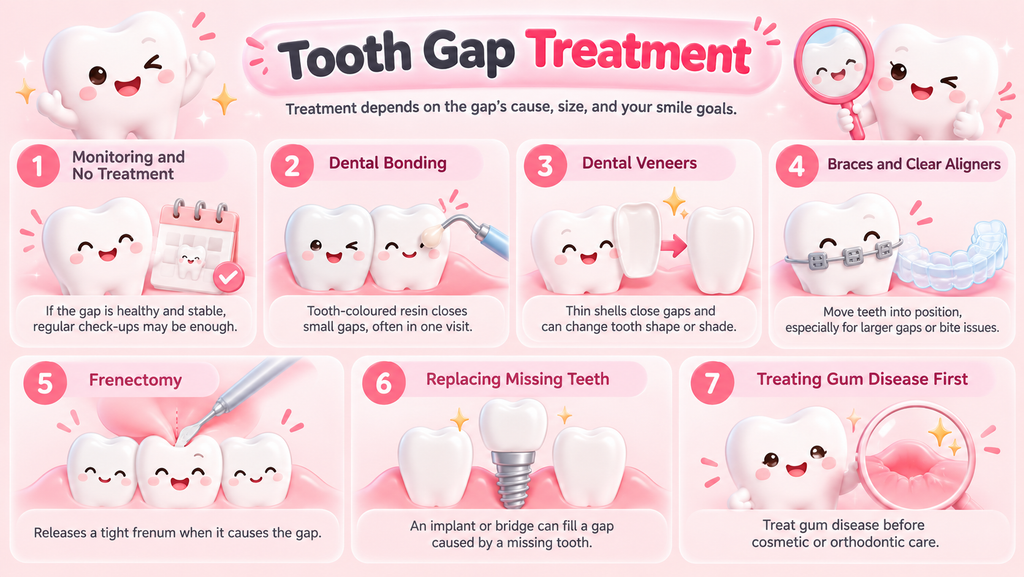
Monitoring and No Treatment
If the gap is healthy, stable and does not bother you, regular check-ups may be all that is needed. Many people also choose to keep their gap as part of their smile.
Dental Bonding
Bonding uses tooth-matched composite resin that is shaped onto the sides of the teeth to close a small gap. It is usually completed in a single visit and needs little or no removal of tooth structure, although the resin can chip or stain over time and may need touch-ups.
Dental Veneers
Dental veneers are thin, custom-made shells bonded to the front of the teeth. They can close a gap while also changing the shape or shade of the teeth. They usually cost more than bonding, and porcelain veneers typically involve removing a thin layer of enamel, which cannot be reversed.
Braces and Clear Aligners
Orthodontic braces close a tooth gap by moving the teeth rather than covering them, which suits larger gaps, several spaces at once, or cases where the bite also needs attention. Clear aligners such as Invisalign may suit selected cases. Treatment time is usually measured in months, and a retainer afterwards helps stop the gap from reopening. The National Dental Centre Singapore describes orthodontic care using fixed braces, clear aligners and retainers.
Frenectomy
A frenectomy is the surgical option for a tooth gap. It releases or reshapes the frenum when that tissue is holding the front teeth apart, and it is considered only when a dentist finds the frenum is the cause. It is often combined with braces or bonding so the result lasts. In children, dentists generally wait until the permanent canines have come through, because many gaps narrow on their own by then. The procedure is typically done under local anaesthesia.
Replacing Missing Teeth
When a missing tooth is the reason for the gap, a dental implant, bridge or crown may be used to restore the space. In some cases the teeth are first moved with braces to create the right amount of room.
Treating Gum Disease First
If gum disease is behind the gap, the infection needs to be controlled before any cosmetic or orthodontic work begins. Gum disease treatment, such as a deep clean, comes first, and the gap can be addressed once the gums are healthy.
Tooth Gap Treatment Cost in Singapore
The cost of closing a tooth gap in Singapore varies widely because the options are so different. A small gap closed with a dental filling or bonding is generally more affordable than veneers or braces, while larger gaps or several spaces usually need orthodontic treatment, which tends to be the higher-cost route. The table below shows what typically affects the cost of each option.
| Treatment | Typical use for a tooth gap | What affects the cost |
|---|---|---|
| Dental filling or bonding | Small gaps | Number of teeth and size of the gap |
| Veneers | Small to moderate gaps, with a change in shape or shade | Number of teeth and veneer material |
| Braces | Larger gaps or several spaces | Type of braces and length of treatment |
| Clear aligners | Selected cases | Complexity of the case and length of treatment |
Whether a dental filling or gum treatment is needed first, and the clinician’s experience, can also affect the final price, and prices change over time. For the most up-to-date information and an accurate quote, please contact AllSmiles Dental Care before you decide on a treatment.
Also Read: Crossbite: Causes, Signs and Treatment in Singapore
Looking After the Gaps Between Your Teeth
Gaps can trap food and plaque more easily, so good habits matter whether you treat the gap or keep it. Brush twice a day with fluoride toothpaste, clean between your teeth daily with floss or interdental brushes, and keep up regular scaling and polishing. If you have had a gap closed, wear any retainer as advised and avoid habits such as nail biting or chewing hard objects, which can chip bonding.
Ready to Take the Next Step With Your Tooth Gap?
Book a dental visit if a tooth gap has appeared recently, is getting wider, or comes with sore, red, swollen or bleeding gums, or if your teeth feel loose. It is also worth seeing a dentist if the gap bothers you or your child, if food keeps catching in it, or if you simply want to understand your options. An examination clarifies the cause before any treatment is considered, and for many people the answer is that nothing needs to be done.
At AllSmiles Dental Care, our dentists can examine your teeth, gums and bite, explain whether your tooth gap is a normal feature or needs attention, and walk you through the options in plain language, without pressure. Explore the dental services at AllSmiles Dental Care and book your consultation today.
Frequently Asked Questions
Is a tooth gap always a problem?
No. When the teeth and gums are healthy, a tooth gap is usually a cosmetic feature. A gap that is new, widening, or accompanied by red, swollen or bleeding gums should be checked, as it can point to gum disease.
Can a tooth gap close on its own?
In children, a gap often narrows once the permanent canines come through. In adults, gaps between permanent teeth rarely close without dental treatment.
Can braces close a tooth gap?
Yes. Braces or clear aligners are a common way to close a tooth gap by moving the teeth, particularly larger gaps or multiple spaces. A retainer helps keep the result stable.
Is surgery always needed for a tooth gap?
No. Surgery, usually a frenectomy, is only considered when the frenum is the cause of the gap. Many gaps are closed with bonding, veneers or braces, or are simply left alone.
How much does tooth gap treatment cost in Singapore?
It depends on the treatment. Bonding is usually charged per tooth, while braces cost several thousand dollars. A consultation is needed for an accurate quote.