
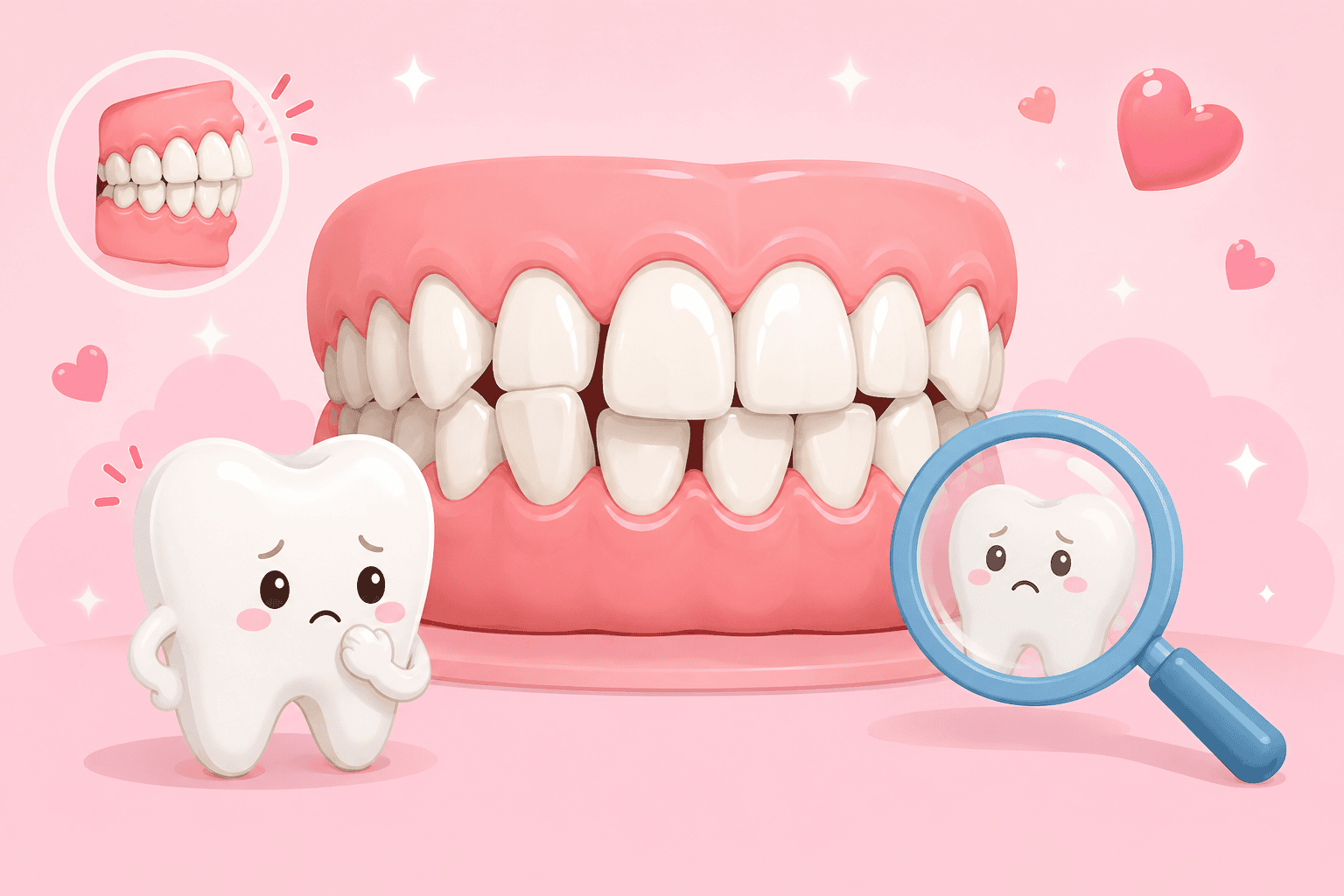
A perfect smile is about more than just aesthetics, it is about how your teeth and jaws function together. Malocclusion, or a “bad bite,” affects millions of people in Singapore, leading to issues with speech, chewing, and long-term oral health. Whether you are dealing with minor crowding or a severe underbite, understanding the specific type of malocclusion you have is the first step toward a healthier smile.
A dental malocclusion occurs when the upper and lower teeth do not fit properly when they bite together. It is a fairly common problem that can range in severity from mild to severe — and in many cases, it goes undiagnosed until it begins to affect everyday life.
What Is Malocclusion?
Malocclusion is a clinical term used to describe any misalignment between the upper and lower teeth when the jaws are closed.
The condition exists on a wide spectrum: at its mildest, it may simply mean a slightly crooked tooth or a small gap; at its most severe, it can involve a significant skeletal mismatch between the upper and lower jaws that affects breathing, chewing, and facial structure.
Malocclusion is not just a cosmetic issue, untreated, it can accelerate tooth wear, make teeth harder to clean, and place excessive strain on the jaw joints and muscles over time.
Angle’s Classification of Malocclusion
Important to understand how dentists categorise bite problems. The most widely used system is Angle’s Classification, developed by Dr. Edward Angle, which divides malocclusions into three main classes based on the relationship of the upper and lower first molars.
Class I Malocclusion
The molar relationship is normal — the upper first molar sits slightly ahead of the lower first molar as it should. However, there are still problems such as crowding, spacing, or rotated teeth. Class I is the most common type.
Class II Malocclusion (Retrognathism)
The lower jaw (mandible) is positioned too far back relative to the upper jaw, causing the upper teeth and jaw to protrude forward. This is commonly associated with a deep overbite or overjet. Class II is often linked to genetics but can be worsened by childhood habits like thumb sucking.
Class III Malocclusion (Prognathism)
The lower jaw protrudes forward past the upper jaw, creating an underbite. This may be due to an overgrown lower jaw, an underdeveloped upper jaw, or both. Class III malocclusions often require more complex orthodontic treatment or jaw surgery.
7 Types of Malocclusion
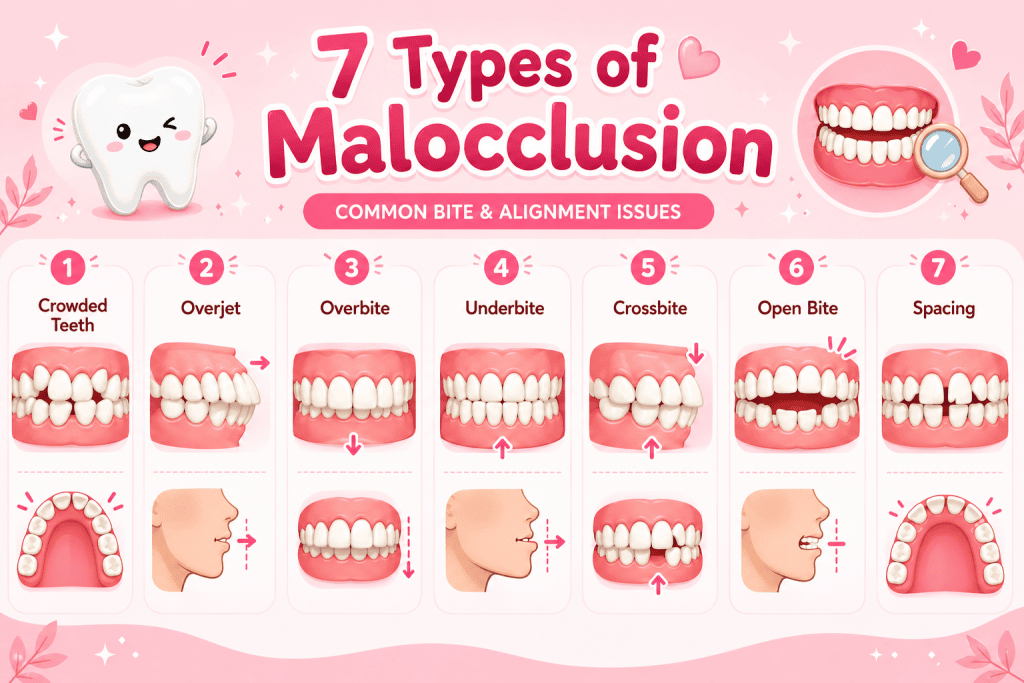
1. Crowded Teeth
Crowding occurs when there is insufficient space in the jaw to accommodate all of the teeth, causing them to overlap, rotate, and push against each other. It is most common during adolescence due to jaw growth spurts, but it can persist into adulthood if untreated.
Why it matters: Overcrowded teeth are difficult to clean properly, significantly increasing the risk of tooth decay and gum disease over time.
2. Overjet
An overjet causes the upper front teeth to protrude horizontally past the lower teeth — commonly called “buck teeth.” This is different from an overbite (see below). The protrusion can interfere with chewing, speaking, and in severe cases, may make the front teeth more vulnerable to trauma.
3. Overbite
An overbite occurs when the upper front teeth overlap the lower front teeth vertically by an excessive amount. A small degree of overlap is normal, but a deep overbite can cause the upper teeth to bite into the lower gums, or the lower teeth to bite into the roof of the mouth, causing pain and tissue damage.
4. Underbite
An underbite (also called an anterior crossbite) is the opposite of an overbite — the lower jaw and teeth protrude forward past the upper teeth. It is often associated with a Class III Angle’s Classification and, in more severe cases, may require jaw surgery to correct the skeletal imbalance.
5. Crossbite
A crossbite occurs when one or more upper teeth bite inside the lower teeth, rather than outside them. It can affect the front teeth (anterior crossbite) or the back teeth (posterior crossbite), and may occur on one or both sides of the mouth. If left untreated in children, a crossbite can cause asymmetric jaw growth and facial imbalance.
6. Open Bite
An open bite is when the upper and lower front teeth do not make contact when the mouth is closed, creating a visible gap or opening. It can also occur at the back of the mouth. Open bites are commonly caused by prolonged thumb sucking, tongue thrusting, or dummy (pacifier) use beyond toddlerhood. The condition makes biting and chewing food difficult and can affect speech clarity.
7. Spacing
Spacing refers to gaps between two or more teeth. Causes include missing teeth, undersized teeth, a large jaw, tongue thrusting, or habits like thumb sucking. While a small gap (diastema) between the front teeth is sometimes a cosmetic preference, excessive spacing can affect bite function and make the gums more susceptible to food impaction and inflammation.
Also Read: Gum Infection: Symptoms, Causes & Treatment
Causes & Risk Factors of Malocclusion
Malocclusion is most often caused by a combination of genetic and environmental factors:
- Genetics: Inherited jaw size or tooth size discrepancies are the leading cause. If your parents had crowded teeth or a misaligned bite, there is a higher likelihood you will too.
- Childhood habits: Prolonged thumb sucking, dummy use past age 3, mouth breathing, and tongue thrusting can all push teeth out of alignment during development.
- Premature tooth loss: Losing baby teeth too early (due to decay or trauma) can allow neighbouring teeth to drift into the empty space, reducing room for adult teeth.
- Trauma: An injury to the jaw can displace teeth or alter the jaw’s shape.
- Dental work: Ill-fitting crowns, fillings, or braces that were not completed properly can contribute to malocclusion over time.
How Dentists Diagnose Malocclusion
A comprehensive orthodontic assessment may include:
- Clinical examination
- Digital photographs
- Dental X-rays
- 3D intraoral scanning
- Bite analysis
- Study models or digital impressions
These diagnostic tools help determine the type and severity of malocclusion and guide treatment planning.
Treatment Options for Malocclusion
The most suitable treatment depends on the patient’s age, bite condition, and treatment goals.
Traditional Braces
Braces remain one of the most effective solutions for correcting mild to severe malocclusions.
Benefits include:
- Highly effective for complex cases
- Precise tooth movement
- Suitable for both teenagers and adults
Invisalign Clear Aligners
Invisalign uses a series of custom-made clear aligners to gradually move teeth into position.
Benefits include:
- Virtually invisible appearance
- Removable during meals
- Easier oral hygiene maintenance
Many adults in Singapore prefer Invisalign due to its discreet appearance.
| Treatment | Best For | Approximate Cost (SGD) |
|---|---|---|
| Metal Braces (18–36 months) | Moderate to severe underbite cases; suitable for all ages | From $4,500 |
| Ceramic Braces (18–30 months) | Moderate underbite cases; patients seeking a more discreet option | $4,500–$7,500 |
| Invisalign (12–24 months) | Mild to moderate underbite cases; adults and teens | $5,000–$9,000 |
Note: Costs are estimates and vary based on case complexity and clinic. Some Medisave-claimable surgical procedures may apply. Speak with our team for a personalised quote.
Malocclusion Severity Guide
| Severity | Characteristics | Typical Treatment |
|---|---|---|
| Mild | Minor crowding or spacing; normal molar relationship | Clear aligners or removable appliances |
| Moderate | Noticeable overcrowding, overbite, or crossbite; some skeletal involvement | Fixed braces or Invisalign |
| Severe | Significant jaw discrepancy, large underbite/overbite, open bite | Braces combined with jaw surgery |
When to See a Dentist
You should book a consultation if you notice any of the following:
- Difficulty or discomfort when biting or chewing
- Jaw pain, clicking, or popping sounds
- Speech difficulties such as a lisp
- Frequent cheek or tongue biting
- Mouth breathing
- Teeth that visibly protrude or appear crowded
- Your child is 7 years old — this is the recommended age for a first orthodontic screening
Early intervention in children can often reduce the complexity and cost of treatment later on, sometimes avoiding the need for tooth extractions or surgery altogether.
Also Read: Overbite: Symptoms, Causes & Treatment
Take the First Step Towards a Healthier Smile at AllSmiles Dental Care
Malocclusion can affect much more than the appearance of your teeth. From difficulties with chewing and speaking to increased risks of tooth wear and gum problems, an untreated misaligned bite can have a lasting impact on your oral health and overall quality of life.
Fortunately, modern orthodontic treatments can effectively address a wide range of bite and alignment issues, helping you achieve a healthier, more confident smile.
If you are concerned about crowded teeth, an overbite, underbite, or any other type of malocclusion, the experienced team at AllSmiles Dental Care is here to help.
Through a comprehensive assessment and personalised treatment plan, we can recommend the most suitable solution for your needs, whether it involves braces, Invisalign, or other orthodontic treatments.
Book a consultation with AllSmiles Dental Care today and take the first step towards improving your smile and long-term oral health.
FAQ About Malocclusion
Can malocclusion be fixed without braces?
Yes, in mild to moderate cases. Clear aligners like Invisalign are an effective, removable alternative to braces. For very young children, myofunctional appliances (like Myobrace) can guide jaw development before teeth are fully erupted.
What happens if malocclusion is left untreated?
Untreated malocclusion can lead to increased tooth wear, higher rates of tooth decay and gum disease (due to difficulty cleaning), jaw joint (TMJ) problems, chronic headaches, and reduced self-confidence. In children, it can also affect speech development.
At what age should a child be screened for malocclusion?
The Singapore Dental Association recommends that children have their first orthodontic assessment around age 7, when enough adult teeth have erupted to identify developing alignment problems. Early screening does not always mean early treatment — but it allows your dentist to monitor and intervene at the optimal time.