
Wisdom tooth pain is one of the more common dental complaints — and for good reason. The third molars are the last teeth to emerge, often arriving in a mouth that has little space left for them. For many people, the first sign is a dull ache or sharp discomfort at the back of the mouth that gradually becomes harder to ignore.
Understanding what is causing the pain, what to watch for, and when to seek professional review can make a significant difference in how the situation is managed.
What Is Wisdom Tooth Pain?
Wisdom tooth pain refers to discomfort associated with the third molars — the four teeth located at the very back of the mouth, one in each corner. These teeth typically emerge in the late teens or early twenties, though the timing varies widely from person to person.
Because wisdom teeth arrive late, there is often limited space for them to grow in properly. This can lead to a range of discomfort patterns depending on how the tooth is positioned, whether it has fully emerged, and how the surrounding tissue is responding.
Pain During Wisdom Tooth Eruption
As wisdom teeth attempt to emerge, they may place pressure on surrounding tissues. This can create:
- A feeling of tightness in the jaw
- Mild aching at the back of the mouth
- Tenderness around the gums
Pain Caused by Inflamed Gum Tissue
When a wisdom tooth partially erupts, a flap of gum tissue may remain over part of the tooth. This area can become irritated, leading to discomfort and sensitivity.
Pain After Wisdom Tooth Extraction
Following wisdom tooth removal, some soreness is expected during healing. In most cases, discomfort gradually improves over time as the tissues recover.
Common Symptoms of Wisdom Tooth Pain
Wisdom tooth symptoms often appear together and can vary in intensity. Recognising the pattern helps clarify whether the pain is part of normal eruption or something that needs attention sooner.
1. Gum Tenderness Near the Wisdom Tooth
The most frequently reported symptom is tenderness or redness in the tissue directly behind the last molar. The gum may look slightly swollen or feel noticeably different from the surrounding area. This tenderness can persist or flare up during eating.
2. Pain When Chewing or Opening the Mouth
Discomfort when biting down or opening the jaw wide is common, particularly when the wisdom tooth is partially erupted or the surrounding tissue is inflamed. In some cases, this limits how far the jaw can open comfortably.
3. Jaw Discomfort or Soreness
A dull ache along the lower or upper jaw near the back teeth is often linked to wisdom tooth activity. This soreness can feel similar to the kind of jaw fatigue that comes from clenching or grinding, which sometimes makes the source harder to identify without a professional exam.
4. Swelling, Tenderness, or Unusual Taste
Local swelling in the gum tissue, tenderness when touched, or a persistent bad taste in that area of the mouth can all accompany wisdom tooth pain. These signs often point to irritation or trapped debris around the tooth.
5. Pain That Spreads to Nearby Teeth or the Ear
In some cases, discomfort from the wisdom tooth area radiates toward adjacent teeth or up toward the ear. While this can feel concerning, it is often still centred around the wisdom tooth site. Persistent or spreading pain is a reason to seek a dental review.
Also Read: Pain After Tooth Extraction: What’s Normal and When to Check In
Causes of Wisdom Tooth Pain
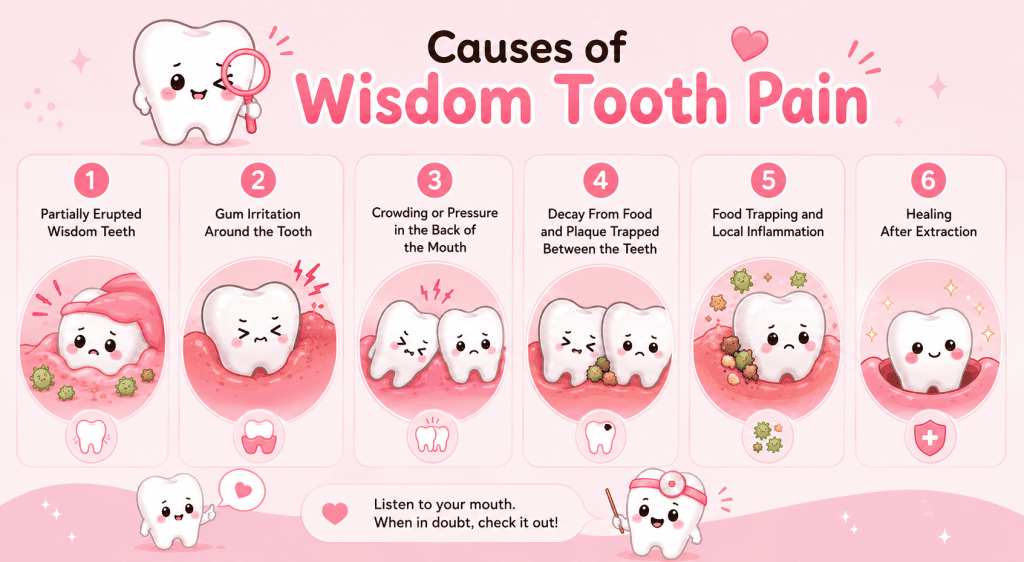
Partially Erupted Wisdom Teeth
A tooth that has only partially broken through the gum leaves a flap of tissue over part of its surface. This flap is difficult to clean and creates a space where bacteria and food particles can accumulate, leading to ongoing irritation and potential inflammation.
Gum Irritation Around the Tooth
Even when a wisdom tooth has fully emerged, the surrounding gum tissue can remain prone to irritation — particularly if the tooth is difficult to reach with a toothbrush or floss. Repeated contact during chewing also contributes to ongoing soreness in the area.
Crowding or Pressure in the Back of the Mouth
When there is insufficient room for a wisdom tooth to grow in at a proper angle, it may push against the adjacent molar. This pressure creates a distinct kind of ache that can extend through several teeth and into the jaw.
Decay From Food and Plaque Trapped Between the Teeth
The tight space between a wisdom tooth and the neighbouring molar is often difficult to reach with a toothbrush or floss, making it a common spot for food particles and plaque to build up undisturbed.
Over time, this trapped debris can lead to decay forming on either the wisdom tooth or the adjacent tooth, often starting at the point where the two teeth touch. Unlike gum-related discomfort, this type of pain tends to feel more localised and can worsen when biting down or when sweet or cold foods reach the affected spot.
Food Trapping and Local Inflammation
Hard-to-clean areas around wisdom teeth are particularly vulnerable to food trapping. When food debris remains in these areas, it promotes bacterial growth, which can lead to localised inflammation and a persistent bad taste or odour.
Healing After Extraction
Post-extraction healing involves natural tissue repair. Some degree of sensitivity and soreness is expected during this period, particularly in the first few days. Understanding what normal healing looks and feels like helps identify when something is outside the expected pattern.
How Wisdom Tooth Pain Is Diagnosed
- Dental Exam and Symptom Review
A dental professional will begin by asking when the pain started, how it feels, and whether anything makes it better or worse. This conversation, combined with a visual exam of the mouth, provides important context for identifying the source.
- Checking Gum Tissue and Tooth Position
The dentist will examine the gum tissue around the wisdom tooth, assessing whether it is inflamed, partially covering the tooth, or showing signs of infection. Tooth position is also assessed to determine whether crowding or improper alignment may be contributing to the pain.
- Imaging When Needed
In many cases, a dental X-ray is taken to get a clearer view of the wisdom tooth’s roots, angle, and relationship to nearby teeth and bone. This helps confirm whether extraction or monitoring is the appropriate next step.
- Ruling Out Other Causes
Because wisdom tooth pain can mimic discomfort from nearby teeth, the jaw joint, or even referred pain from other areas, part of the diagnostic process involves ruling out these other sources before settling on a cause.
Treatment Options for Wisdom Tooth Pain
Professional Evaluation and Monitoring
For wisdom teeth that are erupting without significant complications, a dentist may recommend monitoring over time. Regular check-ups allow any changes in position or surrounding tissue health to be tracked before they become more complex.
Care After Extraction
Following wisdom tooth removal, a dentist will provide guidance on caring for the extraction site during healing. This typically includes instructions on eating, cleaning, and what signs to watch for during recovery.
Symptom Relief Approaches
The specific approach to managing discomfort depends on the underlying cause. A dental professional is best placed to recommend appropriate relief options based on the individual’s situation and the stage of eruption or healing.
Also Read: Tooth Sensitivity: Causes, Symptoms and Relief
Managing Wisdom Tooth Pain: What Helps
Keep the Area as Clean as Possible
Gently cleaning around the wisdom tooth, as advised by a dental professional, helps reduce the buildup of debris and bacteria that can worsen irritation. This is particularly important for partially erupted teeth where the flap of gum tissue creates a hidden space.
Watch for Changes in the Pain Pattern
Tracking how pain behaves over time — whether it is improving, staying the same, or getting worse — provides useful information for both the patient and the dentist. Any significant shift in the pattern is worth noting and reporting.
Know the Difference Between Normal and Abnormal Healing
After extraction, some soreness is expected. Understanding the typical healing timeline helps identify when pain falls outside the normal range. As a general guide:
| Time Since Extraction | Common Pattern | Why It May Matter |
|---|---|---|
| 4 days | Discomfort often decreasing | Marks early healing phase |
| 1 week | Further reduction expected | Helps track normal progress |
| Beyond 1 week with worsening | May indicate delayed healing | Suggests professional review |
How to Get Relief From Wisdom Tooth Pain at Home
While professional dental care is always the most reliable solution, there are a few general measures that may help ease discomfort in the short term while waiting for an appointment.
- Rinsing with warm salt water
Gently rinsing around the affected area can help reduce irritation in the gum tissue and keep the area clean - Cold compress on the outside of the jaw
Applying a cold pack to the cheek for short intervals may help reduce localised swelling and numb some of the discomfort - Over-the-counter pain relief
Paracetamol or ibuprofen taken as directed on the packaging can help manage mild to moderate pain; ibuprofen may also help with swelling due to its anti-inflammatory properties - Avoiding hard or chewy foods
Sticking to softer foods reduces pressure on the affected area and prevents further irritation to already tender gum tissue - Keeping the area clean
Gently brushing around the wisdom tooth and rinsing after meals helps prevent debris from accumulating in the gum flap, which can worsen pain
These measures are intended as temporary relief only. If pain persists, worsens, or is accompanied by swelling, fever, or difficulty opening the mouth, a dental evaluation should not be delayed.
Get Your Wisdom Tooth Pain Assessed at All Smiles Dental Care
If you have been putting off a dental visit because you are unsure whether the pain is serious enough, that uncertainty is itself a reason to get checked.
At All Smiles Dental Care, patients receive a thorough assessment from an experienced dental team that takes the time to understand your symptoms, identify the cause, and walk you through the right options — whether that means monitoring, relief care, or extraction.
With a welcoming clinic environment and a patient-first approach, All Smiles Dental Care makes it easier to get the clarity and care you need without unnecessary delay. Book your consultation today and take the guesswork out of your wisdom tooth pain.
Frequently Asked Questions
How do you make wisdom tooth pain go away?
Rinsing with warm salt water, applying a cold compress to the jaw, and taking over-the-counter pain relief such as ibuprofen or paracetamol can help ease discomfort temporarily. However, these are short-term measures. If the pain persists or worsens, a dental visit is the only reliable way to address the underlying cause.
How to know if wisdom teeth are coming in?
Common signs include a dull ache or pressure at the very back of the mouth, tender or swollen gum tissue behind the last molar, and occasional jaw soreness. Some people also notice mild difficulty opening their mouth fully or a slight change in how that area of the mouth feels when chewing.
What is the 3-3-3 rule for toothache?
The 3-3-3 rule is a general guide: if tooth pain lasts more than 3 days, occurs more than 3 times, or rates above 3 out of 10 in severity, it is time to see a dentist. It is a simple way to help people decide when discomfort has moved beyond something that can be managed at home.
How long will wisdom tooth pain hurt?
It depends on the cause. Eruption-related discomfort can come and go over weeks or months as the tooth slowly pushes through. Post-extraction pain typically eases within the first week. Pain that worsens or does not follow a clear pattern of improvement should be evaluated by a dentist.