
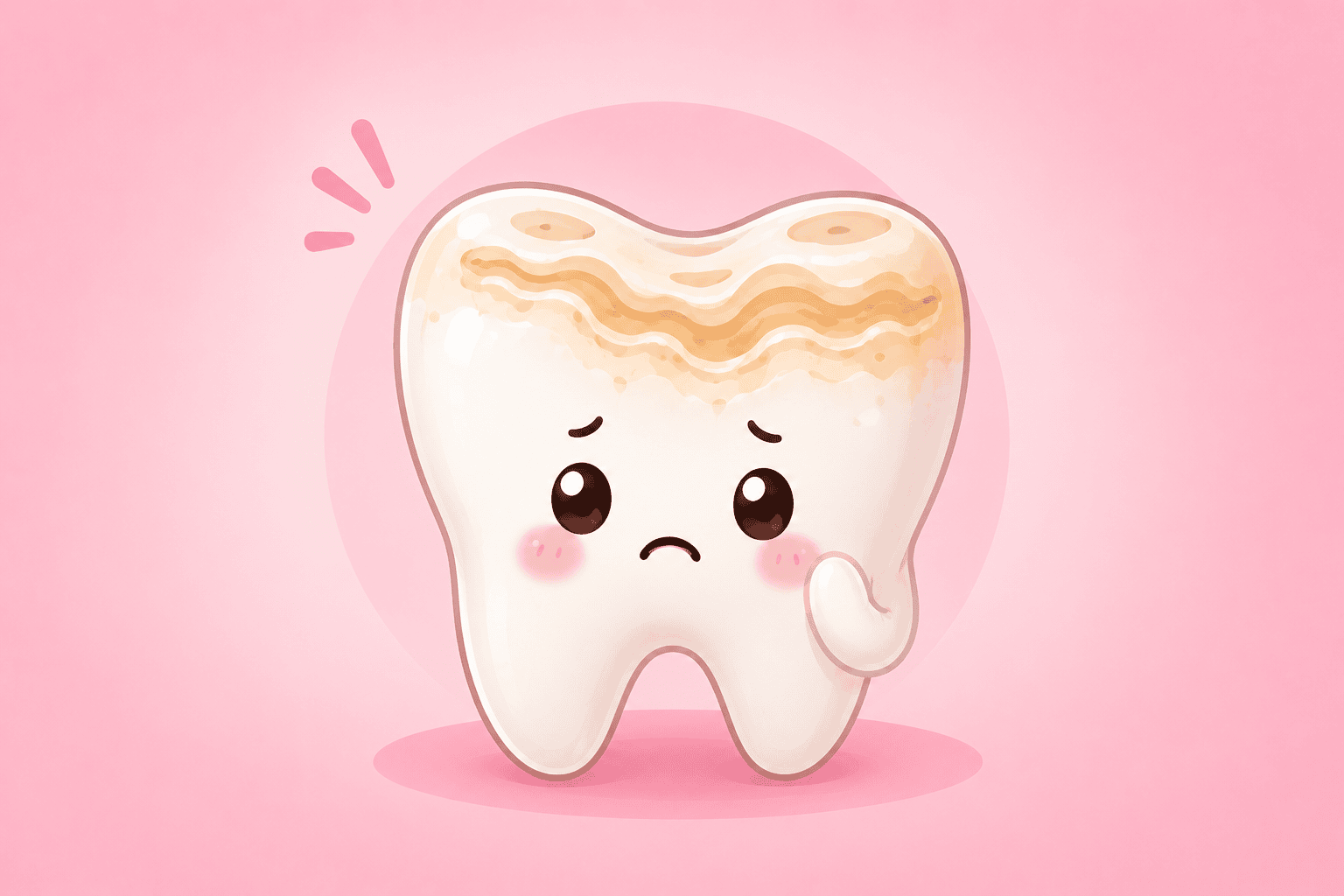
Have you ever taken a sip of a cold drink and felt a sudden sharp sensation in your teeth? While occasional sensitivity is common, persistent discomfort may be a sign of something more than temporary irritation. In some cases, it may indicate enamel erosion, a gradual process that wears away the protective outer layer of the teeth.
Because enamel erosion develops slowly, many people do not notice the changes until symptoms become more obvious. Understanding the warning signs, causes, and available treatment options can help you decide when it may be time to consult a dentist.
What Is Enamel Erosion?
Enamel erosion refers to the gradual loss of tooth enamel, the hard outer layer that protects teeth from daily wear, temperature changes, and acids. Unlike cavities, which result from bacterial activity causing tooth decay, enamel erosion occurs when acids or physical wear slowly break down the tooth surface.
Since enamel does not regenerate naturally once it is lost, early identification is important for protecting long-term oral health.
The Role of Tooth Enamel
Tooth enamel is the strongest substance in the human body. It serves as a protective shield that helps prevent damage to the softer inner layers of the teeth.
When enamel becomes thinner, teeth may become more vulnerable to:
- Sensitivity to hot, cold, or sweet foods
- Changes in appearance
- Increased wear over time
- Greater risk of damage to underlying tooth structures
Common Symptoms of Enamel Erosion
Tooth Sensitivity to Cold, Hot, or Sweet Foods
The most commonly reported early sign of enamel erosion is sensitivity. People describe a brief but sharp twinge when eating or drinking something cold, hot, or sweet. This happens because thinner enamel gives the nerves inside the tooth less insulation from temperature and sugar. The sensation usually passes quickly, but it tends to become more frequent as erosion progresses.
Changes in Tooth Colour or Shape
As enamel thins, the inner layer of the tooth, known as dentine, becomes more visible. Dentine is naturally more yellow than enamel, which is why eroded teeth often take on a yellower appearance even with regular brushing. The shape of teeth can also change subtly, with edges appearing rounded or slightly translucent rather than clearly defined.
Gum-Line Grooves and Indentations
One area where erosion often becomes visible first is near the gum line. Small grooves or notches can form in this region, sometimes feeling rough when you run your tongue across them. These spots can also appear slightly darker than the rest of the tooth and may be more sensitive to touch or temperature.
Changes in Texture and Overall Tooth Feel
Some people notice a change in how their teeth feel rather than how they look. Teeth may feel smoother than usual, or there may be a subtle sense that there is less tooth substance than before. For those who grind their teeth, the surfaces may begin to look flatter or more worn.
| Symptom | What It May Feel or Look Like | Why It Matters |
|---|---|---|
| Tooth sensitivity | Sharp twinge with cold, hot, or sweet items | Indicates reduced protection on tooth surfaces |
| Colour or shape change | Yellow tint or rounded, translucent edges | Visible sign that enamel is thinning |
| Gum-line grooves | Small notches or rough spots near gums | Highlights areas of concentrated wear |
| Texture shift | Smoother feel or less tooth substance | Reflects ongoing surface loss over time |
Also Read: Tooth Sensitivity: Causes, Symptoms and Relief
Enamel Erosion Stages
Enamel erosion does not happen overnight. It moves through stages, and recognising which stage you may be in can help frame the conversation with a dentist.
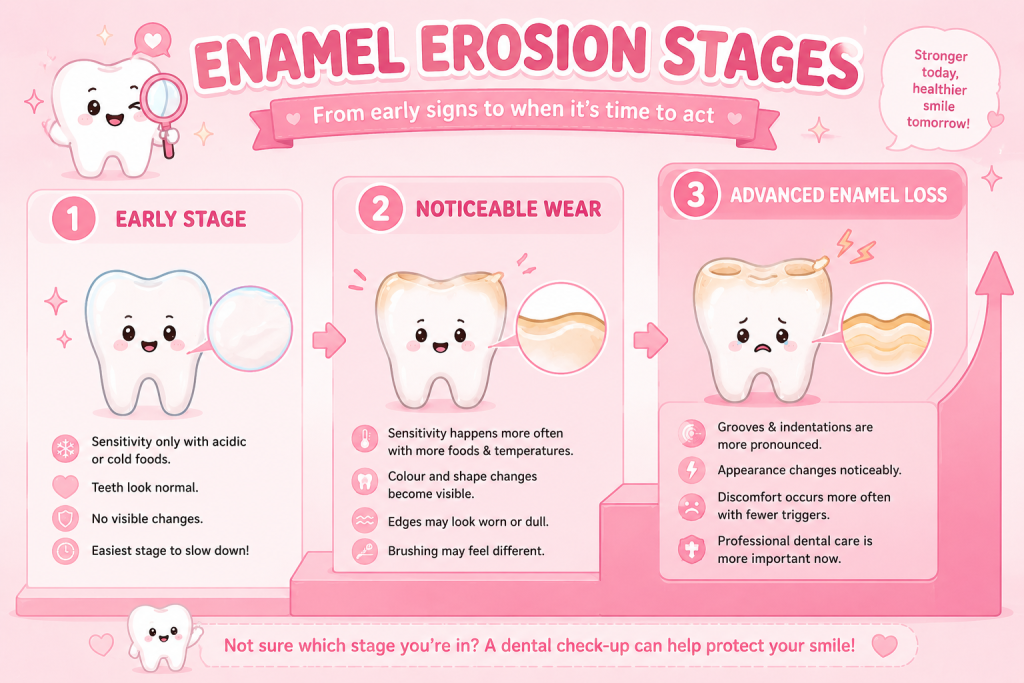
Early Stage
In the earliest phase, sensitivity may only appear after consuming something particularly acidic or cold. The teeth still look normal to most people, and there may be no visible changes at all. This is the easiest stage to slow down, which is why any new or unusual sensitivity is worth noting.
Noticeable Wear
As erosion continues, sensitivity becomes more frequent and may occur with a wider range of foods and temperatures. Colour and shape changes start to become visible, especially on the edges of front teeth or the chewing surfaces of back teeth. Brushing may feel slightly different, and the teeth may look duller or less uniform than before.
Advanced Enamel Loss
In more advanced cases, grooves and indentations become more pronounced, and the overall appearance of the teeth may change noticeably. Discomfort can occur more often and with less obvious triggers. At this stage, the remaining enamel needs protection, and professional dental care becomes more pressing.
| Stage | Common Signs | Why It Needs Attention |
|---|---|---|
| Early | Mild sensitivity after specific triggers | Best window to identify causes and slow progression |
| Noticeable wear | Visible colour or shape shifts, more frequent sensitivity | Helps track changes before deeper loss occurs |
| Advanced | Deeper grooves, frequent discomfort, visible thinning | Dental care needed to protect remaining tooth structure |
What Causes Enamel Erosion?
Acidic Foods and Drinks
One of the most common contributors to enamel erosion is frequent exposure to acidic food and drink. Citrus fruits, fizzy drinks, energy drinks, wine, and vinegar-based foods all lower the pH in the mouth temporarily. When this happens repeatedly — such as sipping on a fizzy drink throughout the day — enamel is softened more often than saliva can neutralise it.
It is worth noting that it is not just highly acidic items that matter. Frequency of exposure plays a large role. Drinking something acidic quickly and rinsing with water afterward is less damaging than nursing the same drink slowly over an hour.
Stomach Acid Exposure
For people who experience frequent acid reflux, regurgitation, or conditions such as GORD (gastro-oesophageal reflux disease), stomach acid can reach the mouth regularly. Stomach acid is significantly stronger than the acid in most foods and drinks, and repeated contact with teeth can cause noticeable erosion — particularly on the inner surfaces of the upper front teeth and the back molars.
Eating disorders that involve vomiting can have a similar effect, as stomach acid comes into direct and repeated contact with tooth surfaces.
Dry Mouth and Reduced Saliva Flow
Saliva does more than help with swallowing and digestion — it plays an active role in protecting teeth. It neutralises acids, washes away food particles, and helps remineralise early areas of enamel softening. When saliva flow is reduced, these protective functions are diminished.
Dry mouth can be a side effect of various medications, including antihistamines, antidepressants, and diuretics. It can also result from dehydration, mouth breathing, or certain health conditions. People who experience dry mouth consistently may notice their teeth are more vulnerable to acid damage over time.
Grinding, Clenching, and Mechanical Wear
Physical wear from grinding or clenching (bruxism) adds a different kind of stress to tooth surfaces. On its own, this can flatten or chip teeth over time. When combined with acid-softened enamel, the effect is faster and more pronounced. Many people grind their teeth at night without realising it, making it a common but underrecognised contributor to enamel loss.
Other Contributing Factors
Several other habits and factors can raise the risk. Frequent snacking keeps the mouth in a more acidic state throughout the day. Using a hard-bristled toothbrush or brushing immediately after consuming acidic food or drink can remove softened enamel more easily.
Some sports drinks and health supplements are more acidic than people expect. Certain medications that reduce saliva or increase acid exposure can also play a role.
How Is Enamel Erosion Diagnosed?
Dental Examination
A dentist will typically assess:
- Tooth color changes
- Surface texture
- Areas of wear
- Gum-line indentations
- Sensitivity concerns
Questions about diet, oral hygiene habits, and medical history may also help identify contributing factors.
Why Early Assessment Matters
Many symptoms of enamel erosion can resemble other dental conditions. Early evaluation can help determine the underlying cause and guide appropriate management.
Also Read: Cavities: Meaning, Symptoms, Causes & Treatment
When to See a Dentist
There is no need to wait for symptoms to become severe before booking an appointment. As a general guide, see a dentist if:
- Tooth sensitivity has lasted more than a few days
- You notice changes in the colour, shape, or texture of your teeth
- Discomfort is affecting what you can comfortably eat or drink
- You suspect you may be grinding your teeth at night
- You have frequent acid reflux or dry mouth
A dental check allows a professional to assess what is happening, distinguish erosion from other issues, and discuss options suited to your situation.
Enamel Erosion Treatment
Enamel that has been lost cannot be restored, but the damage can be managed and further loss can be slowed. Depending on the severity, a dentist may recommend one or more of the following:
- Fluoride applications — professionally applied to strengthen remaining enamel, reduce acid sensitivity, and support the remineralisation of early softened areas
- Desensitising agents — targeted treatments applied to areas of heightened discomfort to block nerve signals and provide lasting relief
- Dental bonding — a tooth-coloured resin bonded directly to worn surfaces to restore shape, protect exposed dentine, and improve appearance
- Crowns — fitted over the entire tooth to restore its original shape, function, and protection, typically recommended when enamel loss is more extensive
- Veneers — thin porcelain or composite shells placed over the front surface of teeth, ideal for restoring appearance while shielding the remaining enamel underneath
The earlier treatment begins, the simpler and more effective the options tend to be.
Preventing Enamel Erosion
Although enamel cannot regenerate, certain habits may help reduce the risk of further erosion.
Helpful Daily Habits
- Limit frequent consumption of acidic foods and beverages
- Rinse with water after acidic meals or drinks
- Stay hydrated throughout the day
- Use a soft-bristled toothbrush
- Follow your dentist’s oral hygiene recommendations
When Home Care May Not Be Enough
If symptoms continue despite lifestyle changes, professional dental advice can help identify underlying causes and determine the most appropriate next steps.
Protect Your Enamel With Help From All Smiles Dental Care
Enamel erosion develops slowly, but that is exactly what makes early awareness so important. Subtle signs like a brief twinge or a slight colour change can easily go unnoticed yet left unaddressed, they can progress into something harder to manage. Since lost enamel cannot grow back, the priority is always to protect what remains before more is lost.
If you have noticed any of the symptoms described in this article, or simply want to get a clearer picture of your dental health, the team at All Smiles Dental Care is here to help. Book a consultation today to have your teeth assessed by an experienced dentist and find out the best steps for your situation.
Frequently Asked Questions
Is enamel erosion serious?
It can range from mild to significant depending on how far it has progressed. Even mild erosion is worth monitoring because enamel cannot grow back, and early management is more straightforward than waiting until the damage is more advanced.
What does enamel erosion feel like?
Most people notice it first as short, sharp sensitivity — particularly with temperature changes or sweet foods. Over time, some describe a sense that their teeth feel smoother, thinner, or more fragile than before.
Can enamel erosion go away on its own?
No — enamel that has been lost does not regenerate. However, early-stage erosion can be slowed significantly with the right habits and, where needed, professional support. The sooner contributing factors are addressed, the better the outcome.
How is enamel erosion different from a cavity?
A cavity is caused by bacteria producing acid that creates a hole in the tooth, typically at one specific point. Enamel erosion involves broader surface wear from acid or friction and usually affects multiple teeth evenly. Both require professional attention, but the causes and management approaches differ.