
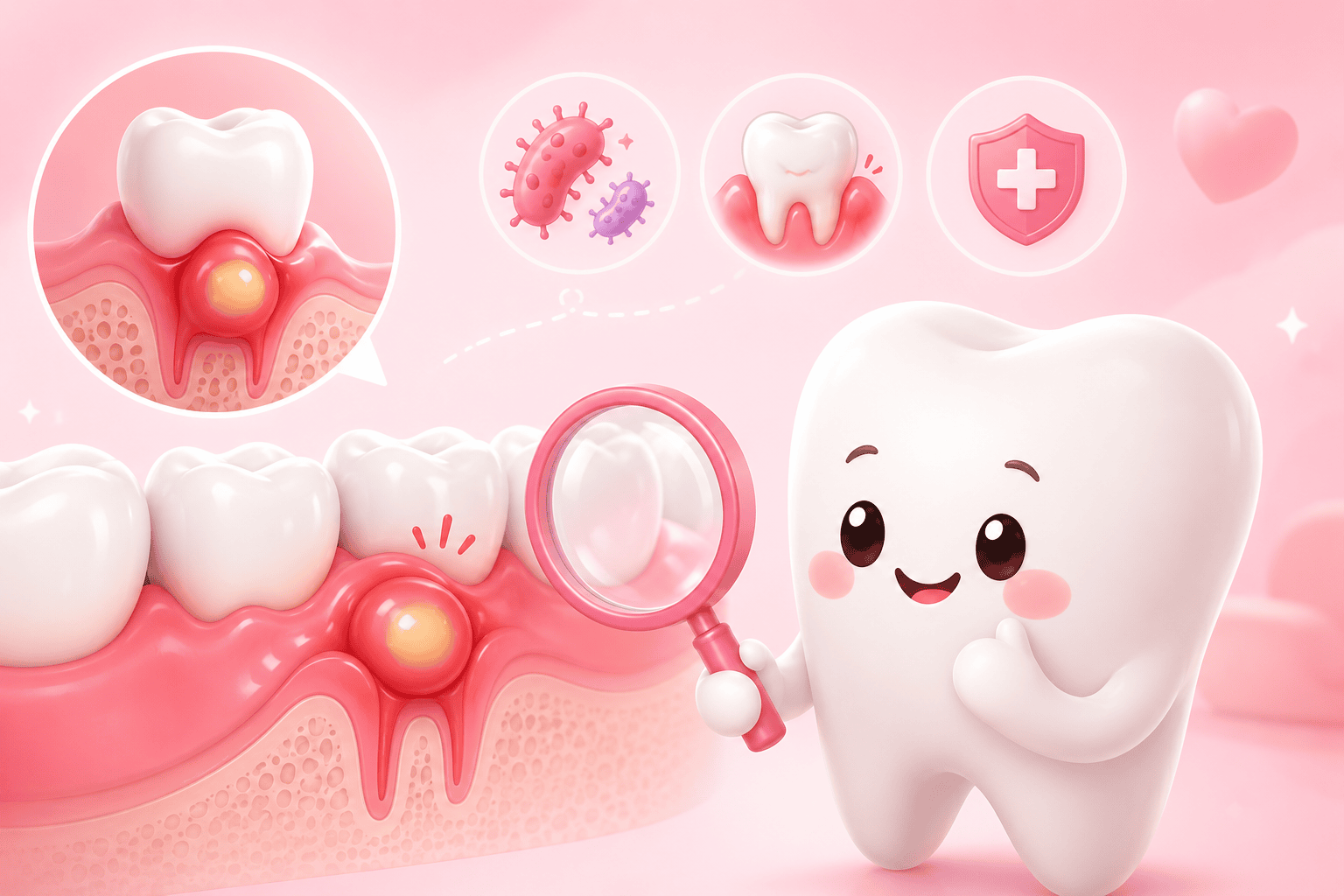
A gum abscess is a localized bacterial infection inside the gum tissue. When bacteria become trapped in a pocket or opening near the teeth and gums, the body sends white blood cells to fight the infection. The resulting buildup of dead cells and fluid forms pus — and that buildup is what creates the swelling, pressure, and pain most people notice first.
Unlike minor gum irritation that fades within a day or two, a gum abscess tends to persist or worsen over time.
It does not reliably clear on its own, and even when symptoms seem to ease temporarily, the source of the infection usually remains. Understanding what to look for and when to act makes a real difference in how the condition progresses.
What a Gum Abscess Looks Like
The most visible sign is a raised, swollen area along the gum line. The surrounding tissue is often red and inflamed. In some cases, a small white or yellowish spot appears on the surface of the bump — this indicates that pus has collected close to the surface and may drain on its own.
Size and appearance vary. Some abscesses are small and pimple-like; others cause more noticeable swelling that visibly changes the shape of the gum. The area is usually tender to the touch, and pressing on it may cause a dull throb or sharp pain.
Also Read: Bleeding Gums: Causes, Symptoms, and When to Get Help
Common Symptoms of a Gum Abscess
The symptoms of a gum abscess often worsen as the infection progresses.
Common signs include:
- Persistent tooth or gum pain
- Swollen gums
- Sensitivity when chewing
- Bad breath
- Unpleasant taste in the mouth
- Pus drainage from the affected area
- Redness around the gums
If the infection becomes more severe, some individuals may also experience facial swelling, fever, or swollen lymph nodes.
What Causes a Gum Abscess
Bacteria Entering the Gum Tissue
The infection starts when bacteria penetrate the soft tissue through a small cut, a weakened area of gum, or a deep periodontal pocket. Once inside, they multiply rapidly in the enclosed space — which is why abscesses tend to worsen quickly if left untreated.
Contributing Dental Conditions
Several underlying conditions create the environment where a gum abscess can develop.
- Gum disease (periodontitis) is one of the most common contributors. As the disease progresses, deep pockets form between the teeth and gums — sheltered spaces where bacteria accumulate and are difficult to remove with regular brushing or flossing alone.
- Tooth decay or a dead tooth can also be a direct cause. When decay reaches the root or a tooth loses its vitality, bacteria from inside the tooth can spread outward into the surrounding gum tissue, triggering an abscess from the inside out.
- Trapped food particles and hardened plaque along the gum line feed bacterial growth. Even without active gum disease, a buildup of debris in hard-to-clean areas creates the conditions bacteria need to thrive and eventually infect the tissue.
- Gum trauma or recent dental work — such as a gum injury or a healing extraction site — can open a direct pathway for bacteria to enter tissue that is already vulnerable. The healing process temporarily reduces the gum’s natural defenses, making infection easier to establish.
Can a Gum Abscess Go Away on Its Own?
A gum abscess may temporarily feel better if it drains naturally, but this does not mean the infection has been eliminated.
The bacteria causing the problem often remain beneath the gums. Without proper treatment, the abscess can return or worsen over time. This is why professional dental evaluation is recommended even when symptoms appear to improve.
Gum Abscess Stages
Gum abscesses do not appear suddenly at their worst. They follow a recognizable progression, and knowing each stage helps identify how serious the situation is and when to act.
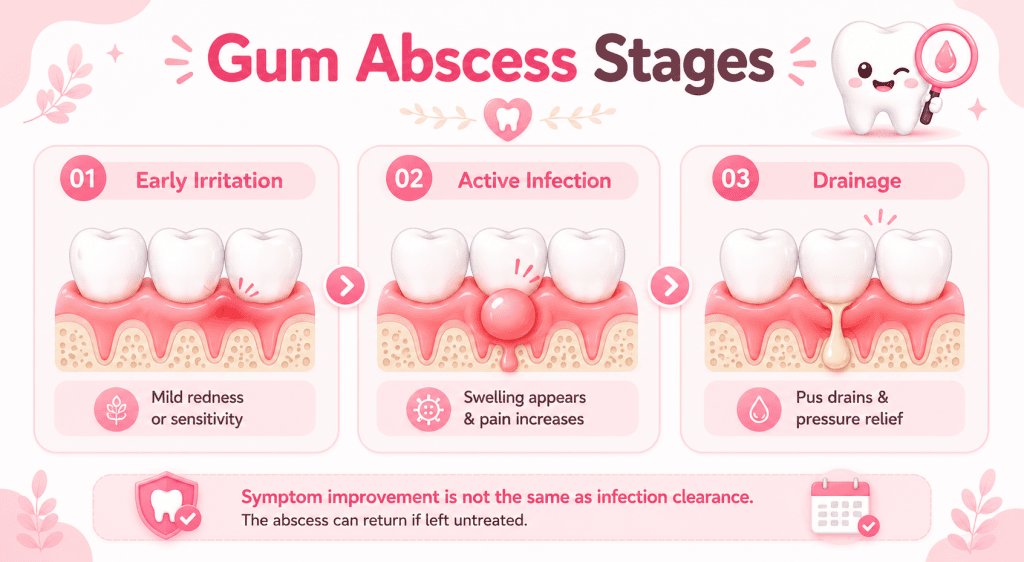
Stage 1: Early Irritation
The first signs are often mild — slight redness or sensitivity along the gum line, sometimes without any visible bump at all. This stage is easy to dismiss as general gum irritation from brushing too hard or eating something sharp, which is why many people ignore it and unknowingly allow the infection to advance.
Stage 2: Active Infection
As bacteria continue to multiply, fluid accumulates beneath the gum surface. The tissue becomes firmer, a distinct swelling becomes visible, and pain shifts from occasional tenderness to a more persistent ache or throbbing sensation that is harder to ignore.
Stage 3: Drainage
The abscess may rupture on its own, releasing pus and bringing noticeable pressure relief. Swelling goes down and pain eases — sometimes significantly. This is the stage where many people assume the problem has resolved itself and delay seeking care.
The key point is that symptom improvement is not the same as infection clearance. Many people delay treatment after a spontaneous drainage only to find the abscess returns — sometimes larger or in a slightly different location — within days or weeks.
Also Read: Gingivitis: Meaning, Signs, Causes and Treatment
How It Is Diagnosed
A dentist examines the gum and surrounding tissue directly, checking for swelling, tenderness, pocket depth, and any visible drainage points. This clinical assessment provides a level of detail that home observation simply cannot.
X-rays are frequently used alongside the physical exam. They reveal what is happening below the gum surface — including whether the abscess involves bone loss, a tooth root, or deeper tissue structures that are not visible externally. Without imaging, an accurate picture of the infection’s extent is incomplete.
Gum Abscess Treatment Options
Professional treatment addresses two things simultaneously: clearing the active infection and eliminating the conditions that allowed it to develop.
1. Drainage
is performed in a controlled clinical setting. The dentist creates a small opening to release pus thoroughly, which immediately reduces pressure and begins the healing process.
2. Deep cleaning (scaling and root planing)
removes bacteria and calculus from below the gum line, reducing pocket depth and eliminating the environment where bacteria thrive.
3. Antibiotics
may be prescribed when there is a risk of the infection spreading, though they are typically used alongside — not instead of — drainage and cleaning.
4. Tooth-related treatment
is necessary when the abscess originates from or involves a tooth, such as decay reaching the root or a failing restoration.
Why Draining It at Home Is Harmful
Attempting to pop or squeeze an abscess at home forces bacteria into surrounding tissue rather than out of the body. It increases the risk of spreading the infection, rarely achieves complete drainage, and leaves the underlying cause fully intact. The short-term pressure relief it provides is not worth the risk of accelerating the infection.
When to See a Dentist Immediately
Seek prompt dental care if you experience:
- Severe or worsening pain
- Swelling that spreads to the face or jaw
- Difficulty swallowing
- Difficulty breathing
- Fever
- Persistent pus drainage
These symptoms may indicate that the infection is becoming more serious and requires urgent attention.
Gum Abscess Prevention and Reducing Recurrence
Daily hygiene
is the most effective preventive measure. Brushing twice a day, flossing once a day, and cleaning gently along the gum line removes the debris and plaque that bacteria feed on. It does not make infection impossible, but it significantly reduces the conditions that allow abscesses to form.
Routine dental visits
allow a dentist to monitor pocket depth, catch early signs of gum disease, and address small problems before they escalate. Many abscesses are preceded by detectable gum changes that are manageable at an earlier stage.
Completing recommended treatment
is the most important factor in preventing recurrence. Partial treatment — draining the abscess without addressing the underlying gum disease or tooth problem — reliably leads to the infection returning. Following through on the full care plan is what produces lasting improvement.
Get the Right Gum Abscess Treatment at AllSmiles Dental Care
A gum abscess is not something to wait out. Even when symptoms seem to come and go, the infection underneath rarely resolves without proper treatment — and the longer it is left unaddressed, the more likely it is to spread or cause lasting damage to the surrounding tissue and bone.
The good news is that with the right care at the right time, a gum abscess is entirely treatable. If you have noticed persistent swelling, tenderness, or a recurring bump along your gum line, AllSmiles Dental Care is here to help.
Our team provides thorough assessment and targeted treatment to clear the infection and address the root cause — so the problem does not keep coming back. Book your appointment with AllSmiles Dental Care today and get the care your gums need.
FAQ About Gum Abscess
Is a gum abscess serious?
It can be. A localized abscess is manageable with prompt care, but if left untreated it can spread to the jaw, neck, or deeper tissue — which becomes a more serious medical situation. Systemic symptoms like fever indicate the infection has already begun to spread.
Can I pop an abscess on my gum at home?
No. Squeezing or popping an abscess at home pushes bacteria into surrounding tissue, increases the risk of spreading infection, and does not address the underlying cause. Professional drainage in a clinical setting is the safe and effective approach.
Will a gum abscess go away on its own?
Occasionally an abscess drains naturally and symptoms subside — but this does not clear the infection. The bacteria and the conditions that caused the abscess remain, and recurrence is common without treatment.