
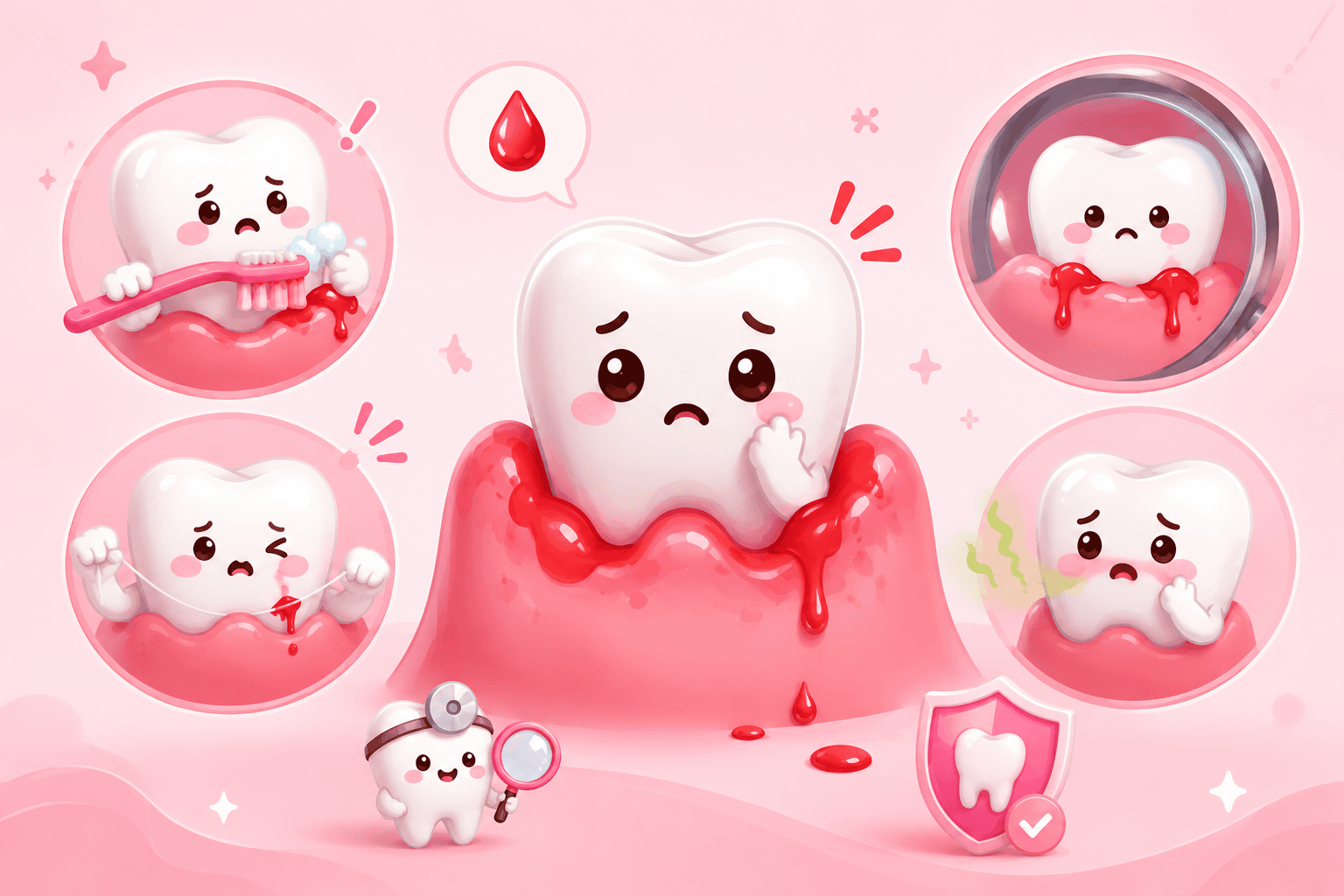
Bleeding gums are a common oral health issue that many people experience at some point. You may notice blood while brushing, flossing, or even rinsing your mouth. While occasional mild bleeding may happen due to temporary irritation, persistent bleeding gums can also signal underlying gum problems that should not be ignored.
Understanding the possible causes, symptoms, and treatment options can help you maintain healthier gums and know when it is time to seek professional dental care.
What Bleeding Gums Mean
Bleeding gums are a signal — not a diagnosis. They indicate that gum tissue may be responding to local factors, but the sign alone doesn’t point to a single cause. The first step is reviewing oral care habits and monitoring for other changes.
Bleeding Gums in Everyday Situations
Most people first spot bleeding gums during routine oral care. It can show up without warning and often prompts questions about the health of the gum tissue.
Bleeding When Brushing
Blood on the toothbrush or in the sink after brushing is one of the earliest signs of gum sensitivity. This can happen even with a gentle technique if the gum tissue is already irritated.
Bleeding When Flossing
Bleeding while flossing is common when food particles or plaque have built up between teeth. The floss can disturb sensitive tissue, causing brief but noticeable bleeding.
Bleeding After Brushing
Some people notice a metallic taste or pink saliva after brushing rather than during it. This pattern can follow changes in brushing pressure, frequency, or the type of toothbrush used.
Also Read: Gingivitis: Meaning, Signs, Causes and Treatment
Common Symptoms Linked to Bleeding Gums
Bleeding rarely appears on its own. Other signs often develop alongside it and help paint a fuller picture of gum health.
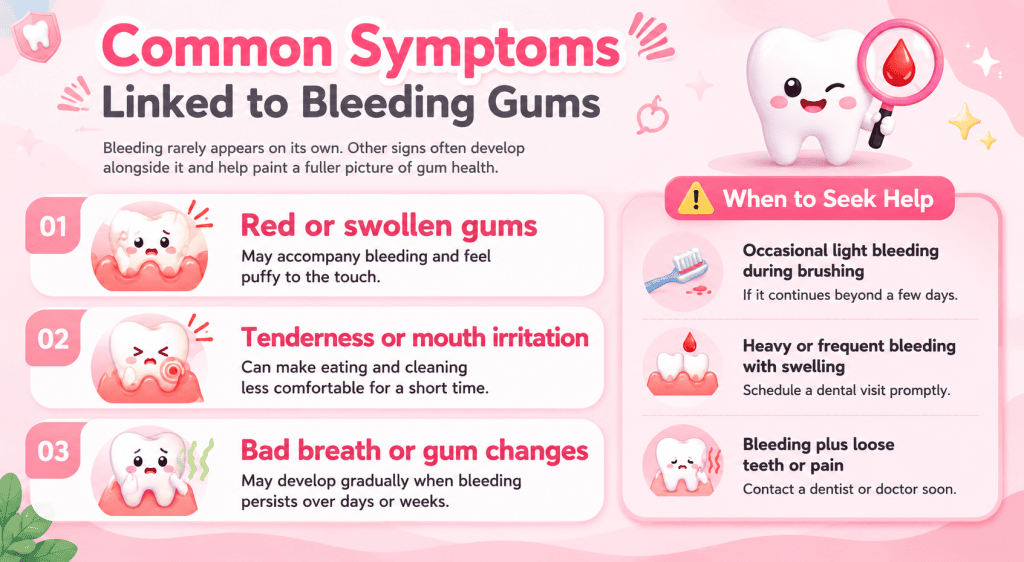
Red or swollen gums may accompany bleeding and feel puffy to the touch. Tenderness or mouth irritation can make eating and cleaning less comfortable for a short time. When bleeding persists over days or weeks, bad breath or visible gum changes may also develop gradually.
| Symptom Pattern | Possible Meaning | When to Seek Help |
|---|---|---|
| Occasional light bleeding during brushing | Common mild irritation | If it continues beyond a few days |
| Heavy or frequent bleeding with swelling | Sign of ongoing gum response | Schedule a dental visit promptly |
| Bleeding plus loose teeth or pain | Pattern that may need review | Contact a dentist or doctor soon |
Causes and Risk Factors of Bleeding Gums
Several everyday factors can contribute to bleeding gums. Understanding the most common ones supports better daily choices.
Plaque Buildup and Gum Irritation
Plaque that remains along the gum line is one of the most frequent triggers. Over time, this buildup irritates tissue and can lead to inflammation and bleeding.
Brushing or Flossing Habits
Technique matters more than many people realize. Brushing too firmly or skipping regular flossing for extended periods can both contribute to gum sensitivity.
Other Contributing Factors
Diet, stress, certain medications, and broader health conditions can all influence how gum tissue responds and heals. These factors are worth discussing with a dental professional if bleeding doesn’t improve.
| Cause Category | Examples | Why It May Matter |
|---|---|---|
| Plaque-related | Buildup along gum line | Can irritate tissue over time |
| Habit-related | Changes in brushing pressure | May increase sensitivity temporarily |
| Health-related | Nutrition or medication effects | Can influence how gums heal |
How Dentists Evaluate Bleeding Gums
A dentist typically performs a structured evaluation to understand the severity and possible causes of bleeding gums.
- Dental Examination
The dentist checks for visible signs such as swelling, redness, plaque buildup, gum recession, or bleeding points.
- Review of Oral Hygiene Habits
Questions about brushing techniques, flossing frequency, and dietary habits help identify possible contributing factors.
- Additional Medical Assessment
In some cases, further evaluation or blood tests may be recommended if the bleeding pattern suggests broader health concerns.
Bleeding Gums Treatment
Treatment depends on the underlying cause, but the goal is usually to reduce inflammation and restore healthy gum tissue.
1. Professional Dental Cleaning
Professional dental cleaning is often the first and most effective step. A dental hygienist or dentist removes plaque and tartar buildup — particularly along and below the gum line — that regular brushing and flossing cannot reach.
For more advanced cases, a deeper cleaning method called scaling and root planing may be recommended, targeting bacteria and deposits beneath the gum surface to help tissue reattach and heal properly.
2. Improved Oral Hygiene Routine
Dentists may recommend adjustments to daily habits, including:
- Gentle brushing techniques — small circular motions rather than aggressive scrubbing, which can damage sensitive gum tissue further
- Soft-bristled toothbrushes — soft bristles clean effectively without adding trauma to inflamed gums
- Proper flossing methods — guiding floss in a C-shape around each tooth rather than snapping it down helps remove plaque without cutting into the gum line
- Antibacterial mouth rinses — antimicrobial rinses reduce bacteria in the mouth, lowering infection risk and supporting gum recovery when used as directed
3. Antibiotics or Antimicrobial Treatment
In cases where gum inflammation has progressed or a bacterial infection is present, a dentist may prescribe antibiotics. These can come in the form of oral medication, topical gels applied directly to the gum pocket, or antimicrobial chips placed between the teeth and gums. This approach targets infection at the source and helps the tissue respond better to other treatments.
4. Addressing Underlying Health Conditions
Bleeding gums are sometimes linked to broader health factors such as nutritional deficiencies, hormonal changes, or medications that affect clotting.
When this is the case, treatment may involve coordination with a physician — for example, adjusting a medication, addressing a vitamin C or K deficiency, or managing a condition like diabetes that directly affects how gum tissue heals.
5. Surgical Treatment for Advanced Cases
When gum disease has advanced significantly, non-surgical options may no longer be sufficient. A periodontist, a gum specialist, may recommend procedures such as flap surgery to clean deep pockets around the teeth, or gum grafting to restore tissue that has receded.
While these are considered last-resort options, they can effectively halt further damage and restore gum structure when earlier interventions have not been enough.
When Should You See a Dentist?
You should schedule a dental visit if:
- Bleeding continues for more than a few days
- Gums become swollen or painful
- Bleeding becomes heavy or frequent
- Teeth feel loose
- You notice gum recession or persistent bad breath
Early evaluation helps prevent potential complications and allows treatment to begin before gum problems worsen.
Tips to Prevent Bleeding Gums
Maintaining healthy gums usually involves consistent daily care and regular dental checkups.
Some helpful habits include:
- Brushing twice daily with gentle pressure
- Flossing consistently
- Eating a balanced diet
- Staying hydrated
- Visiting the dentist regularly
- Avoiding tobacco products
Paying attention to changes in your gums can help you address problems early and maintain long-term oral health.
Also Read: Receding Gums: Causes, Signs, and Treatment Options
Take the First Step Toward Healthier Gums with AllSmiles Dental Care
Bleeding gums are rarely something to brush off. Whether it is occasional light bleeding during your routine or something more persistent, the earlier it is addressed, the easier it is to manage. With the right care — from consistent daily habits to professional treatment — healthy gums are well within reach.
If you have noticed bleeding that does not seem to settle, or simply want a clearer picture of your gum health, the team at AllSmiles Dental Care is here to help.
Our dentists take the time to understand your specific situation, identify what is driving the problem, and guide you through the right steps forward — whether that means a routine cleaning or a more tailored treatment plan.
Don’t wait for the bleeding to get worse. Book your appointment with AllSmiles Dental Care today and take the first step toward a healthier, more confident smile.
FAQ about Bleeding Gums
Is it normal for gums to bleed occasionally?
Mild bleeding can happen temporarily, especially after changes in flossing habits. However, repeated or ongoing bleeding should not be ignored.
Can bleeding gums heal on their own?
Temporary irritation may improve, but persistent bleeding often requires better oral hygiene or professional dental care.
Are bleeding gums a sign of gum disease?
They can be. Bleeding gums are commonly associated with gum inflammation and may indicate early stages of gum disease.
Can stress affect gum health?
Yes. Stress may affect the body’s inflammatory response and contribute to oral health issues, including gum sensitivity and irritation.