
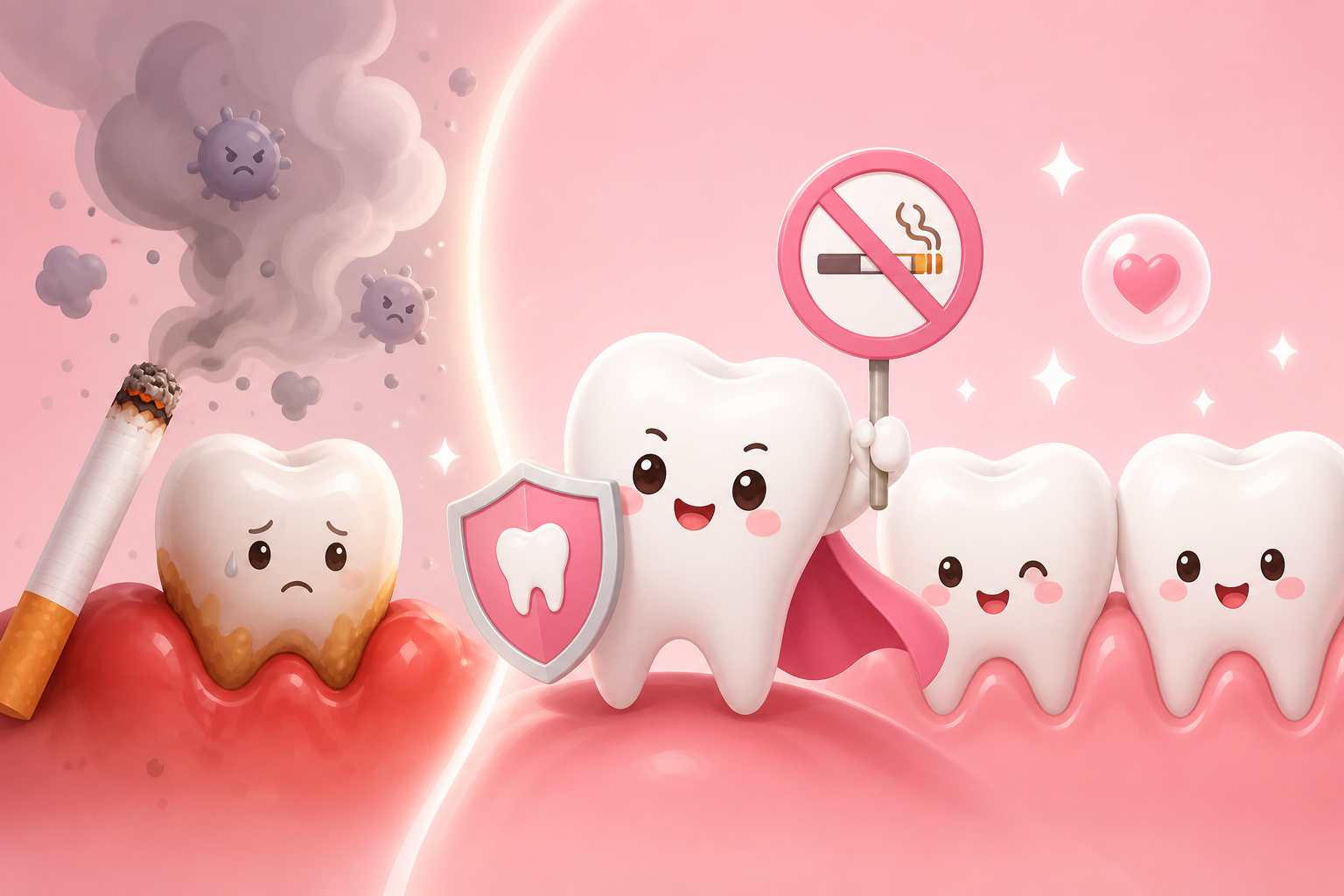
Have you ever brushed your teeth and noticed your gums bleed just a little—but you shrugged it off? Or maybe your gums seem to be getting darker, but there’s no real pain, so you don’t think twice. For many smokers, these changes appear slowly and quietly. It’s common to miss the early signs or assume it’s just part of aging. But your gums could be trying to tell you something important. 🪥
In this article, we’ll explore how smoking really affects gum health—and why it matters more than you might think.
🧪 What Is Smoking-Related Gum Disease?
Smoking-related gum disease refers to the harm tobacco use causes to the tissues that support your teeth. 🚬 When you smoke, your gums don’t get enough oxygen and nutrients, which are essential for keeping them strong and healthy.
Think of your gums like the soil around a tree—if the soil is dry and damaged, the roots suffer too. In a similar way, smoking weakens the support system around your teeth. This makes it harder for your gums to fight infection and heal from everyday irritation, increasing your risk of gum disease over time.
Also Read: Benefits of Dental Implants
📝 Common Symptoms of Smoking-Related Gum Problems
Smoking-related gum issues can range from mild to severe, and many symptoms are easy to ignore in the beginning.
| Symptom | What It Feels Like |
| Bleeding Gums | Bleeding when brushing or flossing, even if you’re gentle |
| Gum Discolouration | Gums appear darker, greyish, or uneven in colour |
| Persistent Bad Breath | Breath smells stale even after brushing |
| Gum Recession | Gums seem to be pulling back from the teeth |
| Loose Teeth | Teeth feel slightly wobbly or less secure than usual |
| Puffy or Swollen Gums | Gums look inflamed or feel tender to the touch |
| Less Gum Sensitivity | Gums don’t bleed or hurt, even when problems are present |
If you’ve experienced any of these symptoms, it’s worth checking in with a dentist to catch problems early. 🦷
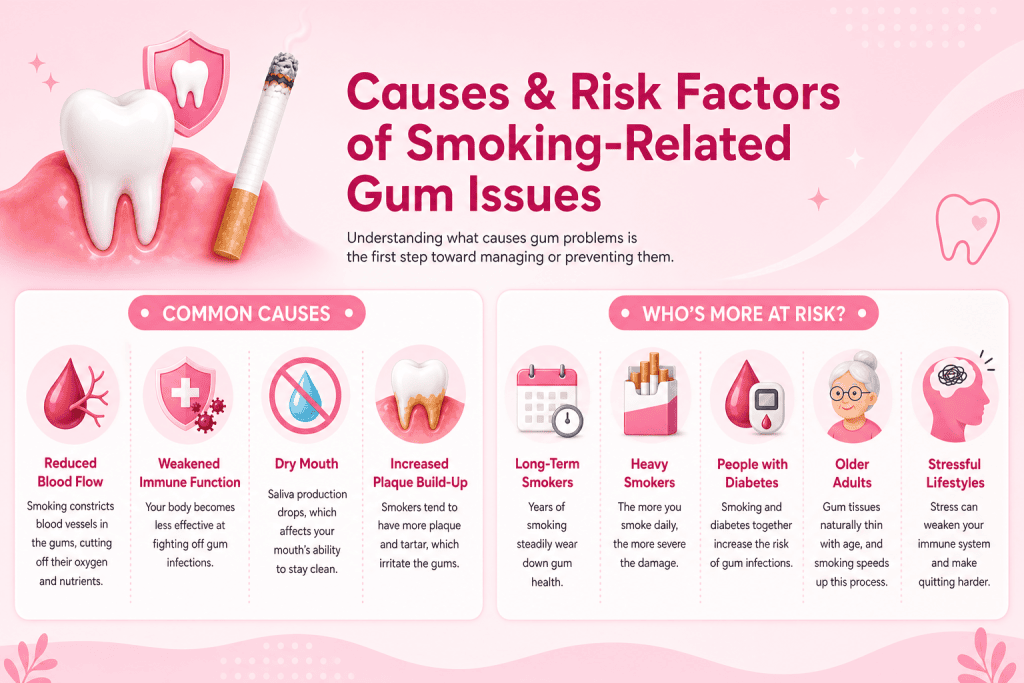
🧩 Causes & Risk Factors of Smoking-Related Gum Issues
Understanding what causes gum problems is the first step toward managing or preventing them.
🔹 Common Causes
- Reduced Blood Flow: Smoking constricts blood vessels in the gums, cutting off their oxygen and nutrients.
- Weakened Immune Function: Your body becomes less effective at fighting off gum infections.
- Dry Mouth: Saliva production drops, which affects your mouth’s ability to stay clean.
- Increased Plaque Build-Up: Smokers tend to have more plaque and tartar, which irritate the gums.
🔹 Who’s More at Risk?
- Long-Term Smokers: Years of smoking steadily wear down gum health.
- Heavy Smokers: The more you smoke daily, the more severe the damage.
- People with Diabetes: Smoking and diabetes together increase the risk of gum infections.
- Older Adults: Gum tissues naturally thin with age, and smoking speeds up this process.
- Stressful Lifestyles: Stress can weaken your immune system and make quitting harder. 😓
Also Read: How to Make Your Teeth White Naturally in 5 Simple Ways
⏳ Why You Shouldn’t Delay Treatment
It’s easy to ignore gum changes when there’s no pain or when life feels too busy for a dental visit. But waiting too long can make things more complicated.
Smoking hides the early signs of gum disease, allowing it to progress unnoticed. Left untreated, it can lead to gum recession, infections, or even tooth loss. More advanced issues often require more time, money, and care to fix.
The sooner you catch it, the simpler and more effective treatment can be. Your gums will have a much better chance to heal with early attention. 😊
🧑⚕️ Do Smokers Gums Treatment at AllSmiles Dental
At AllSmiles Dental, treatment for smoking-related gum problems begins with an individual assessment—because the best approach depends on how early the issue is detected.
For early stages, our dentists may recommend a professional cleaning to remove plaque and tartar around the gumline. If deeper damage is found, a deeper cleaning known as scaling and root planing may be performed to clean below the gums. In cases with active infection, antibiotics might be prescribed to support healing.
Our team at AllSmiles Dental uses modern tools and a gentle, patient-focused approach to keep you comfortable throughout your care. 🪥
🧴 Aftercare & Prevention Tips
Whether you’re recovering from treatment or trying to prevent gum problems in the first place, consistent care goes a long way.
Here are some helpful tips:
- Brush twice daily with fluoride toothpaste and a soft toothbrush.
- Clean between your teeth daily using floss or interdental brushes.
- Cut back or quit smoking—even small steps help your gums recover.
- Drink more water to support saliva flow and keep your mouth clean.
- Visit AllSmiles Dental regularly for hygiene visits and gum health checks.
- Follow any personalised care plans your dentist provides. 🧴
The key is consistency—taking small daily steps can lead to big improvements over time.
🛡️ Why Choose AllSmiles Dental for Gum Treatment
We understand that visiting a dental clinic can feel intimidating, especially when you’re unsure what’s going on with your gums or it’s been a while since your last visit.
At AllSmiles Dental, we provide gentle, judgement-free care in a warm and supportive setting. Our experienced team takes the time to listen, explain, and guide you through each step—because your comfort and trust are just as important as your oral health. 🏥
Whether you need a routine cleaning or support for smoking-related gum issues, we’re here to help you take that first step. Every Cigarette Weakens Your Gums. Start Treatment Today, here!
Frequently Asked Questions
How do I know if smoking is affecting my gums?
Watch out for signs like bleeding when brushing, gum discolouration, or persistent bad breath. Smoking often hides pain, so problems may be worse than they seem. A check-up at AllSmiles Dental can help assess your gum health.
Can smoking really lead to tooth loss?
Yes, smoking increases the risk of gum disease, which damages the tissues that support your teeth. Without proper care, this can eventually lead to tooth loss.
Is it too late to fix my gums if I’ve smoked for years?
Not at all! While some damage may be permanent, many people still benefit from professional cleaning, gum therapy, and quitting or reducing smoking. The sooner you act, the better your results.
Does quitting smoking reverse gum damage?
Quitting helps stop further damage and allows your gums to heal more effectively. It won’t reverse all effects, but it greatly improves your oral and overall health.