
Receding gums are a common dental concern that can affect people of all ages. Many people first notice their teeth looking longer or experience sensitivity when drinking something hot or cold. While gum recession often develops gradually, it should not be ignored because it may affect both oral comfort and long-term dental health.
Understanding the causes of receding gums, recognizing early symptoms, and knowing when to seek professional care can help prevent the condition from worsening.
What Are Receding Gums?
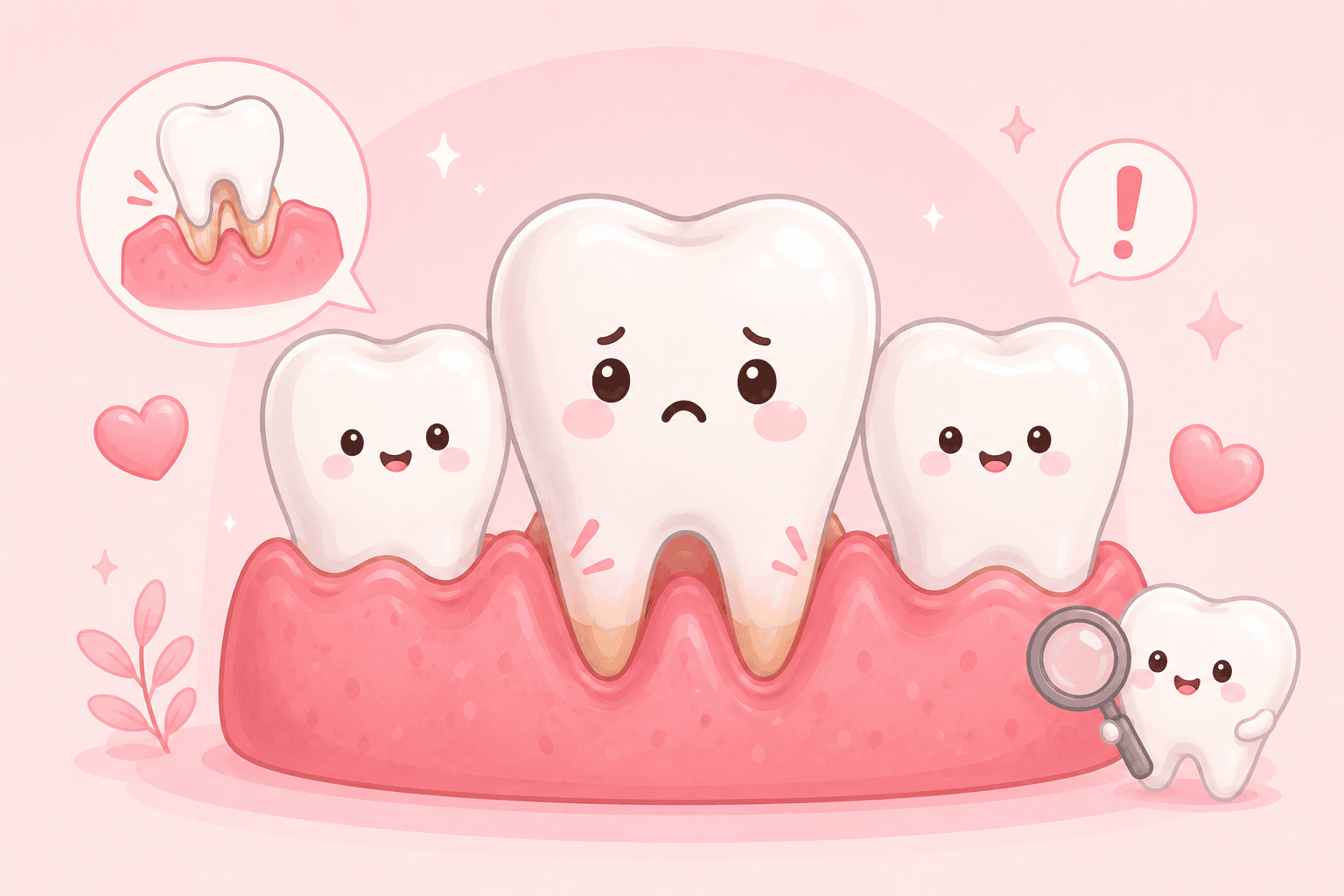
Receding gums are a condition in which the gum tissue surrounding the teeth gradually pulls back or wears away, exposing more of the tooth surface or tooth root. This condition can create small gaps between the teeth and gums where plaque and bacteria may accumulate more easily.
Unlike minor gum irritation, gum recession typically does not reverse naturally once tissue has receded. Early management focuses on preventing further recession and protecting the remaining gum tissue.
Common Symptoms of Receding Gums
Symptoms vary from person to person. Some experience only visual changes, while others notice functional differences during meals or brushing. Tracking these helps decide when professional input is useful.
| Sign | What it may look like | Why it matters |
|---|---|---|
| Visible gum-line change | Gums sit lower on teeth, exposing more of the crown or root area | May increase risk of sensitivity or food trapping |
| Tooth sensitivity | Sharp feeling with hot, cold, sweet, or brushing | Can signal exposed root surfaces |
| Teeth appearing longer | Smile shows more tooth surface than before | Often the first visible cue of recession |
| Tenderness or gaps | Small spaces between gums and teeth, occasional soreness | May affect cleaning and comfort |
Teeth that look longer
This visual shift is one of the most reported signs. It occurs when the gum margin moves downward, revealing more of the tooth. Many people first spot it during routine mirror checks.
Tooth sensitivity to hot, cold, or brushing
Exposed areas can react more strongly to temperature or pressure. Using a soft bristle toothbrush may reduce irritation during cleaning while the cause is identified.
Gaps, tenderness, or a changing gum line
Small pockets can form where food collects. Tenderness may appear during flossing or eating. These changes are worth noting over weeks or months.
What causes receding gums?
Several factors can contribute to gum recession. Identifying the main influence often guides next steps with a dental professional.
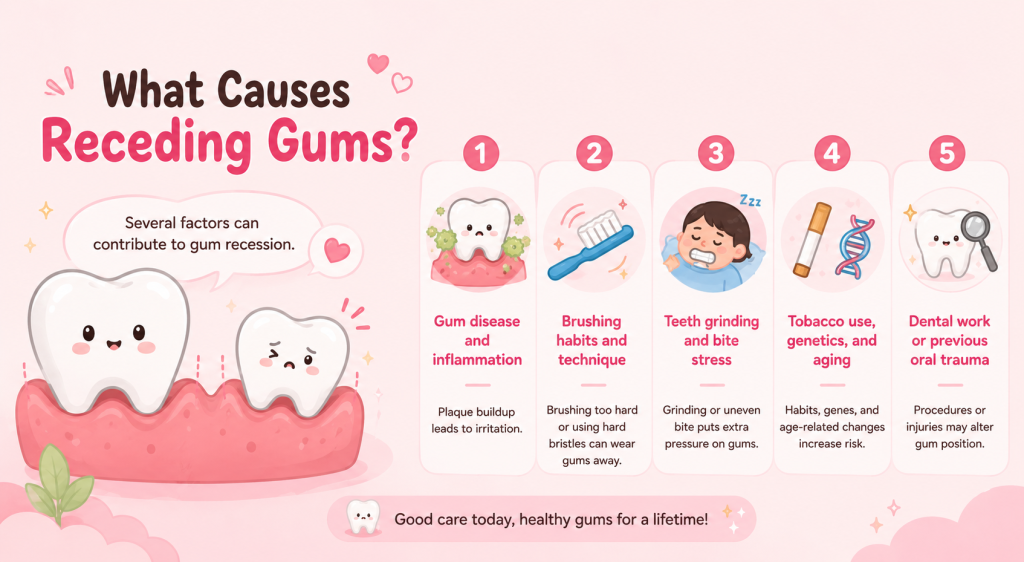
| Cause or risk factor | Typical context | Common examples |
|---|---|---|
| Gum disease and inflammation | Buildup of plaque leading to irritation | Chronic gingivitis or periodontitis |
| Brushing habits and oral hygiene technique | Repeated pressure on gum tissue | Hard bristles or aggressive scrubbing |
| Teeth grinding and bite stress | Extra force on teeth and supporting structures | Nighttime clenching or uneven bite |
| Tobacco use, genetics, and aging | Long-term habits or natural tissue changes | Smoking, family history, or gradual thinning |
| Dental work or previous oral trauma | Prior procedures or injury to the area | Orthodontics, cleanings, or accidental impact |
Gum disease and inflammation
Inflammation from plaque can weaken the attachment between gums and teeth. Regular professional cleanings address this factor directly.
Brushing habits and oral hygiene technique
Brushing too hard or with stiff bristles may wear away gum tissue over time. Switching to a soft bristle toothbrush is a common adjustment discussed in dental visits.
Teeth grinding and bite stress
Grinding places repeated pressure that can push gums back. Night guards or bite adjustments are sometimes considered after evaluation.
Tobacco use, genetics, and aging
These elements can make gums more prone to recession. Age-related tissue changes are natural but can combine with other factors such as smoking or a family history of gum problems.
Dental work or previous oral trauma
Some procedures or injuries may alter gum position. Follow-up care after dental work helps monitor any resulting changes.
Also Read: Gingivitis: Meaning, Signs, Causes and Treatment
How Receding Gums Are Diagnosed
Dentists use a step-by-step approach to assess gum recession. The process focuses on measurements and history rather than assumptions.
- What a dentist looks for during an exam
Visual inspection checks gum height, color, and any pockets. Probing depths are recorded to compare with prior visits.
- Why dental records and measurements matter
Baseline measurements allow tracking of changes over time. Consistent records help determine whether recession is stable or progressing.
- When imaging may be used
X-rays or other images can show bone levels supporting the teeth. They are used when deeper structures need review beyond surface observation.
Treatment for Receding Gums
Treatment depends on the cause and severity of gum recession. The main goal is usually to prevent further tissue loss and protect the exposed tooth surfaces.
1. Professional Dental Cleaning
If plaque and tartar buildup contribute to gum inflammation, professional cleaning may help improve gum health and reduce irritation.
2. Improving Brushing Technique
Dentists often recommend using a soft-bristled toothbrush and gentle brushing motions to avoid further gum damage.
3. Managing Teeth Grinding
Night guards or bite adjustments may be suggested for patients who grind or clench their teeth during sleep.
4. Gum Grafting Procedures
In more advanced cases, gum grafting may be considered to cover exposed tooth roots and strengthen gum tissue.
5. Treating Gum Disease
When gum disease is present, treatment may include scaling, root planing, or ongoing periodontal care.
Also Read: Bad Breath Causes and Treatment: What Halitosis Can Mean
How to Prevent Receding Gums
Daily habits can support gum stability. Small adjustments often make a noticeable difference when done consistently.
- Brushing gently with a soft bristle toothbrush
Light pressure and a soft brush reduce wear on gum tissue. Replacing brushes every few months keeps bristles effective. - Daily cleaning habits that protect the gum line
Flossing or interdental tools reach areas between teeth without forcing gum tissue. Gentle technique avoids unnecessary irritation. - Habits that may reduce extra stress on the gums
Avoiding tobacco, managing grinding, and attending regular cleanings can limit added pressure. These steps work alongside professional guidance.
When to See a Dentist
Many gum-line changes develop slowly, but new or changing symptoms deserve attention. Early evaluation supports informed decisions.
| Situation | What readers may notice | Why an exam may help |
|---|---|---|
| New or worsening recession | Gum line appears lower than recent months | Establishes current status and possible causes |
| Increased sensitivity | Discomfort with everyday foods or brushing | Checks for exposed areas needing protection |
| Bleeding or tenderness | Gums bleed during cleaning or feel sore | Rules out active inflammation |
| Loose teeth or gaps | Teeth feel less stable or food catches easily | Reviews support structures |
Signs that deserve a dental visit
Any combination of visible change, sensitivity, or bleeding is worth discussing with a dentist. Routine exams provide useful baseline comparisons.
Sudden changes or worsening symptoms
Rapid shifts may point to an active issue. Prompt evaluation clarifies whether simple adjustments or further care are appropriate.
Sensitivity, bleeding, or loose teeth
These symptoms can overlap with recession but may also relate to other factors. A dental visit helps sort out the likely contributors.
Ready to Protect Your Gum Health? Visit AllSmiles Dental Care
Receding gums are common, but they are not something to leave unaddressed. With the right daily habits — gentle brushing, consistent flossing, and regular dental visits — it is possible to slow progression and protect your oral health long term. If you have noticed any changes along your gum line, early evaluation always gives you the most options.
At AllSmiles Dental Care, our team is experienced in identifying gum recession early and building a care plan tailored to your needs. Book your appointment today and take the first step toward healthier, stronger gums.
Frequently Asked Questions about Receding Gums
Can gums recede back on their own?
Gum tissue does not usually grow back on its own once it has receded. The focus is often on finding the cause and preventing it from getting worse.
Is receding gums serious?
It can be, especially if it is linked to gum disease or is getting worse over time. Ongoing recession may increase sensitivity and affect tooth support.
Can toothpaste fix receding gums?
Toothpaste may help manage sensitivity, but it cannot restore lost gum tissue or replace professional dental care.
What is the best toothpaste for receding gums?
Many toothpaste products for sensitive teeth and gum care may help reduce discomfort caused by exposed tooth roots. However, toothpaste alone cannot reverse gum recession, so professional dental evaluation is still important to identify and address the underlying cause.