
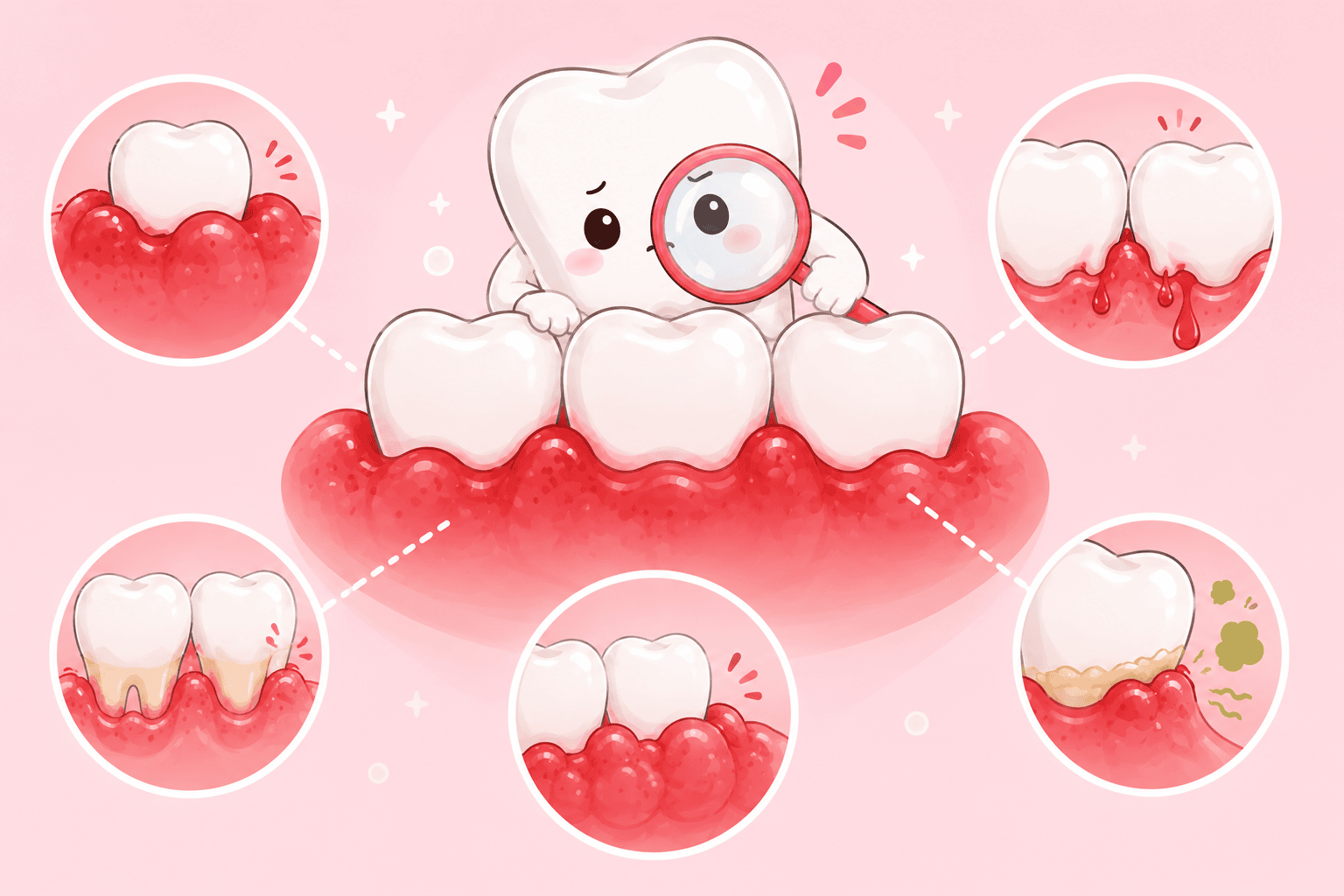
Have you ever noticed your gums looking a little redder than usual, or felt a slight sting when brushing your teeth? These subtle changes are easy to dismiss, but they could be your body’s early warning signal. Gingivitis is one of the most common oral health conditions worldwide, yet many people don’t recognize it until it has already progressed.
The good news: gingivitis is also one of the most preventable and reversible gum conditions when caught early. If you’ve noticed changes in your own gums, understanding what gingivitis is, and what to do about it, can make a meaningful difference in long-term oral health.
This guide walks you through everything you need to know, what gingivitis means, how to recognize the signs, what causes it, and when it’s time to see a professional.
What Is Gingivitis?
Gingivitis is the medical term for inflammation of the gums (gingiva). It is classified as an early-stage gum disease, typically triggered by the accumulation of plaque — a sticky film of bacteria — along and beneath the gumline.
When plaque is not removed through regular brushing and flossing, the bacteria within it produce toxins that irritate gum tissue. Over time, this irritation leads to the redness, swelling, and tenderness that define gingivitis.
It’s important to note that gingivitis affects the soft tissue only the gums and does not yet involve the underlying bone or deeper structures of the tooth. This is what distinguishes it from more advanced periodontal disease.
Gingivitis vs Healthy Gums
Healthy gums are typically pink, firm, and do not bleed easily. With gingivitis, gums may become red, swollen, sensitive, or more prone to bleeding during brushing and flossing.
| Feature | Healthy Gums | Gingivitis |
|---|---|---|
| Color | Pink | Red or reddish |
| Swelling | None | Present |
| Bleeding tendency | Minimal | Common with brushing |
| Texture | Firm and smooth | Soft or puffy |
| Discomfort | None | Mild tenderness |
Early stage gingivitis often develops gradually, making it easy to overlook. Small changes such as redness or slight bleeding may seem harmless at first, but they can indicate inflammation that deserves attention.
Monitoring gum appearance regularly helps identify early warning signs before the condition progresses.
Common Symptoms of Gingivitis
Recognizing the symptoms of gingivitis early is the first step toward protecting your gum health. Symptoms can develop gradually, and their severity varies from person to person.
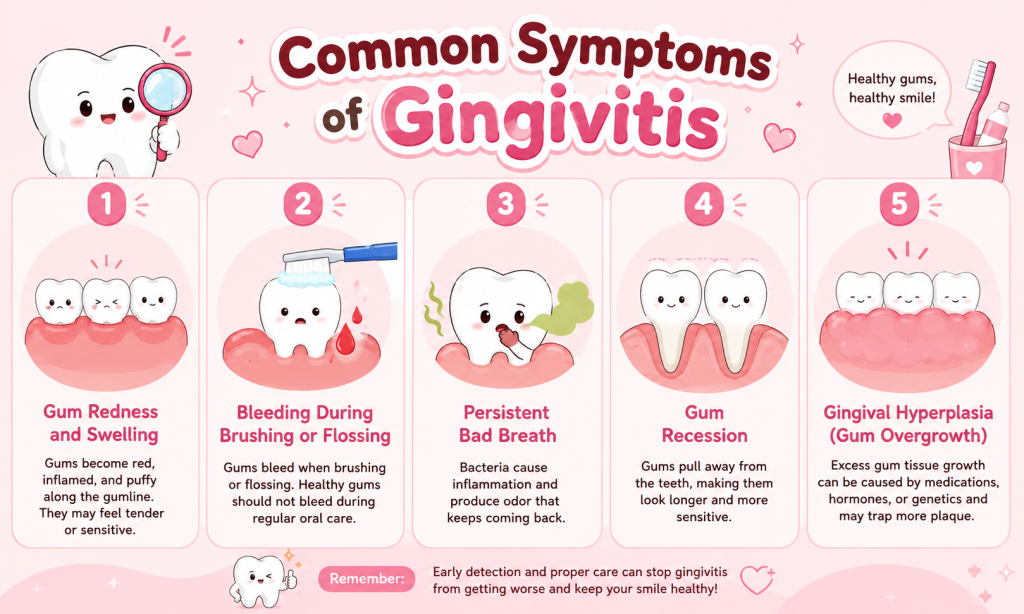
1. Gum Redness and Swelling
Healthy gums are firm and pale pink. When gingivitis develops, the gums become inflamed and may appear noticeably red or dark pink. Swelling along the gumline — where the gums meet the teeth — is also common. The tissue may look puffy or feel slightly tender to the touch.
2. Bleeding During Brushing or Flossing
One of the earliest and most telling signs of gingivitis is gum bleeding. Many people assume that seeing blood when they brush is normal, but healthy gums should not bleed with routine hygiene. If you notice blood regularly when brushing or flossing, it is a strong indicator that your gums need attention.
3. Persistent Bad Breath
Chronic bad breath (halitosis) that doesn’t resolve with brushing or mouthwash may be connected to gingivitis. The bacteria responsible for gum inflammation also produce compounds that cause an unpleasant odor. If bad breath keeps returning despite good hygiene practices, a gum issue may be the underlying cause.
4. Gum Recession
In some cases, gingivitis can contribute to gum recession — a process where the gum tissue gradually pulls away from the surface of the teeth. This can make teeth appear longer than usual and may increase sensitivity to hot and cold temperatures. Recession deserves professional evaluation, as it can accelerate if left unmanaged.
5. Gingival Hyperplasia (Gum Overgrowth)
Less commonly, some individuals experience the opposite problem: overgrowth of gum tissue known as gingival hyperplasia. This can be linked to certain medications, hormonal changes, or genetic factors. Overgrown gum tissue can make it harder to clean teeth effectively, potentially worsening inflammation.
| Symptom | Common Description | Why It Matters |
|---|---|---|
| Redness | Gums appear redder than usual | May signal inflammation |
| Swelling | Puffy appearance along gumline | Indicates possible early change |
| Bleeding | Occurs with brushing or eating | Common early indicator |
| Bad breath | Persistent odor despite hygiene | May relate to bacterial buildup |
| Gum recession | Tissue pulls away from teeth | Deserves prompt evaluation |
| Gum overgrowth | Excess tissue development | Requires professional assessment |
Causes and Risk Factors of Gingivitis
Plaque and Oral Hygiene Factors
The most common cause of gingivitis is plaque accumulation along the gumline. Without proper brushing and flossing, plaque can harden into tartar and further irritate the gums.
Lifestyle and Health-Related Risk Factors
Several additional factors may increase the risk of gingivitis, including:
- Smoking or tobacco use
- Certain medications
- Hormonal changes
- Existing health conditions
- Poor nutrition
- Inconsistent oral hygiene routines
Because every individual responds differently to plaque and inflammation, professional dental evaluation is helpful when symptoms persist.
Also Read: What Is Cracked Tooth? Causes, Symptoms & Treatment You Should Know
How Gingivitis Is Diagnosed
A dentist or dental hygienist will assess several factors during an examination:
- Visual inspection of gum color, texture, and contour
- Probing — a thin instrument gently measures the depth of the pockets between the gums and teeth. Healthy pockets measure 1–3 mm; deeper pockets may indicate progression
- Bleeding on probing — a key diagnostic indicator; healthy gums do not bleed with gentle probing
- X-rays — to check for bone loss, which would indicate a more advanced stage than gingivitis
Being open with your dentist about symptoms — even ones that seem minor — helps ensure an accurate and complete picture.
Treatment Options for Gingivitis
1. Professional Dental Cleaning
The most effective first step in treating gingivitis is a professional dental cleaning — specifically, a process called scaling and root planing. This involves:
- Scaling: Removing plaque and tartar from above and below the gumline
- Root planing: Smoothing the root surfaces to discourage future plaque adhesion and support gum reattachment
This procedure removes the bacterial source of inflammation and allows the gums to begin healing. For mild gingivitis, a single professional cleaning combined with improved home care is often sufficient.
2. Improved Home Hygiene Routine
After professional treatment, maintaining the results at home is essential:
- Brushing: Twice daily using a soft-bristled toothbrush; angle the bristles toward the gumline at 45 degrees to clean effectively
- Flossing: Once daily to disrupt plaque between teeth where brushing cannot reach
- Antimicrobial rinses: Chlorhexidine-based mouthwashes may be recommended short-term to reduce bacteria. Over-the-counter rinses with cetylpyridinium chloride (CPC) can also help as part of a routine
3. Addressing Underlying Risk Factors
Treatment is most effective when combined with lifestyle adjustments:
- Quitting smoking dramatically improves gum healing
- Managing blood sugar in diabetic patients reduces gum vulnerability
- Reviewing medications with a doctor if gum overgrowth is medication-induced
Also Read: Periodontitis: Stages, Symptoms, Diagnosis, and What It Means
When to See a Doctor or Dentist
You should seek professional evaluation if you notice:
- Persistent bleeding gums
- Increasing swelling
- Gum recession
- Ongoing discomfort
- Symptoms lasting more than several days
Prevention Gingivitis and Long-Term Management
Good oral hygiene remains one of the best ways to reduce the risk of gingivitis.
Daily Habits That Support Gum Health
Helpful habits include:
- Brushing twice daily
- Flossing consistently
- Avoiding tobacco products
- Scheduling regular dental checkups
- Maintaining balanced nutrition
Organizations such as the American Dental Association and Centers for Disease Control and Prevention provide additional educational guidance about oral health maintenance.
Monitoring Changes Over Time
Regular self-checks can help track gum appearance and identify early changes. Observing redness, swelling, or tenderness early allows faster professional evaluation and management.
Take the Next Step for Gingivitis Treatment in AllSmiles Dental Care
Gingivitis is common, but it is far from inevitable. With the right habits and timely professional care, healthy gums are well within reach for most people. If you have noticed any early warning signs — bleeding, redness, or persistent bad breath — the best time to act is now, before the condition has a chance to progress.
At AllSmiles Dental Care, we are here to help you take that first step. Whether you are due for a routine cleaning or concerned about changes in your gum health, our team is ready to provide the care and guidance you need. Book your appointment today and keep your smile healthy for years to come.
FAQ About Gingivitis
Is gingivitis serious?
Gingivitis itself is the mildest form of gum disease, but it should not be dismissed. Without treatment, it can progress to periodontitis — a more advanced condition that involves the bone and connective tissue supporting the teeth, and which may lead to tooth loss.
Can gingivitis go away on its own?
In some cases, improved oral hygiene may reduce inflammation — but this depends on how much plaque and tartar has accumulated. If tartar is present, it requires professional removal. Persistent symptoms should always be assessed by a dentist.
Can gingivitis come back after treatment?
Yes. Gingivitis can recur if home hygiene lapses or if underlying risk factors are not addressed. This is why ongoing maintenance — including regular dental visits — is essential even after symptoms resolve.