
Getting a tooth pulled is rarely the hard part, it’s the days that follow that catch many people off guard. While some soreness after an extraction is completely normal, there’s a specific complication that can turn a routine recovery into a painful setback dry socket.
If you’ve noticed that your pain seems to be getting worse instead of better a few days after your tooth was removed, you’re not alone, and you’re right to pay attention. Dry socket is one of the most common concerns people search for after a dental extraction, largely because its symptoms can be easy to confuse with normal post-procedure discomfort.
This guide explains what dry socket actually is, what causes it, how to recognize the signs, and — most importantly, when you need to call your dentist. Whether you’re currently recovering from an extraction or preparing for one, understanding dry socket can help you act quickly if something feels off.
What Is Dry Socket?
Dry socket is a common complication that can happen after a tooth extraction. Normally, a blood clot forms in the empty socket to protect the bone and nerves while the area heals. However, when that clot becomes dislodged or dissolves too early, the underlying bone may become exposed.
This condition can lead to significant discomfort and may slow the normal healing process. Many people search for information about dry socket because the symptoms often feel very different from typical post-extraction soreness.
Common Symptoms of Dry Socket
Recognizing dry socket early can make a significant difference in how quickly you get relief. Here are the signs most commonly reported:
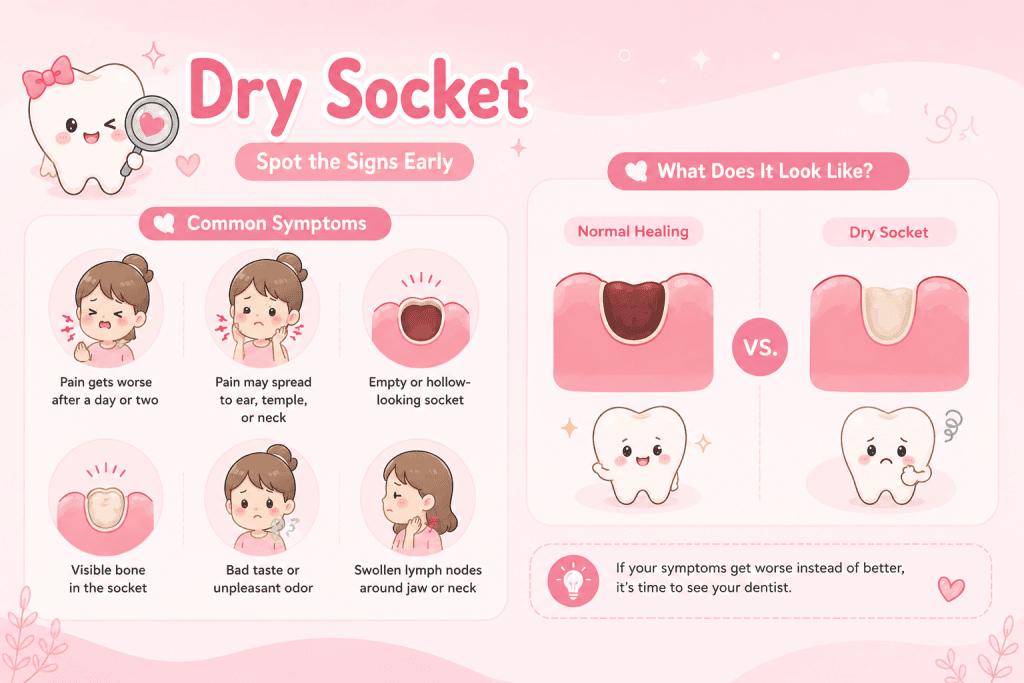
- Pain that worsens after the first day or two — instead of steady improvement, discomfort increases
- Throbbing or aching pain that may radiate toward the ear, temple, or neck on the same side as the extraction
- An empty or hollow-looking socket — the dark blood clot that was visible right after extraction is no longer there
- Visible bone in the socket when you look in a mirror
- Bad taste in the mouth or an unpleasant odor that doesn’t go away with brushing
- Swollen lymph nodes around the jaw or neck in some cases
It’s worth noting that some discomfort, mild swelling, and even a slight taste change are all normal during recovery. The key difference with dry socket is the direction of your symptoms — they get worse, not better.
What Does Dry Socket Look Like?
A normal extraction site usually contains a dark blood clot. With dry socket, the clot may be missing, leaving the area looking empty or exposing bone underneath.
While many people search online for “dry socket pictures,” online images should only be used as general references. A proper diagnosis still requires an examination by a dental professional.
Also Read: Pain After Tooth Extraction: What’s Normal and When to Check In
Dry Socket vs Normal Healing
After a tooth extraction, mild pain and swelling are expected during the first few days. In most cases, discomfort gradually improves as the socket heals.
With dry socket, however, the pain may suddenly worsen several days after the extraction instead of getting better. Some people also notice an unpleasant taste, bad breath, or an empty-looking socket.
Differences Between Normal Healing and Dry Socket
| Feature | Normal Healing | Possible Dry Socket |
|---|---|---|
| Pain Trend | Gradually improves | Becomes worse after a few days |
| Timing | Improves within 1–3 days | Symptoms often appear 2–4 days later |
| Socket Appearance | Blood clot visible | Empty-looking socket |
| Comfort Level | Mild soreness | Sharp or radiating pain |
Causes and Risk Factors of Dry Socket
Dry socket doesn’t happen randomly — certain factors make some people more susceptible than others. Understanding these can help you take targeted precautions.
What Can Cause Dry Socket
The most direct cause is anything that disrupts, dislodges, or prevents the formation of the blood clot. This includes:
- Suction movements — drinking through a straw or vigorous rinsing creates negative pressure that can pull the clot out
- Smoking — both the chemical compounds in tobacco and the physical act of inhaling can interfere with clot stability and healing
- Touching or probing the area with your tongue, fingers, or toothbrush
- Certain foods — hard, crunchy, or sticky foods that make contact with the extraction site
Who Is at Higher Risk?
| Risk Factor | Why It Matters | What to Know |
|---|---|---|
| Complex extractions (e.g., impacted wisdom teeth) | More trauma to the site can affect clot formation | Lower jaw sites are most commonly discussed |
| Smoking or tobacco use | Can disrupt clotting and delay healing | Avoid during the entire early recovery period |
| Poor aftercare habits | Aggressive rinsing or touching can dislodge the clot | Follow your dentist’s specific instructions carefully |
| Previous history of dry socket | Recurrence risk may be higher | Tell your dentist before the procedure |
| Certain medications or health conditions | Can affect how blood clots form | Disclose full medical history to your dental team |
It’s also worth noting that dry socket can sometimes occur even when you’ve done everything right. Individual biology plays a role, and some people are simply more prone to it than others.
Also Read: How Smoking Affects Gums? And What You Can Do About It
How Is Dry Socket Diagnosed?
A dentist or oral surgeon diagnoses dry socket by reviewing your symptom history and physically examining the extraction site. They will check whether the blood clot is still in place, look for exposed bone, and assess how your healing compares to what’s expected at that stage.
One important point: photos or images you find online cannot confirm whether you have dry socket. They may offer general visual reference, but they lack the context of your individual case. Only an in-person evaluation gives you a reliable answer.
Dry Socket Treatment Options
The good news is that dry socket is treatable. Once diagnosed, a dental professional will typically:
- Gently flush the socket to remove any food debris or bacteria
- Apply a medicated dressing directly into the socket to protect the exposed area and relieve pain — this often provides relief within a few hours
- Schedule follow-up visits to replace the dressing as the site heals
Pain medication may also be recommended to manage discomfort between visits. The socket will eventually heal on its own, but treatment significantly reduces the pain and supports a smoother recovery.
Avoid attempting home remedies without consulting your dentist first. While some people use clove oil for temporary relief, self-treatment is not a substitute for professional care and could potentially worsen the situation.
When to See a Dentist
Contact your dental office if you notice any of the following after an extraction:
- Pain that increases rather than decreases after the first couple of days
- A persistent bad taste or odor coming from the extraction area
- An empty-looking or visibly exposed socket
- Radiating pain toward your ear, jaw, or neck
- Swelling that returns or worsens after initially going down
Seek urgent care if you experience severe or rapidly worsening pain, significant facial swelling, or a fever. These may indicate an infection or other complication that requires prompt attention.
How to Prevent Dry Socket
Your dentist will provide specific aftercare instructions after your extraction — following them closely is the single most effective way to prevent dry socket. Beyond that, these general habits support healthy clot formation:
- Avoid straws for at least 48–72 hours (or as long as your dentist recommends)
- Don’t smoke during the early recovery period
- Skip vigorous rinsing in the first 24 hours — after that, rinse gently with warm salt water if advised
- Eat soft foods — yogurt, mashed potatoes, soup, and smoothies (without a straw)
- Avoid touching the socket with your tongue, fingers, or any objects
- Attend follow-up appointments so your dentist can monitor your healing progress
Get Your Best Dry Socket Treatment in AllSmiles Dental Care
Dry socket is uncomfortable, but it doesn’t have to stay that way. The sooner you get professional attention, the sooner you’ll be on the road to a full, pain-free recovery. Whether you’re currently experiencing symptoms after an extraction or simply want to plan ahead for an upcoming procedure, having a trusted dental team by your side makes all the difference.
At AllSmiles Dental, our experienced team is here to guide you through every stage of your dental care, from routine extractions to managing post-procedure complications like dry socket. We’re committed to making your visit as comfortable and stress-free as possible, so you can focus on healing.
Don’t wait for the pain to get worse. Book your appointment with AllSmiles Dental today and get the professional care your smile deserves. Contact us, here!
FAQ About Dry Socket
What does dry socket feel like?
Dry socket typically feels like a dull, aching, or throbbing pain that starts or intensifies a few days after a tooth extraction. The pain often radiates toward the ear, jaw, or temple — and unlike normal soreness, it doesn’t improve over time.
How do I know if I have dry socket or just normal pain?
The main difference is the direction of your pain. Normal healing gets steadily more comfortable. With dry socket, pain worsens — often around day two to four — rather than improving. You may also see an empty-looking socket or notice a bad taste or smell.
Can dry socket heal on its own?
Technically yes, but the pain can be severe and prolonged without treatment. Seeing a dentist significantly speeds up recovery and reduces discomfort, so it’s not something you’d want to wait out.