
You have had a tooth removed, the numbness has worn off, and now the area feels sore, tender, or mildly throbbing. Many people notice some pain, swelling, or discomfort in the first few days after an extraction, and that can be a normal part of healing. At the same time, it is understandable to wonder whether what you are feeling is expected or something that should be checked.
Pain after tooth extraction can feel different from one person to another. It may depend on the tooth involved, how the area is healing, and how your symptoms change over time. This guide explains what normal healing pain may look like, what warning signs may need a dental review, and when it may be a good idea to contact a dentist.
Pain After Tooth Extraction: A Common Recovery Scenario
What people often notice in the first few days
In the early stage of recovery, people often notice soreness at the extraction site, tenderness when opening the mouth, and some post extraction swelling. The discomfort may be more noticeable once the local anaesthetic wears off. Some people describe the feeling as aching, pressure, or a dull throbbing sensation.
Why pain can feel different from one extraction to another
Not every extraction feels the same during recovery. Pain may vary in intensity, location, and duration. For some, the area feels mildly sore and steadily improves. For others, jaw discomfort or throbbing jaw pain may be more noticeable at first. What matters most is whether symptoms gradually settle or start becoming stronger instead of better.
What Is Normal Healing Pain After Tooth Extraction?
Typical pain patterns during healing
Normal healing pain after tooth extraction often begins soon after the numbness fades. The area may feel sore, tender, or mildly throbbing. Discomfort can be more noticeable when chewing, speaking a lot, or touching the area. Some swelling may also happen as the tissues recover.
A common pattern is that pain is most noticeable early on, then slowly becomes easier to manage. The healing area may still feel sensitive for a while, but the overall trend is usually gradual improvement.
How pain may change over time
As healing continues, pain may shift from a stronger ache to a milder soreness. Swelling may settle, and jaw discomfort may become less noticeable. Small changes in sensation can happen during healing, but the key point is that symptoms generally move in a better direction rather than worsening.
How long does pain last after extraction?
How long pain lasts after extraction can vary. Many people notice improvement over time as the area heals. Some tenderness may still be present for a short period, especially when eating or brushing near the site. If pain is getting worse instead of better, or starts to feel stronger a few days later, it may need a dental review.
| Time after extraction | Common experience | What to watch for |
| First day | Soreness, tenderness, mild bleeding, early swelling | Pain that seems unusually severe or difficult to settle |
| First few days | Ache, sensitivity, post extraction swelling, mild throbbing | Pain that keeps increasing instead of easing |
| Several days later | Symptoms may continue to improve | Dry socket symptoms, bad taste after extraction, foul smell after extraction |
| Ongoing healing | Residual tenderness may gradually settle | Persistent worsening pain or a change from healing to stronger discomfort |
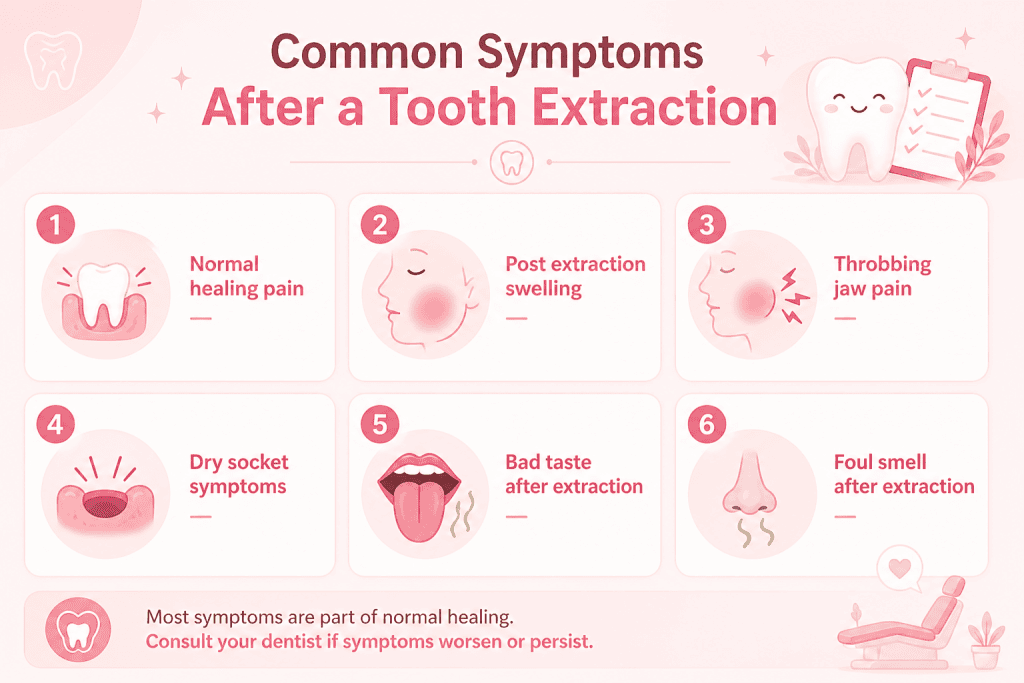
Common Symptoms After a Tooth Extraction
1. Normal healing pain
Normal healing pain is usually localised around the extraction area and tends to improve with time. It may feel sore, tender, or mildly throbbing, especially in the first few days.
2. Post extraction swelling
Some swelling after a tooth extraction can be part of normal healing. It may make the cheek or gum area feel puffy or tender. Swelling that keeps increasing, especially with worsening pain, may need attention.
3. Throbbing jaw pain
Throbbing jaw pain can happen after an extraction, especially early in recovery. Mild throbbing that settles may fit a normal healing pattern. Throbbing that becomes stronger, spreads, or feels out of proportion may deserve a closer look.
4. Dry socket symptoms
Dry socket symptoms can include increasing pain a few days after extraction, pain that feels stronger than expected, and discomfort that no longer seems to follow a normal healing pattern. Some people also notice a bad taste or foul smell.
5. Bad taste after extraction
A mild change in taste may happen during healing. A stronger bad taste after extraction, especially when linked with worsening pain, may be a sign that the area should be reviewed.
6. Foul smell after extraction
A foul smell after extraction is not something to ignore if it is strong or ongoing. When it happens with increasing pain or other concerning symptoms, it may suggest that healing is not progressing as expected.
| Symptom | More consistent with normal healing | May need dentist review |
| Pain | Soreness that gradually improves | Pain that is severe or getting worse |
| Swelling | Mild early swelling that settles over time | Swelling that keeps increasing |
| Throbbing | Mild throbbing early in healing | Stronger throbbing jaw pain that does not improve |
| Taste | Mild temporary taste change | Strong bad taste after extraction |
| Smell | No strong smell | Foul smell after extraction |
| Symptom pattern | Steady improvement | Change from improving to worsening |
Causes and Risk Factors
Why pain can happen after extraction
Pain can happen after extraction because the gum and surrounding tissues are healing. Some soreness, tenderness, and swelling may occur as part of that normal recovery process.
Factors that may affect recovery comfort
Recovery comfort may differ from one person to another. The location of theextracted tooth, the complexity of the extraction, and individual healing patterns may all affect how pain feels during recovery.
When symptoms may suggest a complication
Symptoms may need closer attention when they stop following a gradual healing pattern. Pain that becomes stronger after the first few days, especially with a bad taste after extraction, foul smell after extraction, or throbbing jaw pain, may suggest a problem that needs dental review.
Also Read: Overbite: Symptoms, Causes & Treatment
How It Is Diagnosed
What a dentist may ask about
A dentist may ask when the pain started, whether it is improving or getting worse, and whether there is swelling, bad taste, foul smell, or throbbing jaw pain. They may also ask how symptoms have changed since the extraction and what self-care steps have been used.
What a dental exam may look for
A dental exam may look at the extraction area, surrounding gum tissue, and signs of healing. The dentist may check for swelling, tenderness, changes in the socket area, or other features that may help explain ongoing discomfort.
Why symptom timing matters
Timing can help a dentist understand whether pain is more consistent with normal healing pain or whether symptoms may need further attention. Pain that eases over time may fit expected recovery, while pain that intensifies later may raise more concern.
Aftercare for Tooth Extraction
Symptom relief approaches dentists may discuss
Dentists may discuss ways to support comfort while the area heals. This may include guidance on general pain relief approaches, practical aftercare, and whether the healing area should be reviewed in person.
Tooth extraction pain relief: what people often ask about
Many people want to know what may help if the area feels sore or tender. In general, the focus is often on keeping within the aftercare advice given for the extraction and monitoring whether symptoms are steadily settling rather than worsening.
Can I take ibuprofen?
This is a common question after extraction. A dentist or pharmacist can advise on whether ibuprofen is suitable for you and whether there are other options to consider, based on your situation and any instructions already given after the procedure.
Other options a dentist may consider
If symptoms do not seem to follow a normal recovery pattern, a dentist may suggest a review of the area and discuss next steps based on what they find. The right approach can depend on the timing, symptom pattern, and appearance of the extraction site.
When to See a Dentist
Signs that need prompt review
Arrange a dental review if pain is severe, getting worse, or comes with post extraction swelling that keeps increasing, bad taste after extraction, foul smell after extraction, or throbbing jaw pain. These changes may mean the area is not healing in the expected way.
When pain is no longer following a normal pattern
Normal healing pain often becomes milder over time. If discomfort becomes stronger instead of better, returns after seeming to settle, or feels more intense than expected a few days after extraction, it is sensible to check in with a dentist.
| Symptom | Possible meaning | Suggested next step |
| Pain gradually improving | Often more consistent with healing | Continue aftercare and keep watching the trend |
| Pain getting worse after the first few days | May need review, including possible dry socket symptoms | Contact a dentist |
| Some early swelling | Can happen during normal healing | Monitor for improvement |
| Increasing swelling with worsening pain | May suggest a complication | Arrange prompt dental review |
| Mild temporary taste change | May occur during healing | Watch for whether it settles |
| Strong bad taste or foul smell | May suggest dry socket or infection | See a dentist |
Prevention or Management After Extraction
Practical ways to support healing
Following the aftercare instructions given after extraction can help support a smoother recovery. It can also help to keep track of whether pain, swelling, taste, or smell are moving in the right direction over time.
What to avoid if your mouth is still healing
If your mouth is still healing, try to avoid anything your dentist has advised against during recovery. This matters because irritation to the area may make discomfort feel worse or make it harder to judge whether healing is progressing normally.
Watching for changes in pain, taste, or smell
One of the simplest ways to monitor recovery is to notice the pattern. Pain after dental extraction often causes the most worry when it changes direction instead of slowly improving. If you notice increasing discomfort, a bad taste after extraction, or foul smell after extraction, it is reasonable to contact a dentist for advice.
Pain after dental extraction is common, and many people experience some soreness and swelling as the area heals. The main point is to watch whether symptoms are gradually settling or whether they are becoming more intense. If the pattern does not seem typical, checking in with a dentist can help you understand what is happening and what to do next.
Also Read: What Is Cracked Tooth? Causes, Symptoms & Treatment You Should Know
Ready to Get the Care You Need? Visit AllSmiles Dental
Recovery after a tooth extraction should feel manageable, with discomfort gradually easing as the days go by. If your pain is getting worse instead of better, or if you notice swelling, a bad taste, or an unusual smell that is not settling, it is always worth getting a professional opinion rather than waiting.
At AllSmiles Dental, our team is here to help you through every stage of your recovery — from answering questions about normal healing to assessing symptoms that may need closer attention.
Whether you need a routine post-extraction check or are concerned about how your mouth is feeling, we make it easy to get the right support at the right time. Book an appointment with AllSmiles Dental today and let us help you heal with confidence. Contact Us, here!
FAQ About Pain After Tooth Extraction
How long does pain after a tooth extraction normally last?
Most people notice steady improvement within three to five days. If pain is getting worse instead of better after that period, it is worth contacting your dentist for a review.
Can I eat hawker food after a tooth extraction?
Avoid hard, spicy, or very hot foods in the first few days. Stick to softer options like porridge, tofu, or steamed fish until the area feels more comfortable.
What is dry socket and how do I know if I have it?
Dry socket is when the blood clot at the extraction site is lost before the wound heals. Signs include pain that worsens a few days after extraction, along with a bad taste or foul smell. See a dentist promptly if you notice these symptoms.
When should I go back to the dentist after a tooth extraction?
See a dentist if pain is worsening, swelling is increasing, or you notice a bad taste or foul smell from the extraction site. Do not wait if your symptoms are getting worse rather than improving.